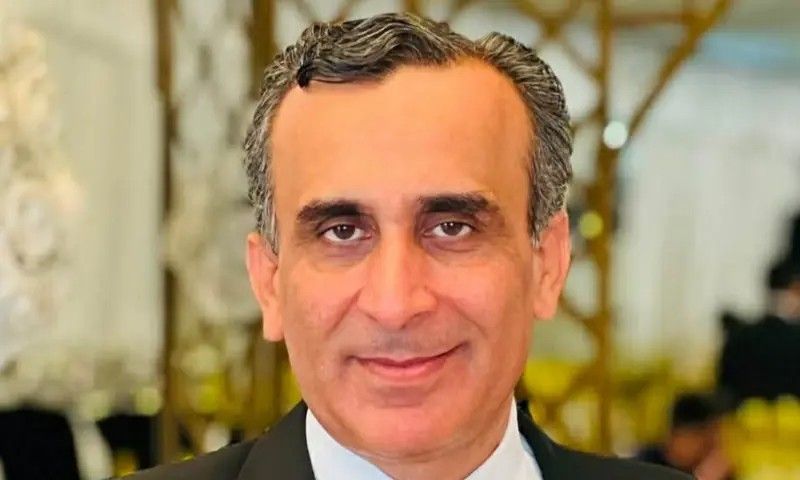
The provincial government of Punjab on Saturday formalized the appointment of Irfan Sadiq Tarar to the position of Prosecutor General, filling a vacancy that had emerged in the province's legal hierarchy. The notification, issued under Section 6 of the Punjab Criminal Prosecution Service Act 2006, grants Tarar a three-year mandate to oversee the criminal prosecution functions of the province.
The vacancy arose following the recent elevation of Farhad Ali Shah, Tarar's predecessor, who was nominated as an additional judge of the Lahore High Court. This transition reflects the common pattern in Pakistan's legal system whereby accomplished prosecutors and senior lawyers move into judicial positions, creating ripple effects throughout the prosecution service hierarchy.
Tarar brings substantial credentials to the role, having held prominent positions within Punjab's legal fraternity. He previously served as vice chairman of the Punjab Bar Council, an influential body that represents the interests of advocates across the province and sets professional standards for legal practitioners. His tenure in this capacity positioned him at the centre of policy discussions affecting lawyers' rights and professional conduct.
Beyond his bar council work, Tarar also held the position of vice president of the Lahore Bar Association, one of the country's most prestigious legal associations. These leadership roles underscore his standing among peers and suggest familiarity with the operational challenges facing legal institutions in Punjab, Pakistan's most populous province.
Tarar's political alignment within the Ahsan Bhoon-led Independent group adds another dimension to his appointment. This affiliation indicates his engagement with broader political currents while maintaining professional credentials. The Independent group has historically positioned itself as a middle-ground faction in Punjab's complex political landscape, focusing on administrative efficiency and institutional development.
The Prosecutor General's office holds significant responsibility in Punjab's justice system. The role encompasses oversight of criminal prosecutions across the province, strategic direction of prosecution policy, and management of a large cadre of prosecutors operating in courts at various levels. Given Punjab's size—with over 120 million inhabitants—the position involves navigating complex legal challenges, resource constraints, and coordination with multiple institutional stakeholders.
Tarar's appointment comes at a time when Pakistan's legal system continues undergoing institutional reform. Courts have been increasingly active in monitoring prosecution standards and defence rights, while civil society groups scrutinize the fairness and efficiency of criminal proceedings. A prosecutor general must balance pressures from multiple directions: ensuring convictions in serious cases while maintaining due process standards, managing limited resources across thousands of cases annually, and implementing evolving legal precedents.
The three-year tenure granted to Tarar provides reasonable continuity for institutional planning. Prosecutor general appointments in Pakistan typically span similar periods, allowing sufficient time to implement systematic improvements while maintaining accountability through periodic review. This timeframe enables strategic initiatives in prosecution training, case management systems, and inter-agency coordination without the instability of shorter tenures.
For Malaysian observers, the Punjab appointment illustrates administrative mechanics in a neighbouring major democracy. While Malaysia's prosecution structure operates under different constitutional and legislative frameworks, the principle of appointing senior legal professionals to prosecutorial leadership remains consistent. Both jurisdictions grapple with similar challenges: ensuring adequate prosecution resources, maintaining independence from political interference, and achieving conviction rates that reflect crime severity while respecting procedural fairness.
The appointment also reflects broader patterns in South Asian legal systems, where successful bar leaders frequently transition into government legal positions. This career pathway creates networks between private practice and public institutions, though it occasionally raises questions about regulatory capture and the influence of particular legal cliques on government policy.
Tarar's background in bar council and association leadership suggests he understands the relationship between prosecution and defence advocacy. The tension between these functions is perpetual in criminal justice systems; prosecutors must effectively present evidence while defence counsel challenge that evidence and protect accused persons' rights. A prosecutor general who has worked closely with bar associations may be better positioned to maintain professional standards and collegial relationships across the legal profession.
Looking forward, Tarar's tenure will likely be evaluated on several metrics: clearance rates for pending cases, conviction statistics in major criminal matters, the professionalism of prosecutorial conduct as reflected in judicial observations, and progress toward modernizing case management systems. These measures provide frameworks for assessing institutional performance in what remains one of Pakistan's most demanding legal positions.

