The battle for Pulai Sebatang in Johor's July 11 state election encapsulates a broader political choice facing voters across Malaysia's southernmost state. Pakatan Harapan candidate Haniff @ Ghazali Hosman is challenging the Barisan Nasional incumbent with a platform centred on unlocking the constituency's economic potential while preserving the traditional sectors that sustain thousands of livelihoods. Barisan Nasional's Hasrunizah Hassan, seeking re-election after taking office in 2022, counters by highlighting tangible infrastructure projects already approved and welfare programmes implemented during her tenure, framing the contest as one between untested promises and proven delivery.
Handiff's campaign strategy rests on positioning Pulai Sebatang as a largely underdeveloped asset waiting for strategic intervention. The 46-year-old PH candidate describes the constituency, which encompasses Pontian town and adjoins several established economic zones, as possessing considerable latent value that careful management could unlock for residents' benefit. His development philosophy emphasises balance—attracting investment and creating new opportunities whilst ensuring that fishermen in Pontian Besar and farmers in Parit Datuk are not marginalised by rapid change. This approach reflects Pakatan Harapan's broader messaging in Johor, where the coalition must persuade voters that alternative governance can deliver both growth and social protection.
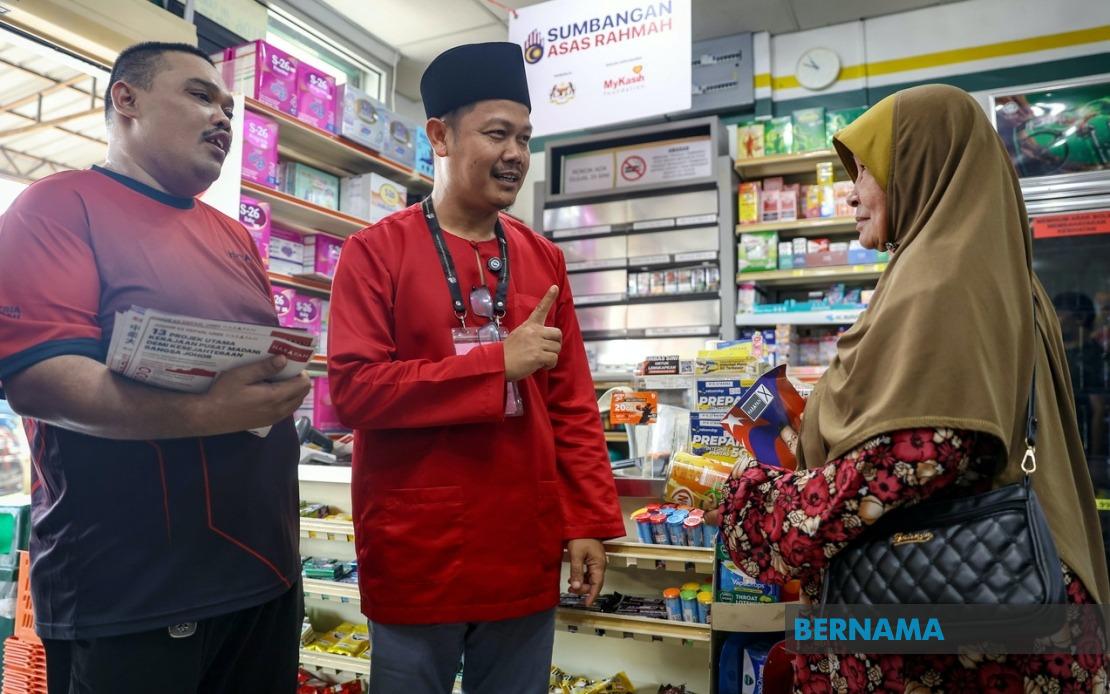
During grassroots engagements, Haniff has prioritised direct voter contact through walkabouts and house-to-house visits, a traditional method proving resilient across Malaysian electoral contests. His campaign has identified specific, long-standing community grievances worthy of parliamentary attention. Compensation for fishermen affected by previous policies and chronic drainage issues causing seasonal flooding in farming areas represent material concerns that voters expect representatives to address. Haniff's willingness to champion these narrower, locally rooted issues suggests he recognises that Pulai Sebatang voters, whilst potentially receptive to broader development narratives, remain primarily concerned with issues affecting their immediate economic security and physical safety.
Handiff's electoral history in the area provides both context and complications for his candidacy. His previous contest for the Pontian parliamentary seat in 2013 and the Benut state assembly seat in 2022 indicate sustained political engagement in the broader Pontian region, yet both previous contests resulted in defeat. This history means voters possess direct experience with his candidacy, and he must overcome any lingering doubts from those earlier campaigns. However, he points to encouraging responses during recent grassroots outreach, suggesting shifting sentiment or at least openness to reconsidering opposition support. Haniff's confidence that PH can replicate its 2018 state election performance in Pulai Sebatang rests on this perceived receptiveness, though 2018 results cannot automatically be transposed to 2024 demographics and political alignments.
Hasrunizah's incumbent positioning offers Barisan Nasional material achievements to defend rather than merely rhetorical promises. The expansion of Pontian Hospital, repeatedly cited by voters during campaigning, has now crossed the threshold from proposal to approved project with procurement processes underway. For a rural constituency where healthcare access directly affects quality of life and economic productivity, hospital expansion represents the type of concrete delivery that incumbent administrations typically emphasise. The Johor state government's approval of the new hospital block signals that infrastructure investment continues flowing to the constituency, an advantage that opposition candidates struggle to match when discussing future possibilities.
Beyond the hospital project, Hasrunizah has catalogued additional infrastructure work reflecting ongoing state investment in Pulai Sebatang. Completing the remaining 25 village road projects from a total of 75 applications identified since her 2022 election constitutes substantial infrastructure activity, particularly for rural and semi-rural areas where road quality directly affects agricultural productivity and residents' daily mobility. Village roads represent unglamorous infrastructure that rarely generates political headlines but carries enormous practical significance for farming and fishing communities reliant on transporting goods to markets. Hasrunizah's specific commitment to completing these remaining projects addresses a constituency concern that persists across many rural Malaysian electoral divisions.
The incumbent also emphasises welfare programmes as evidence of state government responsiveness to residents' material needs. The 'Kasih Johor' assistance scheme, housing aid, and first-home ownership initiatives represent transfer mechanisms that supplement incomes and reduce housing costs for lower-income households. These programmes carry particular electoral weight in constituencies with significant populations employed in traditional, lower-wage sectors like fishing and subsistence farming. By highlighting welfare expansion rather than only economic transformation, Barisan Nasional's messaging acknowledges that not all voters will benefit equally from development-focused policies, and state governments retain a responsibility to provide direct assistance regardless of economic growth rates.
Hasrunizah's campaign methodology, combining traditional door-to-door canvassing with social media outreach, mirrors Haniff's approach whilst leveraging the incumbent's existing familiarity amongst voters. The appearance by Pontian Member of Parliament Datuk Seri Ahmad Maslan at a recent TVET roadshow underscores Barisan Nasional's strategy of deploying federal-level support for state-level campaigns. Ahmad's comments endorsing Hasrunizah and Benut candidate Datuk Mohd Sumali Reduan referenced their educational backgrounds and proven records, suggesting Barisan Nasional intends to position its candidates as competent administrators rather than merely patronage beneficiaries. This framing attempts to neutralise any anti-incumbency sentiment by emphasising capability and experience.
The broader Johor state election context shapes voter calculations in Pulai Sebatang specifically. Whether voters perceive 2024 as a moment for continuity following the 2022 election results, or as an opportunity for course correction, will significantly influence whether Hasrunizah's incumbency advantage outweighs any appetite for change. Johor's position as Malaysia's most economically significant southern state means electoral outcomes here carry implications beyond state politics, potentially influencing federal coalition dynamics. For Pulai Sebatang voters specifically, this election presents a choice between supporting tested delivery of incremental improvements versus accepting some uncertainty in exchange for potentially more ambitious transformation.
The constituency's fisheries and agriculture dependence means both candidates' positions on environmental sustainability, market access, and livelihood protection warrant particular scrutiny. Haniff's emphasis on balanced development implicitly questions whether past investment prioritised economic growth over environmental stewardship. Hasrunizah's record over the past two years indicates her approach to reconciling development with traditional sector concerns, though evaluating this record remains limited given her recent tenure. Early voting commences July 7, with the main poll occurring July 11, providing voters a final week to weigh these competing visions for Pulai Sebatang's trajectory.
Ultimately, Pulai Sebatang voters will determine whether they prefer the certainty of continued incremental progress under proven administration or whether they believe transformative change justifies electoral risk. This choice, whilst framed locally through specific infrastructure and welfare projects, reflects broader Malaysian political tensions between continuity and reform that persist across the nation's electoral landscape.

