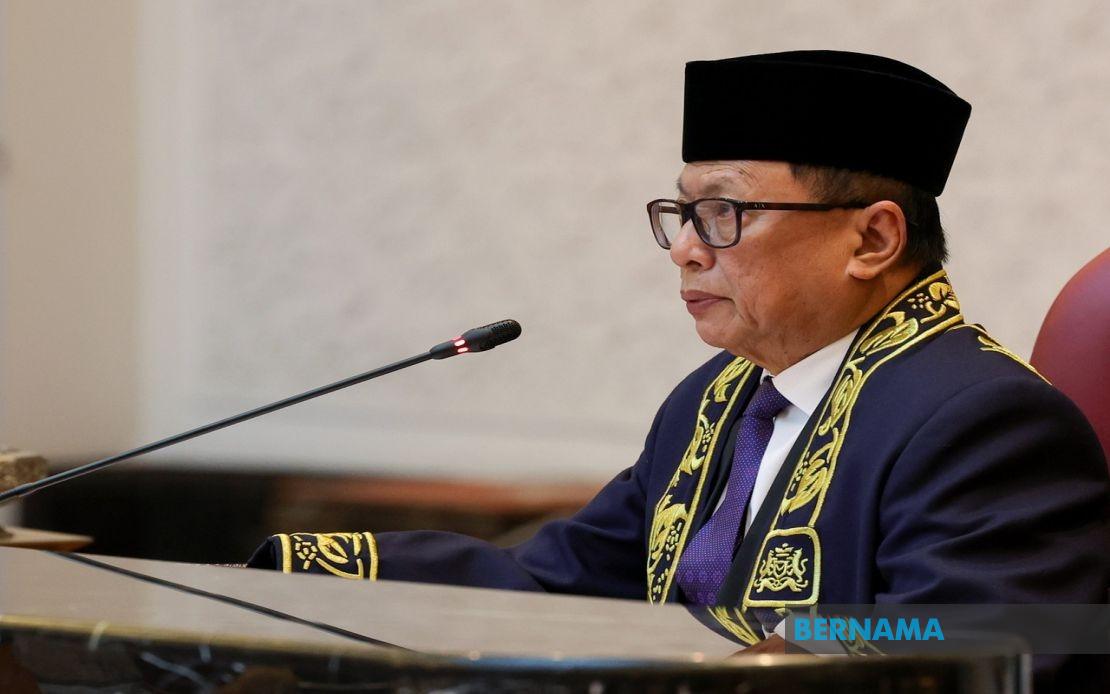
Datuk Dr Mohd Puad Zarkashi, a senior figure within UMNO's upper echelons, severed his ties with the party on June 25, 2026, citing a desire for unfettered political expression and growing concerns about what he characterizes as institutional dysfunction within the organization's Johor machinery. The departure of the Rengit state assemblyman carries particular weight given his standing within party structures and his proximity to senior leadership, signalling potential fractures within UMNO's ranks as the party navigates a critical election period.
Through a Facebook statement, Puad Zarkashi laid out his rationale with deliberate clarity, emphasizing that his exit was voluntary and uncoerced. He underscored that leaving would permit him to articulate viewpoints that diverge from party orthodoxy without risking accusations of disloyalty or internal sabotage—a concern that speaks to the highly regimented nature of UMNO's internal culture, where dissent is frequently interpreted as betrayal. By resigning proactively rather than awaiting expulsion, he positioned his departure as an act of principle rather than punishment.
Central to Puad Zarkashi's critique is his assessment of Johor Chief Minister Onn Hafiz Shamsul, whom he describes as merely a functionary executing decisions made elsewhere rather than a leader steering the state branch independently. The characterization of Onn Hafiz as a "pak turut" (colloquial for yes-man) suggests the Johor Chief lacks autonomous decision-making authority within UMNO's state apparatus, implying that real power operates through channels and mechanisms obscured from public view. This accusation carries implications beyond personality politics; it suggests systemic capture or centralized control that undermines the ostensible autonomy of state leadership.
Puad Zarkashi's metaphor of Johor UMNO as a "tethered puppet" extends this critique further, painting a picture of an organization constrained by invisible strings, operating within parameters set by distant handlers. The imagery conveys not mere disagreement over policy or strategy, but rather fundamental concern about the integrity of decision-making processes and the degree to which Johor's UMNO leadership can exercise genuine agency. For Malaysian readers accustomed to assessing factional dynamics within major political parties, such language signals the possibility of deeper institutional conflicts simmering beneath surface-level unity.
The veteran politician's departure acquires additional context through his reference to "irregularities" in the Barisan Nasional candidate selection process for the upcoming Johor state election. Puad Zarkashi had previously indicated anomalies in how candidates were chosen, and his decision to quit suggests he views these irregularities as symptomatic of broader governance problems rather than isolated administrative oversights. For a party that has prided itself on meritocratic and transparent selection mechanisms, such allegations—especially from an insider—undermine institutional credibility.
Puad Zarkashi's own electoral trajectory adds nuance to his departure. Despite securing the Rengit state seat in the 2022 Johor election, he had announced his intention to step aside for younger candidates rather than defend the seat in the coming contest. This decision—apparently made in good faith and presented as a contribution to generational renewal within the party—suggests his exit from UMNO stems less from personal political setback than from principled objection to how the party operates. A politician seeking merely to advance personal ambitions would likely have remained within the fold, fighting for electoral endorsement; his departure on grounds of institutional critique carries greater moral weight.
His prior parliamentary experience provides additional perspective on his departure. Puad Zarkashi previously represented Batu Pahat in the 12th General Election, defeating his PAS opponent by a substantial 12,968-vote margin. However, he subsequently lost the seat in the 13th General Election to PKR's Datuk Mohd Idris Jusi by a narrower 1,524-vote margin, indicating shifting electoral dynamics in the constituency. His tenure as Batu Pahat UMNO division chief demonstrated organizational capability and grassroots engagement—the kind of leadership experience that gives his current criticisms particular standing.
Beyond electoral politics, Puad Zarkashi's résumé includes significant federal administrative responsibility. His tenure as Deputy Education Minister from 2009 to 2013 positioned him within the machinery of national government during a period of significant policy evolution. More notably, his role as Director-General of the Special Affairs Department (JASA) from March 2015 to April 2018 provided intimate exposure to the information and strategic affairs apparatus crucial to national governance. These positions suggest a leader with substantive experience in institutional operations and strategic planning, lending credibility to his assessments of organizational dysfunction.
The timing of his departure warrants scrutiny within Malaysia's broader political calendar. With state-level elections approaching and federal electoral cycles potentially looming, UMNO faces intensified pressure to project unity and electoral viability. A high-profile resignation accompanied by public allegations of leadership weakness and selection irregularities generates precisely the kind of negative narrative the party seeks to avoid. The resignation becomes not merely a personal decision but a political statement that reaches beyond internal party dynamics to influence broader public perception.
For Southeast Asian observers monitoring Malaysia's political evolution, Puad Zarkashi's departure illustrates persistent tensions within UMNO between centralized control and decentralized autonomy, between hierarchical discipline and individual conscience. These tensions are not unique to Malaysia, but their manifestation within UMNO—a party that has dominated Malaysia's political landscape for decades—carries implications for regional political stability and governance structures. The question of how parties balance internal discipline with space for legitimate disagreement remains acute across Southeast Asia.
Puad Zarkashi frames his decision as an act of "political courage," positioning himself as willing to sacrifice organizational affiliation to expose what he perceives as wrongdoing before it escalates. This framing appeals to a particular conception of political responsibility—one prioritizing institutional integrity over personal advancement or party loyalty. Whether this characterization resonates with broader UMNO constituencies or whether it is dismissed as the grievance of a departing figure will substantially influence the political reverberations of his exit.
The resignation also raises questions about UMNO's capacity to retain senior figures who wish to exercise substantive influence over party direction. If respected cadres with significant experience and electoral credibility feel compelled to depart due to constraints on independent thought and action, the party faces recruitment and retention challenges that extend beyond individual cases. The departure of committed activists and administrators willing to sacrifice positions for principle, rather than those forced out through factional defeat, suggests underlying structural concerns that demand institutional attention.
As Malaysian politics continues its complex navigation of coalition building, electoral competition, and generational transitions, Puad Zarkashi's departure and his accompanying critique of Johor UMNO's leadership structures and candidate selection mechanisms contribute to an evolving narrative about the party's internal health and capacity for transparent governance. Whether his criticisms prompt internal reform or are absorbed into the organizational background remains an open question with implications for UMNO's political future.

