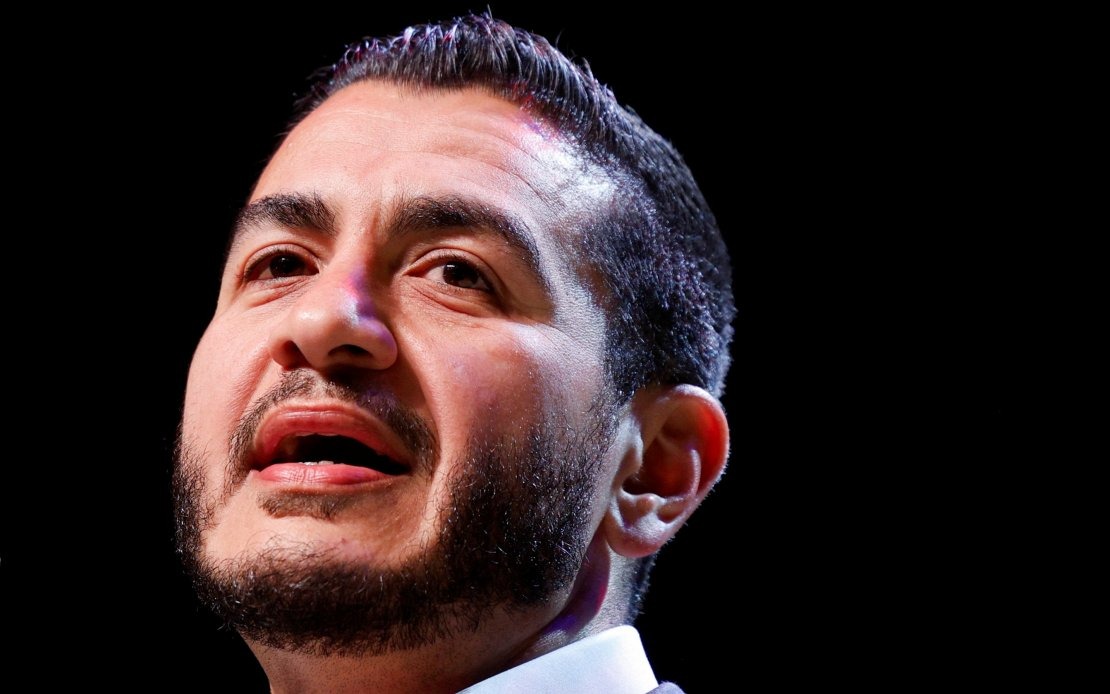
Early Wednesday voting returns from across five American states revealed that Abdul El-Sayed had secured a narrow advantage in Michigan's hotly contested Democratic Senate primary, setting the stage for a general election clash between the progressive candidate and Republican nominee Mike Rogers. The Michigan race captured national attention as Democrats in Kansas, Michigan, Missouri, Virginia and Washington simultaneously cast ballots to determine their standard-bearers for the November midterm elections, contests that will reshape the composition of Congress and numerous state offices. With roughly nine in ten ballots counted, El-Sayed maintained his slender edge over US Representative Haley Stevens, though the major news organisations had not yet officially declared a winner in the closely watched matchup.
The philosophical divide within Michigan's Democratic Party played out starkly through the competing endorsements each candidate received. Stevens enjoyed backing from the party establishment, with retiring Senator Gary Peters among her prominent supporters, reflecting the more moderate wing of the party. Conversely, El-Sayed marshalled resources and visibility from progressive champions, including national figures such as Senator Bernie Sanders and Representatives Alexandria Ocasio-Cortez and Rashida Tlaib. This schism reflects broader tensions within the Democratic coalition between its centrist and progressive wings, a dynamic that has characterised American politics for the past half-decade.
For Malaysian observers and other Southeast Asian readers, the Michigan primary illustrates how foreign policy debates—particularly those involving the Middle East—have become unexpectedly central to American domestic politics. The question of American support for Israel and its military operations in Gaza emerged as a defining issue throughout the Michigan primary campaign, demonstrating how developments thousands of miles away now influence electoral dynamics in the heartland. This convergence of international affairs and electoral politics underscores the global interconnectedness of contemporary democracies and how voters increasingly weigh foreign policy alongside traditional domestic concerns.
The winner of the Democratic primary will confront Mike Rogers, a Republican who advanced without opposition from within his own party. Rogers represents the incumbent seat being vacated by Peters' retirement, and the November contest will prove consequential in determining whether Republicans can expand their Senate majority or whether Democrats can defend their chamber's slight control. The Michigan Senate race carries implications stretching well beyond the state itself, as Senate seats remain hotly contested across the nation heading into the midterm cycle.
Michigan's Republican congressional races demonstrated the consolidation of support around incumbent representatives. In the 1st Congressional District, Jack Bergman secured his party's nomination with a commanding 74.3 per cent of the vote across a field of challengers, while Bill Huizenga similarly dominated Michigan's 4th District contest with an overwhelming 85 per cent when pitted against Philip Tanis. Huizenga will subsequently face Democrat Sean McCann, who had himself overwhelmingly prevailed in his party's primary with 67.2 per cent support, signalling competitive general election terrain.
Kansas voters in their Republican primary returned incumbent Senator Roger Marshall to the party's ballot, as he defeated challenger Pond Naramore with 79.9 per cent of ballots cast. Marshall's commanding victory reflects the conservative Republican leanings of the state's electorate and positioned him favourably against Democrat Adam Hamilton for the general election. The gubernatorial contest in Kansas proved equally significant, as Democrat Cindy Holscher won her party's nomination and will challenge Republican Ty Masterson, who claimed the Republican nomination despite a crowded field and received endorsement from President Donald Trump. This gubernatorial race carries genuine competitive potential, given that Democratic Governor Laura Kelly, termed out from seeking further reelection, leaves the office open.
Missouri's primary elections operated under novel circumstances following Republican state lawmakers' adoption of a congressional map backed by Trump, designed to maximise Republican prospects of maintaining House control. Within Missouri's 1st Congressional District, Democrat Wesley Bell fended off four challengers, including former Representative Cori Bush, to secure the Democratic nomination. The contest between Bell and Republican Paul Berry III will likely prove contentious in the general election, reflecting the competitive nature of many congressional battlegrounds.
Virginia's Republican primary for Senate saw Bert Mizusawa secure the nomination and set himself for a general election challenge against Democrat Mark Warner, an incumbent senator who faced no opposition within his party. Virginia's congressional races featured varied competitive circumstances. In the 1st District, Democrat Shannon Taylor emerged from a competitive field with 53.1 per cent support, positioning herself against Republican Rob Wittman, who ran unopposed and seeks his tenth full congressional term. Meanwhile, former Democratic Representative Elaine Luria reclaimed her party's nomination in Virginia's 2nd District with dominant 80.4 per cent support, positioning herself for a rematch against Republican Representative Jen Kiggans.
Virginia's 7th District witnessed Republican Doug Ollivant capture the nomination with 56.6 per cent, establishing a contest against Democrat Eugene Vindman, a first-term congressman who ran unopposed. This seat has transformed into competitive terrain in recent cycles, suggesting the general election could prove closely contested. Washington state's all-party primary system produced different outcomes than traditional party contests, with Democratic Representative Suzan DelBene and Republican Mary Silva both advancing from the 1st Congressional District to the November ballot. Democratic Representative Marie Gluesenkamp Perez will confront Republican John Braun, who enjoyed Trump endorsement, while in Washington's 6th District, Democrat Emily Randall progressed to face Republican Teresa Fox.
These primary results across five states illuminate the contours of the broader midterm electoral battle shaping up nationwide. The contests demonstrate persistent polarisation between Republican and Democratic voters, the influence of national political figures in local and statewide races, and the emergence of foreign policy—particularly Middle Eastern conflicts—as an unexpected voting consideration. For international observers and Southeast Asian policymakers monitoring American politics, these primaries suggest that the November midterm elections will intensify existing divisions rather than forge new consensus, with implications for how future American administrations approach foreign relations and international engagement.

