Singapore's Workers' Party chief Pritam Singh has emerged from an internal leadership challenge significantly strengthened, re-elected unopposed on June 28 following a secret ballot in which he secured overwhelming support from the party's core membership. The outcome marks a decisive moment for the opposition party's future direction and underscores Singh's ability to retain the confidence of rank-and-file cadres despite mounting legal and political difficulties.
The re-election followed an earlier meeting the same day where approximately 25 dissident party members attempted to force Singh's resignation but fell short of generating sufficient momentum for change. The cadres who triggered the special conference had compiled their grievances over several months, ultimately dispatching a formal letter in December 2025 that outlined three specific demands: accountability from Singh regarding his legal troubles, his resignation, and failing that, a membership vote on his continued leadership. The strategy reflected deep divisions within the party over how to manage the fallout from Singh's involvement in former Sengkang GRC MP Raeesah Khan's parliamentary misconduct in 2021.
When party members cast their ballots on Singh's continued tenure, roughly 80 per cent voted in his favour—a margin described by Aljunied GRC MP Gerald Giam, who chaired the proceedings, as "well in excess of a supermajority" within the party's inner circle of slightly more than 100 cadres. This represents a decisive endorsement that transcends the typical party politics of Singapore's opposition movement, particularly given the controversies that have shadowed Singh's leadership. His conviction for misleading Parliament regarding his handling of Khan's false statements to the legislature had created genuine anxiety among grassroots members about the party's credibility and direction.
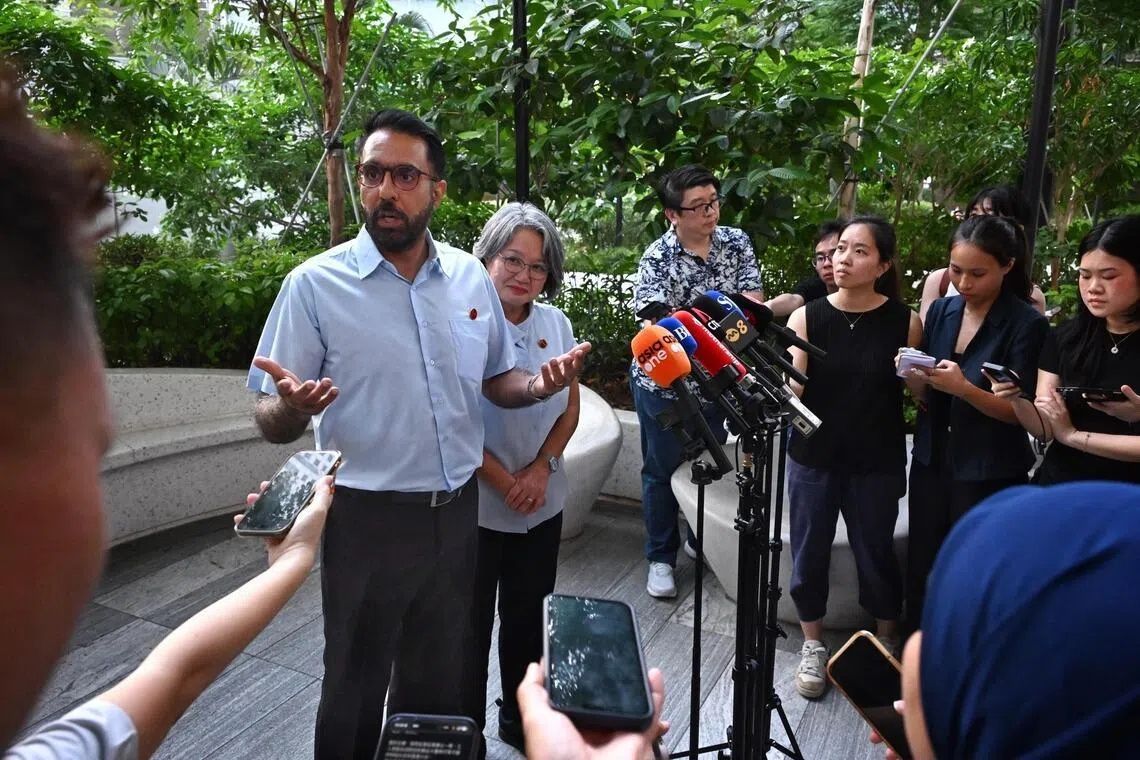
Speaking to journalists after the vote, Singh struck a unifying tone, emphasizing the Workers' Party's commitment to rational governance and faithful representation of Singapore's citizens. He acknowledged both the concerns raised by dissidents and the party's obligation to move forward cohesively, noting that internal democratic processes must be respected even when outcomes disappoint particular factions. The message attempted to bridge the gap between those who questioned his fitness to lead and those who maintained confidence in his stewardship, suggesting that robust internal debate strengthens rather than weakens opposition politics.
The path to re-election was complicated by uncertainties around whether former party chief Low Thia Khiang would continue supporting Singh's leadership. These doubts had fuelled speculation among dissident cadres that a challenger might emerge from within the party's senior ranks. However, Low publicly reaffirmed his backing for Singh on the morning of the elections, effectively foreclosing the possibility of a contested race and signalling to wavering members that the party's elder statesman remained confident in Singh's continued relevance. This endorsement proved strategically crucial in consolidating support among moderates who might otherwise have entertained alternatives.
Singh's legal troubles stem from his handling of Khan's 2021 parliamentary misconduct, when she made false statements to the legislature about her involvement in certain incidents. The High Court subsequently upheld Singh's conviction for guiding Khan in maintaining her falsehoods over several months, finding him culpable despite his appeals. Parliament's Committee of Privileges reached similar conclusions, leading to his removal as Leader of the Opposition in January 2026 following a formal determination that he was unsuitable for the role. Prime Minister Lawrence Wong subsequently offered the Workers' Party the opportunity to nominate another MP for the position, but the party declined, maintaining that the post should remain with the largest opposition party's leader.
Two months before the June 28 elections, Singh had received a formal letter of reprimand from the party's central executive committee regarding his conviction. This followed findings from a three-member disciplinary panel that Singh had breached two articles of the party's Constitution through his actions relating to Khan's false parliamentary statements. The panel, comprising Sengkang GRC MPs Jamus Lim and He Ting Ru alongside former Hougang MP Png Eng Huat, conducted a thorough examination that acknowledged Singh's culpability while allowing the membership to ultimately decide on his continued leadership.
Beyond Singh's re-election, the party's biennial internal elections proceeded smoothly, returning Sylvia Lim as party chair—a position she has maintained since 2003. The central executive committee, the party's principal decision-making body, was reconstituted with 12 elected members, most of whom retained their previous positions. Four members lack parliamentary seats: Low Thia Khiang, former Aljunied GRC MP Faisal Manap, long-serving committee member Tan Kong Soon, and newly elected senior counsel Harpreet Singh, who contested the May 2025 general election as part of the Workers' Party's Punggol GRC slate. The party retains capacity to co-opt up to seven additional members to the committee, typically finalizing such appointments approximately one month after elections conclude.
Harpreet Singh's election to the committee represents generational renewal within the party's leadership structure, particularly as the Workers' Party seeks to rebuild its profile following recent setbacks. In a LinkedIn post following the results, Singh characterized the membership's re-election of Pritam not as reflexive loyalty but as a deliberate assessment grounded in Singh's track record of steady leadership and service under sustained political pressure. He notably distinguished between respecting the courts' judgment regarding the conviction and evaluating Singh's broader character and fitness for leadership, arguing that comprehensive historical context must inform such evaluations rather than isolated legal decisions.
The internal challenges facing the Workers' Party reflect broader questions about opposition politics in Singapore, where the ruling People's Action Party has maintained parliamentary dominance for decades. The Workers' Party remains the largest opposition entity, having achieved historic electoral gains in May 2025, yet Singh's leadership had come under question as the party navigated the Khan scandal and its aftermath. The June 28 outcome suggests that despite genuine internal dissatisfaction, a clear majority of engaged cadres believed Singh's continuation offered the best path forward for the organization's development and electoral prospects.
Analysts attribute Singh's political survival partly to the absence of a compelling alternative leader within party ranks. While dissident cadres sought a challenger, no figure of sufficient stature and acceptability to both traditional and progressive factions emerged as a viable replacement. This vacuum, combined with Low's continued support and the memories of Singh's constructive parliamentary engagement during earlier opposition campaigns, tilted calculations toward maintaining continuity. For regional observers watching Singapore's opposition development, the outcome demonstrates that even conviction and parliamentary censure need not terminate leadership if broader institutional confidence persists.
Looking forward, Singh faces the challenge of maintaining party unity while operating under the constraint of his Leader of the Opposition removal. The Workers' Party's decision to decline Prime Minister Wong's offer to nominate an alternative for that formal role has preserved principle but cost the party meaningful parliamentary standing. Singh must now demonstrate that his leadership can advance opposition interests effectively despite this formal demotion, rebuilding cadre confidence and public perception in the process. The strength of his June 28 endorsement provides a mandate, but persistent divisions suggest ongoing management challenges ahead.

