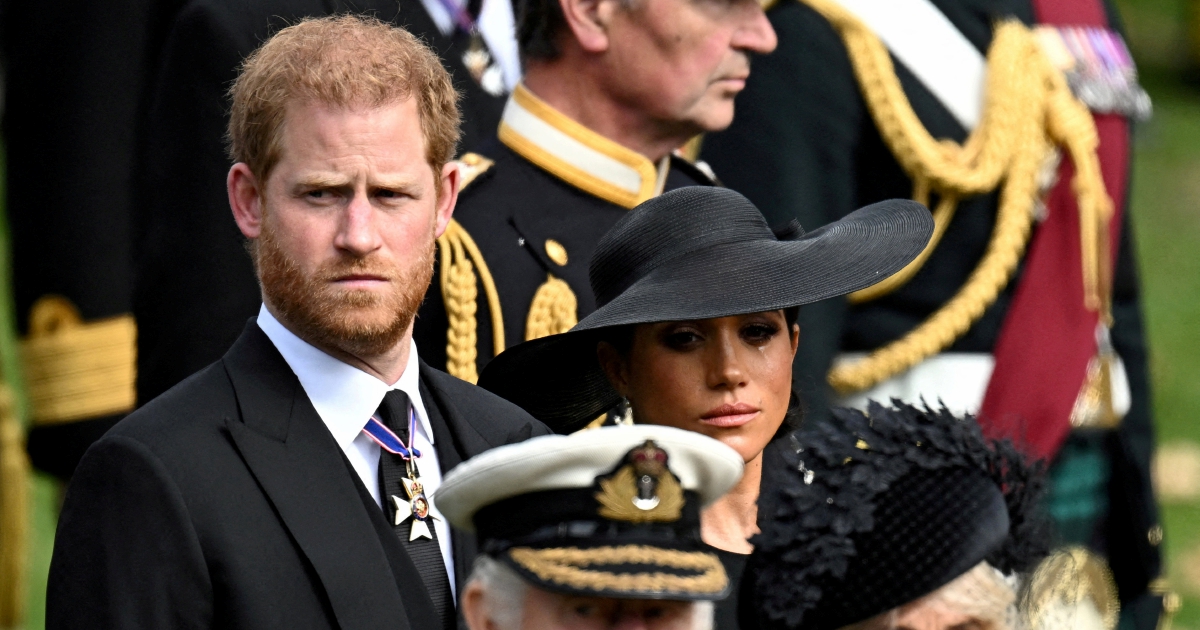
Prince Harry and several other prominent figures, including musician Elton John, must now dig deep into their pockets to settle a significant legal bill. A British court has ordered these high-profile individuals to cover the substantial legal costs incurred by the Daily Mail's publisher following the collapse of their privacy-related lawsuits. The ruling represents a major financial and reputational setback for the claimants, whose attempts to hold the tabloid accountable for alleged invasions of privacy have come to naught.
The court's decision hinges on a critical finding: the judge determined that the claimants had pursued their legal action in a manner that was unreasonable and potentially abusive of the legal process. This conclusion carries significant weight in English law, as judges have considerable discretion to penalise parties who litigate in bad faith or through tactics deemed vexatious. The ruling signals that simply bringing a case is not sufficient—how it is conducted matters enormously, and courts will not hesitate to impose financial consequences on those who fall short of procedural standards.
For Prince Harry in particular, this judgment adds another layer of complexity to his long-running battle with sections of the British tabloid press. The royal has been vocal about his grievances with media intrusion, famously stepping back from royal duties partly due to press harassment. However, the court's assessment suggests that his legal strategy in this instance did not meet the threshold of reasonableness required by the judiciary. This distinction is important: the judge has not necessarily validated the Daily Mail's behaviour, but rather has found fault with how the challenge to it was mounted.
The financial implications extend well beyond Prince Harry. Elton John, a legendary performer who has also been a vocal critic of invasive media practices, alongside other claimants, now faces personal liability for costs. These amounts can run into millions of pounds, particularly in complex privacy litigation that spans lengthy court proceedings and involves multiple parties and legal representatives. For individuals accustomed to substantial wealth, such orders remain consequential; for the principle involved, they demonstrate that litigation carries genuine risks even for the well-resourced.
From a legal perspective, this ruling illustrates the distinction between having a legitimate grievance and having a viable case pursued properly. English courts have long protected free speech and press freedom alongside privacy rights, creating a delicate balance. The judge's decision suggests that in this instance, the claimants' approach—whether through procedural missteps, strategic choices, or the framing of their claims—did not present a reasonable path to victory. Understanding where this balance shifts is crucial for anyone contemplating privacy litigation against media organisations.
The outcome carries implications that stretch across the British media landscape and beyond. Publishers and editors will likely view this as validation of their robustness in defending against privacy claims, potentially emboldening more aggressive editorial practices. Conversely, public figures considering similar legal action will need to think carefully about the risks, knowing that an unsuccessful case could saddle them with enormous bills. The chilling effect on privacy litigation, particularly among those of moderate means, could be substantial.
For Malaysian and regional readers, this case offers insights into how Commonwealth legal systems approach media accountability and free speech. While press freedom is cherished in liberal democracies, the bar for successfully constraining media behaviour through courts remains high. The judgment also underscores how litigation strategy itself becomes scrutinised—courts are not merely arbiters of underlying facts, but also guardians of proper legal procedure. A technically sound complaint can fail if pursued through unreasonable tactics.
The role of judicial discretion in assigning costs deserves particular attention. English law gives judges substantial power to determine who pays for litigation, and this power is exercised with the intention of deterring frivolous or abusive claims while protecting legitimate grievances. The Daily Mail's publisher successfully convinced the court that this case fell into the former category, or at least that the manner of pursuit warranted cost penalisation. This reflects a broader judicial philosophy that the courts themselves must be protected from misuse.
Prince Harry's position as a member of the royal family adds another dimension. His attempt to use the legal system mirrors efforts by other public figures worldwide to reclaim privacy and dignity from aggressive tabloid coverage. Yet the judgment suggests that even those with significant resources and arguably justifiable complaints cannot simply bypass normal standards of litigation conduct. The message is unambiguous: the courts will not serve as a mere tool for any party, regardless of status or sympathies, if the process itself is conducted improperly.
Looking forward, this case will likely influence how privacy and media law develop in Britain and Commonwealth jurisdictions. Legal practitioners advising high-profile clients on media disputes will need to factor in not just the merits of the underlying claim, but the realistic prospect of adverse cost orders if the case fails. The financial calculus of litigation thus becomes more fraught, potentially pushing disputants toward alternative mechanisms like mediation or negotiation rather than full courtroom battles.
The broader context of press regulation in Britain remains contentious. While self-regulatory bodies like IPSO exist, their effectiveness is debated, and many public figures feel they offer insufficient redress. This judgment does not resolve that debate but demonstrates that judicial remedies, while theoretically available, carry substantial financial and procedural risks. The gap between what the public might expect of responsible journalism and what courts will enforce through privacy law remains a live issue in contemporary Britain.

