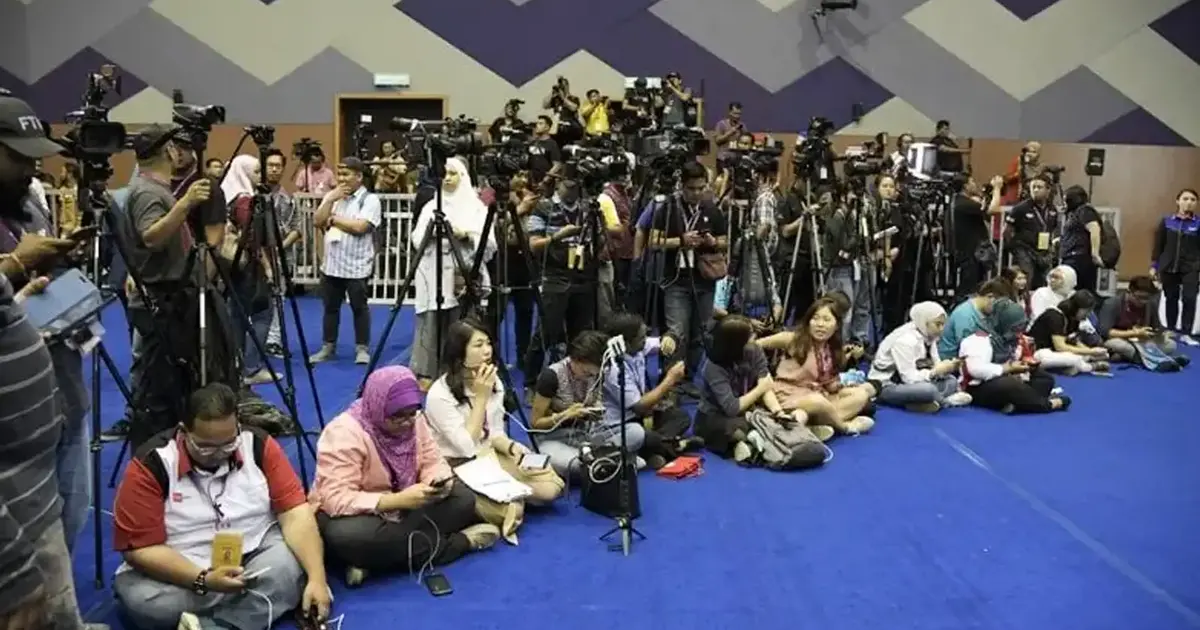
Prime Minister Anwar Ibrahim has articulated a structured complaint mechanism designed to channel concerns about journalistic conduct through the Malaysian Media Council, establishing what his administration characterises as a safeguard against premature or unwarranted enforcement action. The policy represents an attempt to balance accountability in the media sector with broader principles of editorial independence, a distinction that carries significant implications for press freedom and regulatory practice throughout Southeast Asia.
Under the framework described by the prime minister, complaints directed at journalists or news organisations must first be submitted to the Malaysian Media Council rather than proceeding immediately to police investigations or other formal enforcement channels. This prerequisite step introduces a mediation and review phase designed to differentiate between legitimate concerns requiring regulatory intervention and disputes that may be better resolved through industry self-regulation or dialogue. The approach reflects growing international consensus that media governance functions most effectively when professional councils examine allegations before state institutions become involved.
The Malaysian Media Council operates as the industry's self-regulatory body, comprising editors, journalists, media proprietors, and public representatives. Its established mandate includes receiving and investigating complaints from the public regarding accuracy, fairness, and ethical standards in news coverage. By positioning the council as the first port of call, the government effectively delegates initial assessment responsibilities to an entity with technical expertise in media standards rather than retaining that function within enforcement agencies. This architectural choice distinguishes complaint handling from other regulatory matters and potentially reduces the appearance of state oversight of editorial decisions.
For Malaysian readers and regional media observers, this mechanism addresses a persistent tension in democratic societies: how to protect citizens from harmful or inaccurate reporting without creating opportunities for political interference in news coverage. The council's independence, though occasionally questioned by media freedom advocates, theoretically provides insulation between political pressure and investigative decisions. By requiring complaints to pass through this institutional filter, the prime minister's position seeks to build credibility that regulatory action follows professional standards rather than political convenience.
The timing of this clarification reflects growing concern about the relationship between government and media in Malaysia. Recent years have witnessed periodic confrontations between journalists and officials, with debates intensifying around defamation law, security legislation, and the scope of permissible government criticism. By establishing this procedural requirement, the administration signals commitment to systematic rather than ad hoc responses to media complaints, potentially reducing instances where complaints could be weaponised for political purposes. Such transparency in process can marginally increase public confidence that enforcement decisions rest on consistent principles.
However, the effectiveness of this mechanism depends significantly on the Malaysian Media Council's actual independence and resource capacity. If the council operates under subtle political pressure or lacks sufficient investigative capability, the procedural requirement becomes largely performative. Regional experiences in countries such as Thailand and the Philippines demonstrate that self-regulatory bodies can be compromised if governments selectively enforce their recommendations or if the council's leadership is perceived as politically aligned. Malaysian observers will likely scrutinise whether complaints receive genuinely impartial examination or whether outcomes systematically advantage particular political or business interests.
The approach also must navigate tensions between protecting press freedom and addressing legitimate public grievances. Complaints about inaccurate reporting, fabricated sources, or reckless allegations warrant professional investigation regardless of the complainant's identity or motivation. The Malaysian Media Council's role in filtering requires distinguishing between genuine accuracy concerns and complaints motivated by political or personal vendetta. This diagnostic function demands considerable institutional integrity and independence, qualities that remain contested in Malaysian media governance discussions.
For journalists and news organisations, the system creates procedural clarity but also introduces uncertainty about timeline and outcomes. Complaints previously handled through direct engagement with publications or reliance on existing press codes now necessarily flow through a centralized council process. This centralisation can improve consistency in standards application but may also delay resolution or introduce additional bureaucratic layers. Publications already struggling with resource constraints may find the extended complaints process cumbersome, particularly for time-sensitive matters where rapid clarification serves public interest.
Regionally, Malaysia's approach resonates with other Southeast Asian democracies grappling with equivalent challenges. Indonesia, Thailand, and Singapore maintain various self-regulatory frameworks alongside statutory regulation of media. The specificity of Malaysia's articulation—requiring council referral before enforcement—positions the country within a comparative spectrum of media governance models. Some regional governments emphasize statutory regulation more heavily, while others defer substantially to industry bodies. Malaysia's formulation suggests middle-ground positioning, though implementation determines whether this theoretical balance translates to actual protection of editorial independence.
The Malaysian Media Council must now demonstrate capacity to handle potentially increased complaint volumes while maintaining perceived neutrality. The council's website and processes require accessibility for ordinary complainants, not merely institutional actors. Transparent decision-making, published rationales for findings, and accountability mechanisms become essential for the system to achieve its stated objective of fair scrutiny. Without these supporting elements, the requirement itself risks becoming a procedural hurdle obscuring rather than clarifying how media accountability functions in practice.
Anwar Ibrahim's emphasis on this procedural framework also reflects broader questions about media's role in Malaysian political development. As the country navigates competing pressures for press freedom and responsible reporting standards, institutional mechanisms that manage complaints systematically may reduce politically-motivated interventions. Whether this mechanism succeeds depends on sustained government commitment to allowing the council genuine independence and on the council's ability to demonstrate consistent, principled decision-making that earns respect across political and commercial divides.
Looking forward, the operational details of this complaint mechanism will determine its credibility. Clear timelines, transparent criteria for investigation, published decisions, and effective remedies for upheld complaints constitute the practical framework within which the stated principle of fair scrutiny becomes meaningful. Malaysian journalists, news organisations, and the public will assess whether this system genuinely protects press freedom while addressing legitimate accountability concerns or whether it represents an intermediate step in a broader centralisation of media governance.

