President Prabowo Subianto's signature free nutritious meals initiative has encountered fresh turmoil with the abrupt resignation of National Nutrition Agency (BGN) head Nanik Sudaryati Deyang, marking the second leadership change at the troubled agency within a span of just eight weeks. The departure, announced Wednesday via Facebook, leaves the multitrillion-rupiah programme in fresh disarray as Indonesia grapples with implementing one of its most ambitious social welfare schemes.
Nanik attributed her sudden exit to serious health complications, revealing that doctors had discovered a significant arterial blockage in her heart. In a poignant disclosure, she linked the medical emergency directly to the extreme psychological strain of managing the agency's colossal budget and navigating the complex governance landscape it operates within. The stress of safeguarding enormous quantities of public funds, she explained, had become unbearable, with the responsibility feeling akin to standing precariously at the edge of a precipice where any miscalculation could prove fatal to her health and career alike.
The circumstances surrounding Nanik's appointment and departure reveal the institutional chaos gripping the free meals agency. She had taken charge merely weeks earlier, specifically tasked with restoring public confidence following the detention of her predecessor, Dadan Hindayana, who was arrested in early June alongside two subordinates on corruption charges. These allegations centred on suspected procurement irregularities and financial misconduct connected to the sprawling national nutrition initiative. Despite her previous role as Dadan's deputy and presumed institutional knowledge, Nanik found herself overwhelmed by the position's demands.
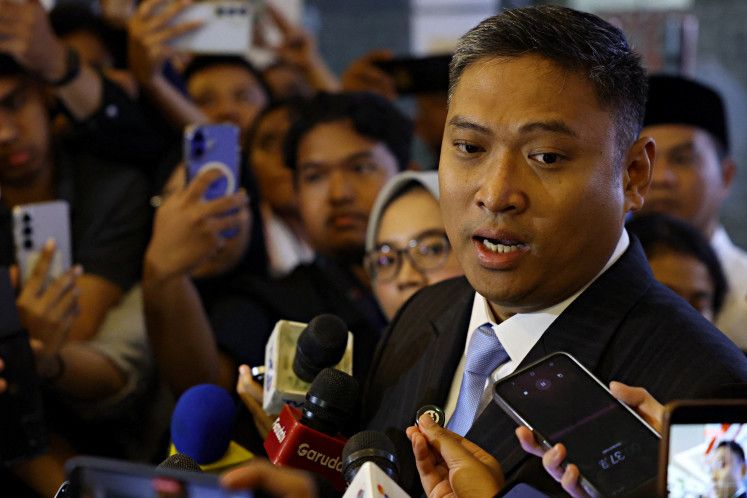
Within hours of accepting Nanik's resignation, Prabowo moved decisively to install Deputy Agriculture Minister Sudaryono as the new BGN chief. Sudaryono, a politician from Prabowo's Gerindra Party who previously served as a presidential aide during the 2010s, brings both political proximity to the president and reportedly substantial involvement in the programme's conceptual development. At his inauguration ceremony at the State Palace, Sudaryono pledged sweeping reforms aimed at establishing genuine transparency and eliminating opaque decision-making processes that have characterised the agency's recent operations.
The repeated leadership upheavals signal deeper institutional fractures within the BGN that transcend individual capability or health circumstances. State Secretary Prasetyo Hadi acknowledged these shortcomings, indicating that Prabowo had mandated comprehensive administrative restructuring at the agency following the corruption investigation's findings. The administration's acknowledgment of systemic failures represents a significant admission that the programme's rollout, despite its political importance as a presidential campaign cornerstone, lacks adequate technocratic foundations necessary for managing an operation of such scale and complexity.
Operational problems have plagued the free meals initiative since its launch in early 2025, extending well beyond governance and financial irregularities. Multiple mass poisoning incidents across Indonesian schools and communities have raised serious food safety concerns, prompting intense scrutiny over meal quality and kitchen hygiene standards. These health crises precipitated Nanik's decision to impose a temporary freeze on new kitchen facilities while initiating comprehensive reviews of approximately 28,000 existing operational kitchens nationwide, a move that inadvertently created secondary consequences as thousands of small entrepreneurs who had invested substantially in setting up facilities staged protests over the suspension.
The financial retrenchment now underway further illustrates the programme's trajectory from ambitious promise to constrained reality. The BGN announced Tuesday that its provisional 2026 budget had been reduced substantially to Rp229 trillion from the originally planned Rp268 trillion allocation. More dramatically, the agency has lowered its beneficiary targets significantly, reducing this year's goal to 62.7 million people from an initial ambitious target of 82.9 million recipients, including schoolchildren, toddlers and pregnant women. BGN deputy chief Agustina Arumsari explained that the administration would now prioritise service quality improvements rather than pursuing expanded coverage, effectively abandoning numerical expansion as a near-term objective.
These scaling-back decisions represent a strategic pivot reflecting hard lessons learned through operational difficulties. The original 2026 allocation of Rp335 trillion was clearly deemed unachievable given persistent implementation challenges, resource management complications and the reputational damage inflicted by health and safety incidents. By narrowing scope while promising enhanced standards, the administration tacitly acknowledges that the programme as originally envisioned exceeded institutional capacity to deliver effectively. This represents a substantial retreat from Prabowo's campaign messaging, which centred on the programme as evidence of his administration's commitment to comprehensive social welfare expansion.
Political analyst Wasisto Raharjo Jati offers crucial perspective on these recurring institutional failures, arguing that the free meals initiative exemplifies a broader governance challenge confronting the Prabowo administration. Despite its status as a flagship presidential initiative bearing his personal stamp, the programme has been driven predominantly by political ambition rather than rigorous technocratic preparation and planning. This distinction proves crucial in Malaysia's regional context, where social welfare programmes similarly attract political attention but require careful institutional design and implementation capacity to avoid similar crises.
For Malaysian observers, the Indonesian experience offers instructive lessons regarding ambitious welfare programmes. When political commitment to a flagship initiative overshadows careful administrative preparation, institutional capacity building and realistic timeline projections, the inevitable result involves operational failures, financial mismanagement and erosion of public confidence. The BGN's experience demonstrates that leadership competence, while necessary, cannot overcome fundamentally inadequate institutional infrastructure or unrealistic programme scope. The frequency of senior personnel changes signals not merely individual inadequacy but systemic dysfunction requiring far more extensive reformation than personnel adjustments can provide.
The appointment of Sudaryono, while representing an attempt to inject fresh political will and alleged programmatic expertise, carries inherent risks. His status as a Prabowo associate could potentially insulate him from critical accountability even if operational problems persist, a dynamic that may encourage prioritising political expediency over genuine institutional reform. The coming months will reveal whether his tenure represents genuine administrative transformation or merely cosmetic repositioning intended to deflect public criticism from the presidency while underlying governance failures persist uncorrected. The ultimate test involves whether the dramatically scaled-back programme, despite reduced ambitions, can finally achieve sustainable, safe and transparent operations that restore public confidence in this troubled initiative.

