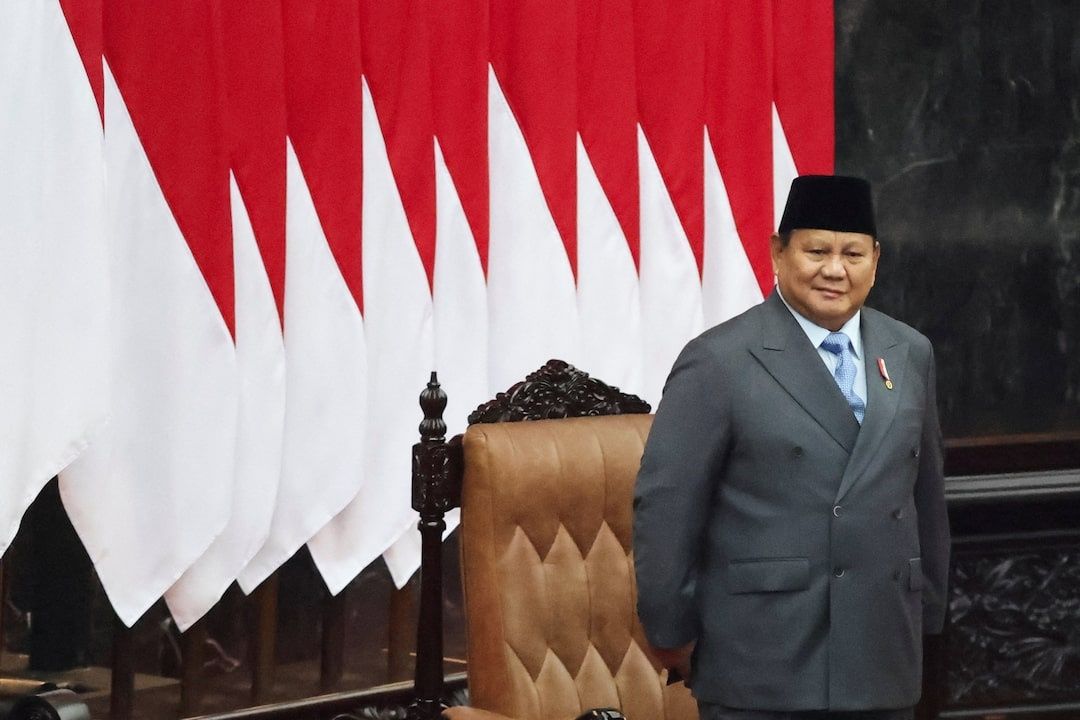
Indonesian President Prabowo Subianto faces a critical test of his economic credibility this week as he presents next year's budget proposals amid a deteriorating political landscape and growing wariness from the international investment community. The former military commander, who swept to power in October 2024 on a wave of electoral momentum, must now confront the harsh realities of governing an economy struggling with currency weakness, stock market underperformance, and mounting public discontent. His Friday presentation during Independence Day celebrations represents far more than routine budgetary procedure—it is a make-or-break moment that will signal whether his administration can deliver on the transformative economic promises that secured his election victory.
When Prabowo assumed office less than a year ago, he carried ambitious mandates from Indonesian voters. His campaign promised to eliminate corruption, accelerate economic growth from the sluggish 5 per cent to a buoyant 8 per cent, and implement a revolutionary free meals programme benefiting millions of schoolchildren nationwide. These pledges resonated particularly with lower-income Indonesians exhausted by stagnation and convinced that only a decisive leader could engineer wholesale change. Yet the intervening months have exposed the gap between campaign rhetoric and governmental reality, as multiple economic headwinds have buffeted his early tenure and undermined public confidence in his capacity to deliver.
The rupiah's consistent depreciation and the anaemic performance of Indonesia's stock exchange have compounded investor anxiety about the government's policy direction and fiscal management. Beyond these market indicators, serious questions have surfaced regarding government spending discipline and the autonomy of Bank Indonesia, the central bank, at a moment when monetary policy coordination is essential for stabilising the currency and controlling inflation. These structural concerns reflect deeper anxieties about whether Prabowo's administration possesses the institutional depth and technocratic capability to execute complex economic policies.
The free meals initiative, the administration's most visible and politically significant social programme, has suffered particularly acute setbacks. Budget allocations for the scheme have been slashed, while troubling allegations of mismanagement and implementation failures have circulated among civil society observers and opposition politicians. For a president who explicitly fashioned himself as a corruption-fighter capable of deploying military-style discipline to root out inefficiency, these stumbles deliver embarrassing blows to his core messaging and raise awkward questions about whether his promises exceed his administrative capacity.
The 2027 budget presentation will unfold across two separate forums, with Prabowo delivering a broader policy address in the morning focused on national priorities and Independence Day themes, followed by the formal budget presentation in the afternoon. This format provides the president with opportunity to frame fiscal matters within a larger narrative about Indonesia's direction, yet it also multiplies the platforms where he must convince sceptics. Economists and investors will scrutinise both addresses for evidence that the administration recognises economic reality and is prepared to make difficult trade-offs between competing priorities.
Irman Faiz, an economist at Bank Danamon, emphasised that this budget moment carries exceptional weight for international investors assessing Indonesian policy stability. He noted that after two consecutive years of market-jolting policy surprises, the global investment community has lost patience with uncertainty and now demands clearer signals about the government's economic philosophy. Indonesia's fiscal deficit, currently tracking at approximately 2.8 per cent of GDP, threatens to breach the constitutional ceiling of 3 per cent again this year, leaving limited room for further spending expansion without triggering constitutional alarm bells. This constraint will force difficult choices about programme priorities and revenue measures.
The most volatile issue dominating investor conversations concerns Prabowo's May announcement about centralising control of critical natural resource exports through a new state entity, Danantara Sumberdaya Indonesia. This proposal initially suggested comprehensive government control over commodity flows, alarming traders and producers of palm oil, minerals, and other strategic resources who feared state-directed export quotas would restrict supply and fragment their supply chains. Since that announcement, administration officials have murmured reassurances that Danantara Sumberdaya Indonesia would function primarily as a supervisory body rather than an operational monopoly, yet ambiguity persists about the entity's actual mandate and enforcement powers.
Yose Rizal Damuri, executive director of the Center for Strategic and International Studies think tank, has identified the clarification of Danantara Sumberdaya Indonesia's role as a paramount concern for investors preparing their Indonesia strategies. International commodities traders, particularly those involved in the palm oil supply chains critical to Southeast Asian and global food security, will listen intently for any additional details that illuminate how this state body will interact with existing export procedures and private sector operators. The opacity surrounding this policy continues to depress confidence and raises risk premiums for Indonesian investments.
Prabowo's political standing has deteriorated precipitously over recent months, with approval ratings collapsing from a stratospheric level to 51 per cent—a stunning 30-percentage-point decline registered in a single eight-month period. Polling analysts attributed this erosion primarily to widening frustration with economic conditions and mounting criticism of law enforcement practices, suggesting that Indonesians are increasingly disillusioned with his signature governance themes. This approval slide reduces his political capital for implementing unpopular fiscal measures or contentious reforms that international creditors might demand as prerequisites for stable financing.
Arya Fernandes, head of politics and social change at CSIS, observed that Prabowo confronts an extraordinarily delicate political equation. He must simultaneously convince domestic audiences that his government understands their economic anxieties while reassuring international investors and multilateral institutions that Indonesia remains a stable investment destination. He must also address deepening public scepticism about the impact of his priority programmes, particularly given the troubled rollout of the free meals initiative. Fernandes acknowledged that reconciling these competing demands represents an extraordinarily challenging governance task, especially given the deteriorating economic fundamentals that constrain policy options.
For Malaysia and other Southeast Asian economies, Indonesia's budgetary and policy direction carries significant implications. As the region's largest economy and a critical node in global commodity supply chains, Indonesian policy uncertainty creates spillover effects for regional currencies, investment flows, and supply chain stability. Malaysian exporters and investors with exposure to Indonesian commodities sectors face heightened uncertainty about regulatory frameworks and market access. The regional implications of Prabowo's budget presentation thus extend far beyond Jakarta's policy corridors, affecting investment calculations across Southeast Asia.
The fundamental question animating Friday's budget presentation is whether Prabowo's administration can arrest the credibility slide and demonstrate that it possesses both the will and capability to implement disciplined fiscal policy while maintaining the economic growth trajectory necessary to satisfy its electoral constituencies. His answer will reverberate through financial markets and shape investor decisions about Indonesia's investment attractiveness for years ahead.

