President Prabowo Subianto is undertaking a strategic reassessment of two centrepiece initiatives that have become increasingly controversial since his administration came to power, suggesting the government may substantially reshape how these costly programmes are implemented and delivered to beneficiaries. The move comes as both schemes face intensifying public pressure, allegations of mismanagement, and logistical challenges that have undermined their credibility in the eyes of Indonesian citizens and international observers.
During an intensive four-hour closed-door session at the Presidential Palace on Wednesday involving multiple cabinet ministers responsible for programme oversight, Prabowo signalled his intention to conduct fundamental reviews that could alter the trajectory of both initiatives. The National Nutrition Agency, tasked with administering the free meals scheme, received explicit presidential instructions to evaluate every aspect of current implementation within a strict one-month timeframe. Senior agency official Agustina Arumsari characterised the presidential directive as emphasising thoroughness and fairness, explicitly rejecting any rush toward hasty modifications that might create new problems rather than solving existing ones.
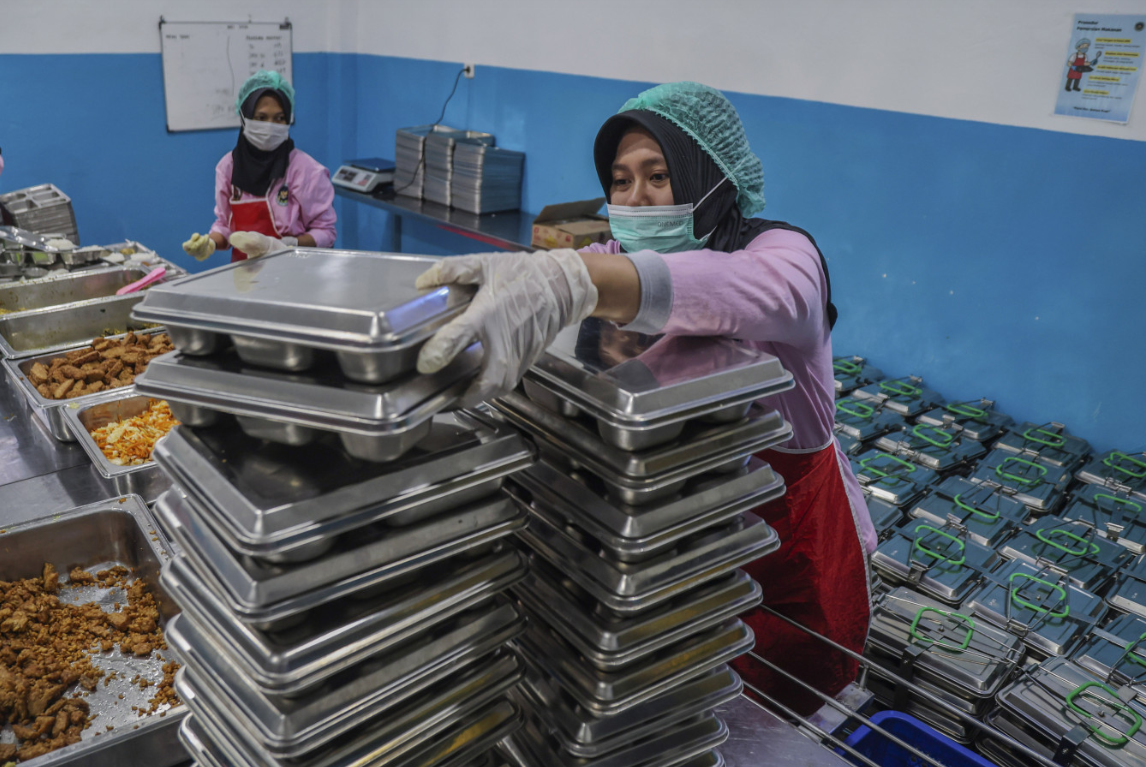
The free nutritious meal programme represents one of the administration's most ambitious social welfare undertakings, with a budgetary commitment reaching at least Rp 268 trillion in 2026—equivalent to approximately US$19.5 billion. The initiative targets approximately 83 million people across Indonesia, encompassing schoolchildren, pregnant women, and other vulnerable populations, operating within a broader national strategy to combat malnutrition and childhood stunting, which remain significant public health challenges throughout the archipelago. Yet despite its noble intentions and substantial financial commitment, the programme has increasingly become a test of presidential governance and administrative competence.
A central focus of the ongoing review involves reassessing who qualifies for assistance, with government officials considering whether higher-income households should be excluded from beneficiary rolls. This represents a crucial policy inflection point, shifting from a universal model toward means-tested targeting. However, implementation presents genuine complexities, particularly in mixed-income school environments where some students would receive free meals while classmates do not. Agustina acknowledged this psychological and social dimension explicitly, noting that the government must carefully consider the emotional and peer-relationship implications before implementing any changes that could create visible distinctions between students based on economic status.
Beyond eligibility criteria, officials are examining alternative delivery mechanisms that could enhance efficiency and reduce costs. One particularly promising avenue involves utilising existing school canteen infrastructure rather than maintaining separate dedicated meal preparation facilities. This shift toward decentralisation and school-based delivery could represent a less resource-intensive approach while potentially improving food quality control and local adaptation to regional dietary preferences. The underlying philosophy appears to be moving away from centralised, uniform service provision toward more flexible, community-responsive models.
The pressure forcing this reassessment stems from multiple converging challenges that have significantly damaged public confidence. Large-scale street protests erupted last month specifically calling for the scheme's suspension. Documented cases of food poisoning have raised serious food safety concerns. Most damaging perhaps has been a sprawling corruption investigation involving senior officials from both the National Police and the Indonesian Military, undermining claims that the programme represents clean, efficient governance. These scandals have transformed what should have been a straightforward public welfare initiative into a political liability requiring urgent remedial action.
The review signifies potential movement toward more sophisticated policy design, recognising that universalist approaches, while conceptually appealing, often prove administratively cumbersome and fiscally unsustainable in developing country contexts. By embracing means-testing and flexibility in delivery mechanisms, the government could theoretically reach its most vulnerable populations more effectively while reducing wasteful spending on those capable of self-provision. Whether implementation can match these aspirations remains uncertain given demonstrated administrative challenges.
Parallel to the meals programme reassessment, Coordinating Food Minister Zulhas Hasan announced an expansion of the Red and White cooperative initiative, which has similarly attracted severe criticism. The government plans to establish these cooperatives as primary distribution channels for various assistance schemes and subsidised goods, simultaneously tasking them with purchasing agricultural commodities when market prices dip below government-determined levels. In theory, this dual role supports both rural economies and household welfare. However, the programme has generated profound controversy following mandatory military-style training for cooperative managers that resulted in at least four fatalities, prompting serious questions about oversight, accountability, and whether such institutional arrangements warrant continuation in their current form.
The converging crises affecting both flagship programmes highlight recurring implementation challenges within Indonesian governance, where ambitious policy design frequently encounters execution difficulties rooted in corruption, bureaucratic inefficiency, and inadequate safety protocols. For regional observers, particularly those in neighbouring Southeast Asian nations grappling with similar poverty and malnutrition challenges, Indonesia's experience offers cautionary lessons about programme scale, institutional capacity, and the necessity of robust monitoring mechanisms before expanding welfare commitments. Malaysian policymakers, cognisant of their own budget constraints, may find Indonesia's struggles instructive when evaluating comparable subsidy and nutrition schemes.
Prabowo's decision to order fundamental reviews rather than defend the programmes suggests political pragmatism, recognising that these initiatives have become liabilities threatening broader policy agendas and governmental legitimacy. The one-month deadline for the meals programme assessment indicates urgency, implying the administration expects visible changes relatively quickly. Success in reformulating these programmes while maintaining their pro-poor intent could demonstrate administrative learning and adaptability. Conversely, if reviews produce only cosmetic adjustments while systemic problems persist, public scepticism will likely deepen, potentially constraining support for future welfare expansion initiatives across Indonesia's archipelago.

