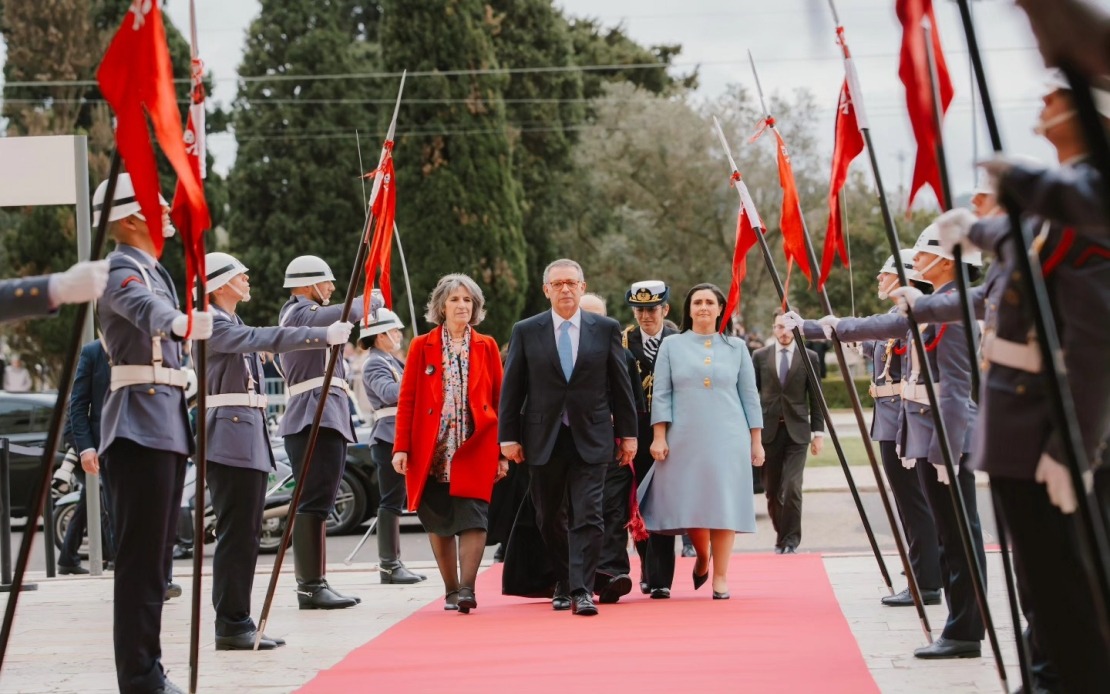
Portugal has formally prohibited face coverings in public spaces, with President Antonio Jose Seguro signing the controversial legislation on Tuesday. The law, originally championed by the right-wing Chega party, follows parliamentary amendments that ultimately persuaded the nation's leader to endorse the measure. According to a statement from Belem Palace, Lisbon's presidential headquarters, Seguro characterised the issue as one carrying substantial "social and cultural sensitivity" for Portuguese society.
The presidential rationale centres on several interrelated arguments about social cohesion and identity. Seguro framed an uncovered face as fundamental to Portuguese society's functioning, arguing that daily social interaction depends on mutual recognition and direct relationship-building between individuals. This reasoning extends to gender equality concerns, with the government contending that requiring only women to conceal their faces contradicts principles of equal dignity and parity that underpin European democracies. The statement emphasised that such asymmetry runs counter to the foundational values shaping modern European governance structures.
The government's position draws intellectual support from European Court of Human Rights precedents concerning face coverings. Officials argued that within free societies like Portugal, individuals should exercise autonomy in living according to their identity and beliefs, provided they operate within broader communal frameworks that establish shared civic experiences. This formulation attempts to balance individual liberty with collective social requirements, a tension that courts across Europe have grappled with repeatedly in recent years.
However, human rights organisations immediately challenged the law's legitimacy. Amnesty International Portugal denounced the legislation as discriminatory and fundamentally incompatible with protecting vulnerable populations. The group specifically warned that the ban threatens Muslim women who voluntarily choose facial covering as an expression of religious conviction and personal identity. This critique highlights the uncomfortable reality that prohibitive legislation often disproportionately affects religious and ethnic minorities despite ostensible neutrality in legislative language.
Portugal's action places it within a broader European movement toward restricting religious and cultural expressions. France implemented comprehensive restrictions on face coverings over a decade ago, establishing a template that numerous countries subsequently adopted. Belgium, Austria, Denmark, and the Netherlands have all introduced full or partial prohibitions, creating a patchwork of increasingly restrictive policies across the continent. This convergence reflects growing political salience of integration debates and the rise of anti-immigration sentiment in European politics, phenomena that resonate beyond Europe's borders.
The timing and political origins of Portugal's legislation warrant careful examination. The Chega party's central role in proposing this measure aligns with the party's broader nativist platform and opposition to immigration. By originating from a right-wing political faction, the law carries implicit messaging about national identity and belonging that extends beyond its literal provisions. The subsequent parliamentary process introduced modifications sufficient to win presidential approval, suggesting broader political consensus emerged around the principle, even if specific implementations generated debate.
For Southeast Asian observers, Portugal's action illustrates how Western democracies increasingly legislate cultural and religious expression, often framing such measures as defending secular governance values. Malaysia, with its Muslim-majority population and constitutional protections for Islamic practice, operates from fundamentally different premises regarding the relationship between state authority and religious freedom. The Portuguese example demonstrates how concepts like social integration and national security—claims also advanced in various contexts globally—can justify restrictions on religious observance.
The legal and philosophical questions raised by such prohibitions remain contested internationally. Supporters contend that visible identification promotes trust and security in public life, particularly in contexts of heightened security concerns. Critics counter that blanket restrictions on religious attire disproportionately burden women and minorities while failing to address underlying security challenges through targeted mechanisms. This debate echoes similar discussions occurring in various democracies regarding the appropriate boundaries between collective security interests and individual freedom of conscience and expression.
The practical enforcement of Portugal's law will reveal whether it genuinely improves social cohesion or simply marginalises certain communities through legal punishment. Early evidence from other European jurisdictions suggests such bans often generate resentment among affected populations rather than facilitating integration. Women who previously wore face coverings sometimes respond by avoiding public spaces altogether, paradoxically reducing social participation. Such outcomes raise questions about whether prohibition effectively achieves stated policy objectives or merely displaces the underlying issues to different contexts.
Portugal's legislation also intersects with broader European discussions about identity and immigration. Political movements across the continent have successfully mobilised constituencies anxious about demographic and cultural change, translating these anxieties into restrictive policies. The Portuguese case exemplifies how mainstream political institutions increasingly accommodate demands from anti-immigration parties, gradually normalising policies that previously seemed extreme. This dynamic operates differently across European nations based on specific political configurations and historical contexts.
The international human rights implications deserve emphasis, particularly for countries with significant religious diversity. When established democracies implement restrictions on religious expression under the rubric of social integration and security, they establish precedents that authoritarian regimes exploit to justify their own suppressive policies. Malaysia and other Southeast Asian nations with Muslim populations observe how Western governments handle similar questions, with potential implications for regional standards regarding religious freedom and minority protection.

