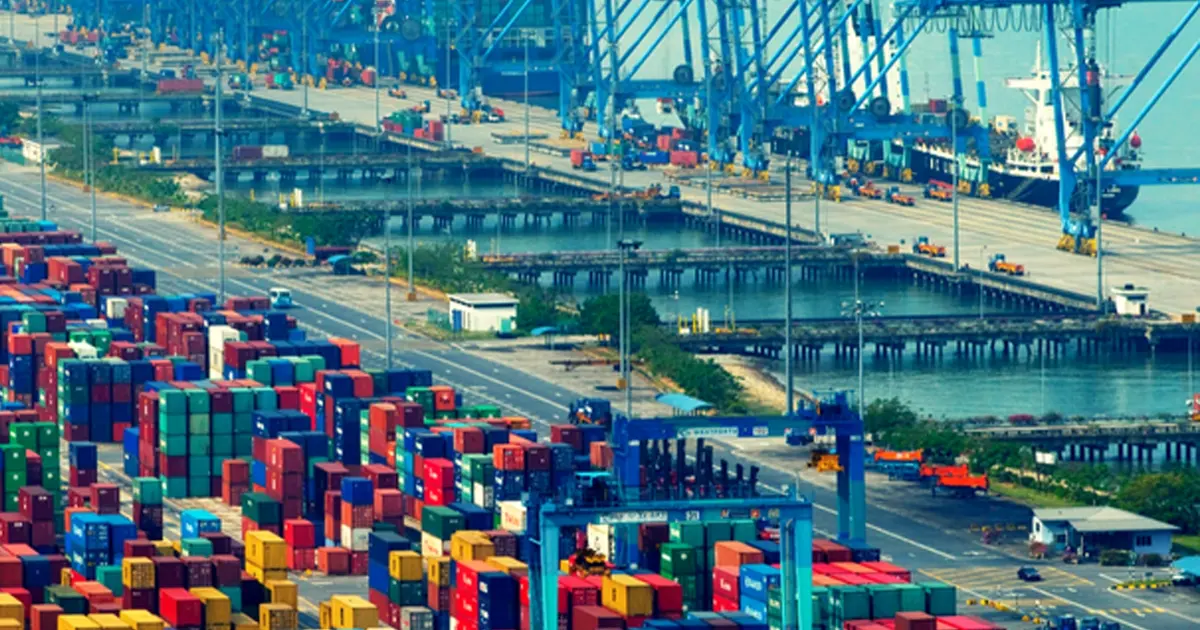
The Port Klang Free Zone (PKFZ) has generated RM108 million in revenue during the past 18 months, demonstrating the port's resurgence as a key economic engine for Malaysia. Transport Minister Loke Siew Fook highlighted these figures as evidence that sustained efforts to revitalise the facility are bearing tangible results, with reactivation work now approaching completion at 86 per cent. This recovery comes after years of underperformance, and the momentum signals a broader turnaround for one of Southeast Asia's busiest trading hubs.
The Port Klang Free Zone, located in Malaysia's premier shipping gateway, has long served as a critical logistics and transhipment facility. However, operational challenges and capacity constraints had previously hampered its competitiveness. The current reactivation programme represents a concerted push to modernise infrastructure, streamline cargo handling, and attract new tenants and investors. Minister Loke's remarks underscore the government's commitment to positioning PKFZ as a competitive alternative within the region's crowded port landscape, where neighbouring facilities in Singapore, Thailand, and Indonesia vie for similar regional trade flows.
The RM108 million revenue figure represents cumulative income across the reactivation period and reflects growing utilisation of the zone's facilities. This growth trajectory is significant when contextualised against the global supply chain disruptions and shipping volatility that have characterised the post-pandemic period. Despite external headwinds, PKFZ has managed to capture increased cargo volumes and attract business from companies seeking to diversify their logistics footprint away from congested competitors. The revenue growth also reflects value-added services being deployed within the zone, including warehousing, packaging, and light manufacturing activities that enhance the facility's appeal to regional traders.
Reaching 86 per cent reactivation completion indicates that most infrastructure rehabilitation and tenant recommissioning efforts are nearing conclusion. This milestone suggests that physical facilities, from berths to storage areas to office spaces, have been rehabilitated to operational standards. The remaining 14 per cent of work likely encompasses final-stage improvements, final tenant fitouts, or advanced digital infrastructure integration. This near-completion status is crucial for Malaysia's broader port sector, as PKFZ's full operationalisation will increase Port Klang's overall handling capacity and efficiency, strengthening its position as a transhipment hub for East-West trade flows.
The implications for Malaysian businesses are substantial. Improved PKFZ operations translate to lower logistics costs, faster cargo clearance, and reduced supply chain friction for importers and exporters. Companies utilising the free zone benefit from preferential tax treatment, extended storage periods without duty obligations, and flexible warehousing arrangements. For manufacturing and trading enterprises based in Malaysia and the region, a fully operational PKFZ represents expanded opportunities to integrate regional supply chains more efficiently. The facility's recovery also creates employment across port operations, logistics, customs clearance, and ancillary services.
From a broader Southeast Asian perspective, PKFZ's reactivation carries strategic weight. The facility complements Malaysia's position within the region's shipping infrastructure hierarchy and supports Malaysia's aspirations as a regional logistics hub. With Singapore's port capacity under increasing pressure and given growing protectionist shipping policies across the region, PKFZ offers Malaysian traders and regional companies a geopolitically neutral, competitively priced alternative. The zone's success enhances Malaysia's value proposition in competitive bidding for regional trade and investment flows.
Minister Loke's public emphasis on steady, encouraging growth reflects the government's broader transport sector agenda. Beyond PKFZ, the ministry oversees port development, rail connectivity, and maritime infrastructure across Malaysia. The PKFZ reactivation must be understood as part of a larger push to integrate Malaysia's logistics infrastructure, from inland ports to coastal terminals to digital platforms. Improved PKFZ performance synergises with ongoing upgrades to Port Klang's container and general cargo terminals, creating a cohesive, efficient maritime ecosystem.
The revenue growth and reactivation progress also signal investor confidence in Malaysia's logistics sector. Private stakeholders operating within PKFZ, from shipping lines to logistics providers to freight forwarders, have committed capital and operational resources to the facility's recovery. This confidence reflects broader perceptions that Malaysia remains an attractive market for trade and logistics investment, notwithstanding regional competition and evolving geopolitical dynamics. Positive sentiment among private operators supports the government's ability to attract further public-private partnerships and capital investment in transport infrastructure.
Looking forward, the critical challenge lies in translating reactivation progress into sustained operational excellence and market share growth. Completion of the remaining 14 per cent of reactivation work must be expedited to unlock PKFZ's full potential. Beyond physical infrastructure, the facility requires continuous investment in digital systems, cyber security, and skills development for its workforce. Port operators and government agencies must also remain responsive to evolving maritime trade patterns, emerging cargo types, and shifting logistics preferences among multinational enterprises operating across Southeast Asia. The next phase of PKFZ's development will determine whether its recovery becomes a durable competitive advantage or merely a temporary upswing in utilisation.
The Port Klang Free Zone's financial recovery and infrastructure revitalisation represent welcome progress for Malaysia's maritime sector. As reactivation nears completion and revenue streams solidify, stakeholders across the logistics and trade ecosystem will watch closely to see whether PKFZ can sustain growth momentum and deepen its role as a regional transhipment and value-added services hub.

