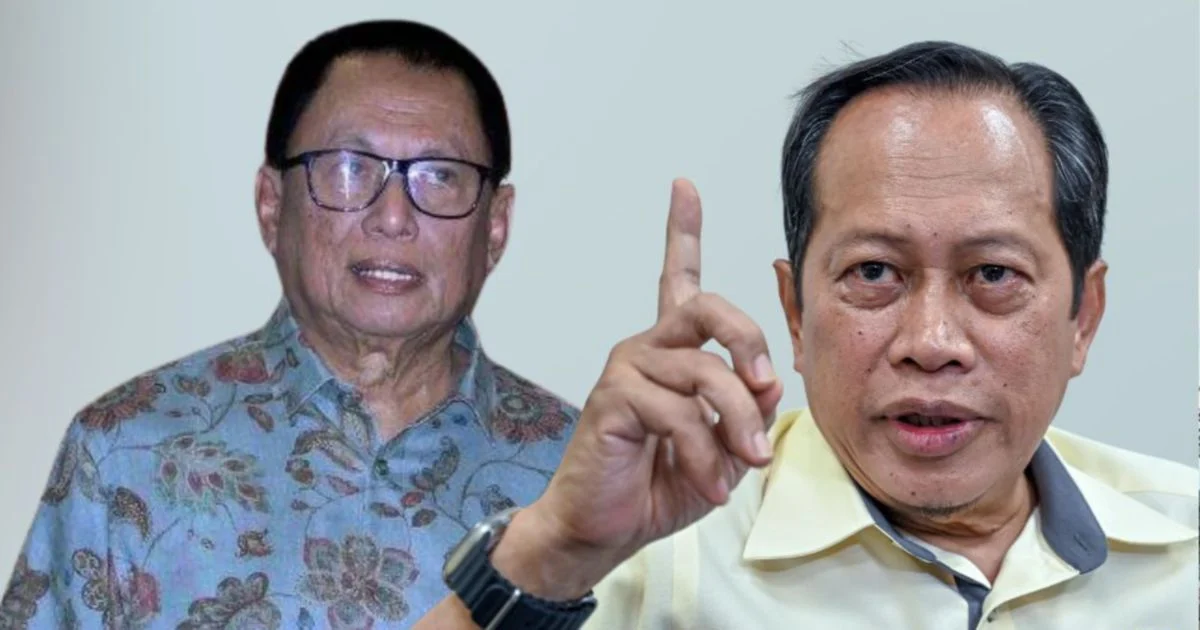
Johor's UMNO establishment sent a clear message about expectations for the party's younger cadres this week, with deputy chairman Datuk Seri Ahmad Maslan cautioning that political advancement cannot be rushed or manufactured through expedient means. Speaking in Johor Baru, he laid out a sobering vision of what aspiring leaders within Malaysia's longest-serving ruling party must expect: a protracted process of apprenticeship where experience accumulates gradually and commitment must remain unwavering through inevitable setbacks and periods of obscurity.
The remarks carry particular weight given the ongoing tension within UMNO between its veteran power structures and impatient younger members seeking rapid advancement. Ahmad Maslan's intervention suggests the party's hierarchy is concerned about unrealistic expectations among rank-and-file members who may believe that winning internal votes or securing patronage networks can substitute for the grinding work of building genuine political credibility. His framing of politics as a marathon rather than a sprint speaks to a fundamental principle that appears increasingly under pressure in modern politics, where social media amplifies the rise of new figures and public attention spans have contracted dramatically.
The timing of these remarks aligns with broader discussions within UMNO about succession planning and the integration of younger members into decision-making structures. Malaysia's political landscape has become notably more volatile over the past five years, with rapid shifts in coalitions, unexpected electoral results, and generational tensions within all major parties. For UMNO specifically, which has seen its dominance eroded and its internal cohesion tested, questions about how effectively the party can develop new talent while maintaining stability have become increasingly urgent. Ahmad Maslan's comments suggest that at least sections of the party leadership remain convinced that traditional methods of grooming leaders—based on patient accumulation of experience and proved reliability—remain valid.
The emphasis on "time, experience and commitment" also hints at concerns within UMNO about members who may view party candidacy as a transactional opportunity rather than a responsibility to constituents. In Malaysian politics, the gap between how candidates are selected and how they subsequently perform often depends heavily on the depth of their grounding in local community issues and their understanding of governance complexities. Ahmad Maslan appears to be arguing that shortcuts in this process inevitably produce leaders who are less effective and less resilient when facing electoral challenges or policy difficulties.
Within the Malaysian political context, where state and federal politics operate in parallel and party assignments to electoral seats have profound implications for members' careers and financial security, the competition for advantageous positions has become intense. In Johor particularly, where UMNO retains strong grassroots presence despite national setbacks, such positioning has high stakes. Ahmad Maslan's intervention serves as a reminder to the party rank-and-file that the selection process for candidates and leaders should not be hastened simply to satisfy ambitious individuals or to create the appearance of renewal.
The broader message also reflects generational anxieties within UMNO about maintaining party discipline and respecting hierarchical decision-making at a time when party structures face mounting pressure from competing political movements. Pakatan Harapan's continued relevance, despite its 2023 setback, and the emergence of newer parties like MUDA and Perikatan Nasional have fragmented Malaysia's political landscape in ways that demand more efficient and responsive party management. Yet Ahmad Maslan's framing suggests that at least some senior figures believe that moving too quickly toward untested leaders would be counterproductive—creating instability rather than vitality.
The implicit audience for his remarks extends beyond UMNO to encompass observers watching how Malaysia's ruling coalition manages its internal evolution. Questions about whether established parties can successfully renew themselves while preserving their institutional strengths remain unresolved across Southeast Asia's political landscape. Thailand, Indonesia, and the Philippines have all grappled with similar questions, often with mixed results when either the old guard moves too slowly or attempts reform too rapidly without adequate foundations.
For Malaysian political analysts, Ahmad Maslan's comments invite reflection on whether the traditional model of political apprenticeship remains viable in an era of rapid information flows and changed voter expectations. Younger voters in particular have shown less patience with the formulaic progression of candidates through party hierarchies, yet Ahmad Maslan's argument suggests that cutting corners ultimately produces less capable leaders. This tension between modernisation pressures and the genuine value of accumulated experience represents one of the most consequential questions Malaysian political parties face over the coming decade.
The comments also subtly address questions about meritocracy within UMNO, suggesting that advancement based on genuine capability and proven commitment should supersede advancement based purely on factional loyalty or personal connections. Whether the party's structures can actually enforce such standards, however, remains to be seen given the notoriously fluid nature of internal factionalism within UMNO. Ahmad Maslan's statement should thus be read partly as an aspiration about how the party should function rather than a definitive account of how it actually operates.
Moving forward, how UMNO's leadership actually allocates candidate positions and advancement opportunities in the next electoral cycle will indicate whether senior figures like Ahmad Maslan genuinely believe in the patience-based model they advocate. The gap between stated principles and actual practice in Malaysian politics has historically been substantial, and the coming months will test whether UMNO's hierarchy can maintain consistency between its public messaging about leadership development and its concrete decisions about who gets elevated to visible positions.

