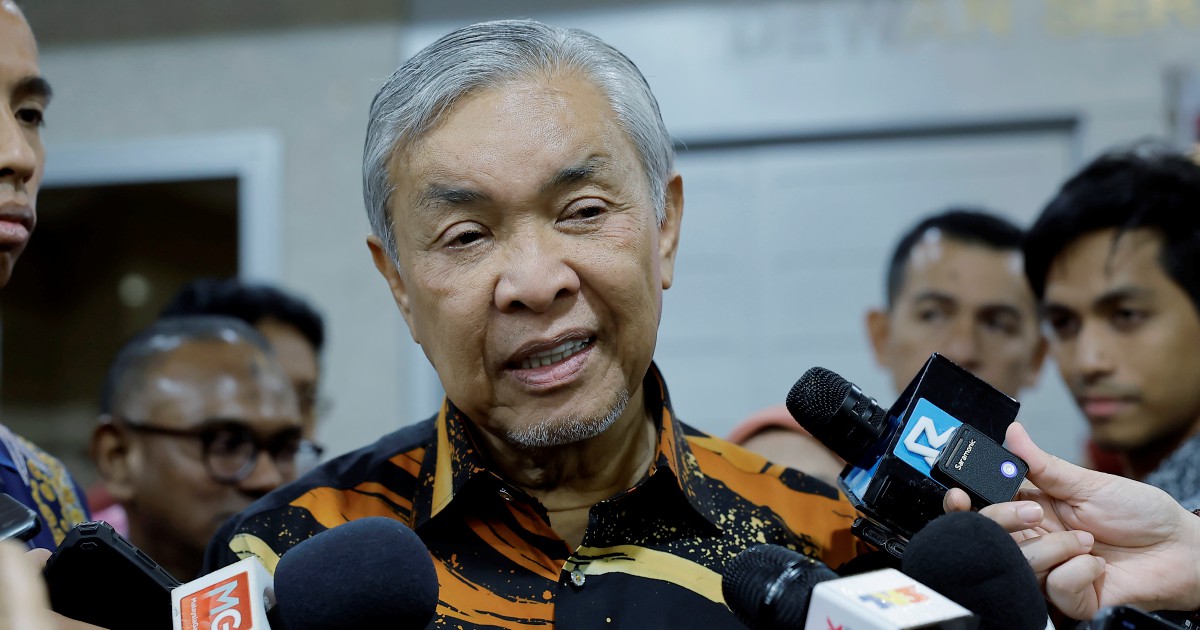
Barisan Nasional chairman Datuk Seri Dr Ahmad Zahid Hamidi has firmly rejected accusations that external forces influenced the selection process for Negri Sembilan's Menteri Besar, characterising such concerns as misguided commentary from those unfamiliar with how political systems actually operate.
The remarks represent a significant pushback against persistent questions surrounding the legitimacy and procedural integrity of the appointment, which has drawn scrutiny from various political quarters. Zahid's defence pivots away from procedural justifications toward a more fundamental argument about the inevitability of political compromise and the necessity of pragmatic decision-making in coalition government.
The appointment of a Menteri Besar in any Malaysian state carries symbolic weight beyond the individual selection, particularly in Negri Sembilan, a traditionally crucial swing state that has alternated between ruling coalitions. The mechanism for selecting a Menteri Besar typically involves consultation between state rulers and political leadership, making it inherently a process where multiple power centres must negotiate consensus. Zahid's framing suggests that those questioning the appointment fail to account for these institutional complexities and the legitimate role of negotiation among stakeholders.
Criticism of the appointment had centred on whether the selection truly reflected the democratic preferences of elected representatives or whether backroom dealings had determined the outcome. Such concerns are not unique to Malaysia—they reflect broader anxiety across democratic systems about the gap between electoral mandates and actual executive decision-making, particularly within coalition governments where bargaining power can overshadow popularity or performance metrics.
Zahid's assertion that detractors misunderstand "political realities" implicitly acknowledges that the appointment process involved considerations beyond procedural transparency or individual merit. In multi-party coalitions like Barisan Nasional, securing agreement often requires trading favours, honouring historical power-sharing arrangements, and balancing competing interests among member parties. The Negri Sembilan appointment likely reflected this complex calculus, where various BN parties negotiated their respective positions and influence.
For Malaysian readers, particularly those in Negri Sembilan, the distinction matters considerably. A Menteri Besar who arrives at office through consensus-building across multiple power brokers may lack an independent mandate but gains legitimacy from coalition stability. Conversely, one who appears imposed through external pressure faces governance challenges, as their legislative support becomes contingent rather than organic. Zahid's defence essentially argues that while the process may not satisfy procedural purists, it produces stable government—the ultimate political reality that matters.
The statement also reflects broader patterns in Malaysian coalition politics. Barisan Nasional, despite containing multiple member parties with divergent interests, has maintained cohesion partly through careful management of appointments and resource distribution. The federal government's appointment decisions in states significantly influence how federal funding and development allocations flow, creating incentives for alignment. Questioning these dynamics, Zahid suggests, amounts to naiveté about how political systems sustain themselves operationally.
However, the vigour of Zahid's dismissal itself indicates that the criticism carried enough weight to warrant response. When political leaders address allegations directly—even to dismiss them—it signals the criticism has gained traction among significant constituencies. The tone of his remarks, characterising questioners as ignorant rather than dishonest, suggests an attempt to reframe the debate from ethics to epistemology: the problem is not what was done, but that critics lack the sophistication to understand why it was necessary.
This approach carries risks. In an era of heightened political consciousness and social media scrutiny, claims that critics simply lack understanding can appear condescending or evasive. Voters increasingly demand not just functional government but also procedural legitimacy and transparency. The argument that political complexity justifies opaque decision-making may resonate with political insiders but potentially alienates younger voters and those who prioritise institutional reform.
For Southeast Asia more broadly, the episode illuminates persistent tensions between formal democratic procedures and informal power dynamics in Westminster-influenced systems operating within hierarchical social contexts. Malaysia's constitutional monarchy and federal structure create multiple veto points where power can be exercised outside public view. Defending such systems requires either transparent justification or the kind of assertion Zahid offered: that those seeking such justification simply do not grasp how politics actually functions.
The Negri Sembilan appointment, whether procedurally sound or politically expedient, will likely influence how Zahid manages future coalition challenges. If the selected Menteri Besar governs effectively and maintains legislative support, Zahid's argument that results matter more than process gains credibility. If governance struggles or the appointment subsequently unravels, his dismissal of procedural concerns will appear prescient in reverse—a warning that disregarding legitimacy produces instability.
Ultimately, Zahid's defence crystallises a fundamental choice facing Malaysian politics: whether to prioritise operational stability through flexible informal arrangements or to invest in strengthening formal procedures and transparency to rebuild institutional trust. His comment suggests the coalition leadership presently favours the former, betting that governance outcomes will ultimately vindicate shortcuts in process.

