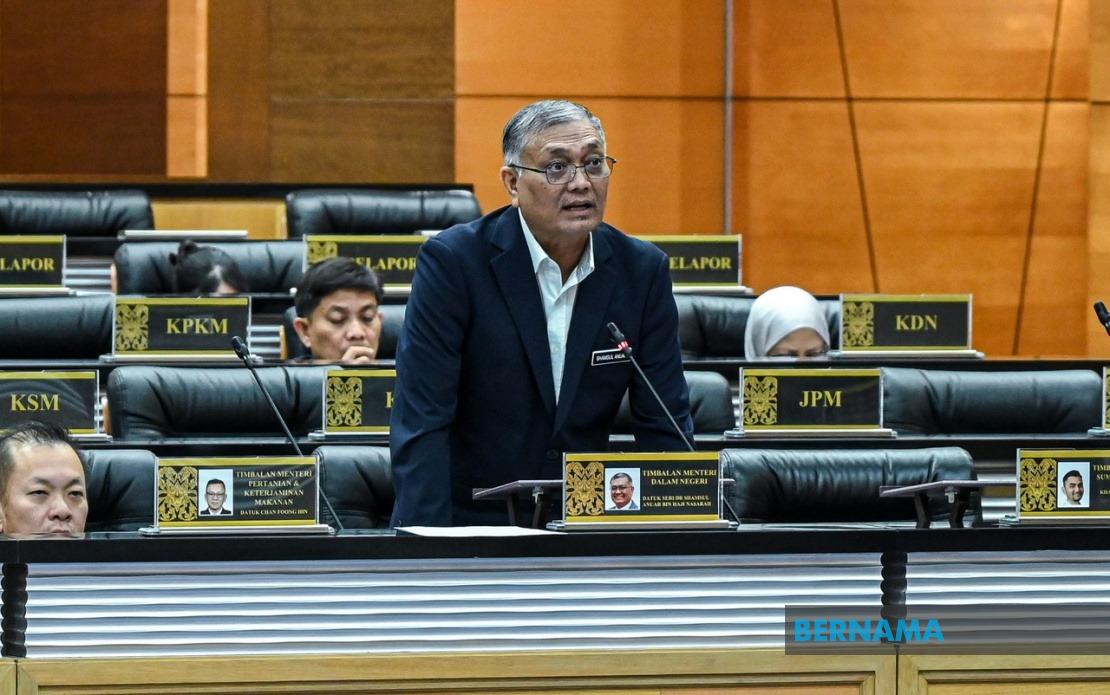
Deputy Home Minister Datuk Seri Dr Shamsul Anuar Nasarah has insisted that the Royal Malaysia Police (PDRM) maintain impartiality when handling sensitive investigations, assuring lawmakers that no individual—regardless of their position or political connections—receives preferential treatment or protection during high-profile inquiries. Speaking in Parliament during the Dewan Rakyat Special Chamber session on July 15, Shamsul Anuar underscored the institution's commitment to conducting investigations with professionalism, transparency, and fairness as fundamental operational principles that guide all police work across the country.
The deputy minister's statement came as a response to parliamentary questions from Datuk Wan Saifulruddin Wan Jan of Tasek Gelugor (PN), who sought updates on several high-profile cases currently under police scrutiny. Among these is the persistent investigation into an intimate video recording that circulated widely on social media in 2019 and was subsequently linked to a former Cabinet-level official. Shamsul Anuar disclosed that police efforts remain focused on locating the original recording as well as identifying and securing all electronic devices and equipment that may have been involved in the distribution of the material.
The investigation into the 2019 video incident operates under multiple legal frameworks, reflecting the seriousness with which authorities are treating the matter. Charges or inquiries could potentially involve Section 292 of the Penal Code, which addresses obscene materials; Section 377B, which pertains to consensual sexual conduct provisions; and Section 504, which covers intentional insult with intent to provoke breach of the peace. Additionally, authorities are examining potential violations under Section 233 of the Communications and Multimedia Act 1998, which prohibits the transmission of obscene or indecent content via electronic networks. This multi-pronged legal approach suggests that the investigation is comprehensive and addresses both the creation and distribution channels of the disputed material.
Parallel to the video investigation, Shamsul Anuar addressed a separate matter involving the son-in-law of former Prime Minister Tan Sri Muhyiddin Yassin, which has attracted considerable public attention given the familial connection to a recent leader. He confirmed that this particular case falls within the investigative jurisdiction of the Malaysian Anti-Corruption Commission (MACC) rather than the police force, and that the anti-corruption body has already proceeded to issue an arrest warrant against the individual concerned. The Deputy Home Minister declined to elaborate further on the specifics, citing the ongoing nature of the MACC inquiry and the necessity to preserve the integrity of that separate investigation.
The reaffirmation of police impartiality carries particular significance in the Malaysian political context, where public confidence in investigative institutions has periodically come under scrutiny, particularly when cases involve politically connected individuals. By explicitly stating that rank, position, and political affiliation do not influence the police's investigative approach, Shamsul Anuar attempted to address lingering concerns about potential bias in high-profile inquiries. This transparency, at least in principle, represents an effort to reinforce the notion that the rule of law operates uniformly across all levels of Malaysian society.
Beyond domestic investigations, Shamsul Anuar also addressed the question of international extradition arrangements, an increasingly important mechanism as transnational crime and corruption become more prevalent. He outlined that Malaysia's extradition procedures are governed by the Extradition Act 1992 and are conditional upon bilateral treaties or multilateral agreements with other nations. Currently, Malaysia maintains formal extradition treaties with eleven countries, providing legal pathways for the pursuit and return of fugitives across borders.
Moreover, Malaysia has become a signatory to the ASEAN Extradition Treaty, which facilitates cooperation among Southeast Asian member states in addressing transnational crime and corruption. This regional framework reflects the broader recognition among ASEAN nations that coordinated enforcement mechanisms are essential for combating crimes that transcend national boundaries. Shamsul Anuar indicated that the government remains proactive and willing to engage foreign governments in negotiations aimed at expanding the network of extradition agreements, thereby strengthening Malaysia's capacity to pursue suspects internationally and enhance regional security cooperation.
The deputy minister's remarks underscore a broader commitment to institutional independence and adherence to due process, principles that assume heightened importance in emerging democracies and developing nations where questions about the politicization of law enforcement agencies periodically surface. By emphasizing that investigations proceed according to established legal procedures without regard to external political pressure or the social standing of those under investigation, Malaysian authorities signal their intention to uphold constitutional values and international standards of impartial justice.
For regional observers and the Malaysian public, these assurances carry implications beyond the immediate cases under discussion. They reflect an attempt to demonstrate that while Malaysia's law enforcement and anti-corruption bodies do pursue cases involving high-profile individuals, the system maintains structural safeguards against arbitrary action or political favoritism. The involvement of specialized institutions like the MACC in corruption-related matters, rather than concentrating all investigative power in a single agency, also represents a mechanism for checks and balances that may enhance public confidence in outcomes. Nevertheless, such statements are ultimately tested through the transparency of actual prosecutions, the fairness of trial procedures, and the consistency of sentencing across different social strata, areas where Malaysian courts and law enforcement continue to evolve in meeting public and international expectations.

