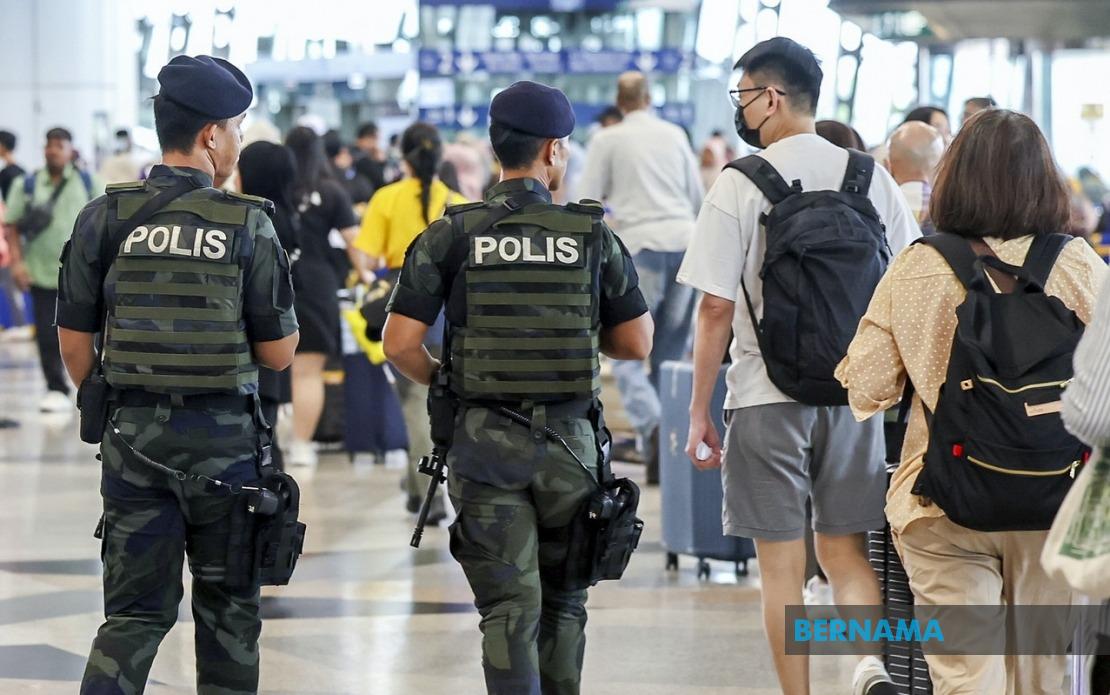
Malaysia's government is taking decisive action to plug security vulnerabilities at its airports by deploying trained Royal Malaysia Police (PDRM) officers to frontline aviation security roles, Communications Minister Datuk Seri Fahmi Fadzil announced on Tuesday. The move comes directly in response to the arrest of a 39-year-old Malaysian pilot by Indonesian authorities at Jakarta's Soekarno-Hatta International Airport, who was caught attempting to smuggle narcotics valued at approximately RM45 million. The incident has forced Malaysian authorities to confront uncomfortable questions about whether current security protocols are adequate to prevent aviation personnel from exploiting their privileged access.
The arrest represents a serious breach of trust within Malaysia's aviation sector and has exposed the limitations of relying on auxiliary police personnel to staff the Aviation Security (AVSEC) unit. According to Fahmi's account of Cabinet discussions held on the day of the announcement, both the Home Ministry and Transport Ministry presented the PDRM deployment as an urgent necessary measure. Currently, AVSEC units across Malaysian airports are staffed by auxiliary police rather than full-fledged PDRM officers, a staffing model that may lack the investigative rigour and enforcement authority needed to properly vet and monitor personnel with access to aircraft and secure airport areas.
The Indonesian authorities discovered the pilot was carrying 15 packages containing 70,114 ecstasy and methamphetamine capsules during baggage screening at the Jakarta airport terminal. Based on street market values in Indonesia, the seized narcotics carried an estimated worth of RM45 million, signalling a substantial commercial operation rather than personal use. The scale of the attempted shipment indicates that the pilot may have been operating as part of a larger smuggling network, raising concerns about whether other Malaysian aviation personnel might be similarly compromised or recruited into trafficking schemes.
Beyond immediate staffing changes, the government has instructed Malaysia Aviation Group (MAG) to comprehensively overhaul its background screening and health assessment procedures for pilots and co-pilots. This directive acknowledges that multiple incidents involving aviation personnel have accumulated sufficiently to warrant systematic review of hiring and ongoing monitoring protocols. Airlines typically conduct background checks before employment, but the government's intervention suggests these processes may require enhancement through stricter psychological assessments, more frequent health evaluations, or more thorough investigation of financial circumstances that might indicate vulnerability to smuggling recruitment.
The PDRM and the Malaysian Border Control and Protection Agency (AKPS) have simultaneously been tasked with conducting a forensic examination of existing security systems to identify exploitable weaknesses. This dual-agency approach reflects recognition that airport security involves overlapping jurisdictions and that vulnerabilities might exist at the intersection of different agencies' responsibilities. By requiring both bodies to work in parallel, authorities hope to catch gaps that a single-agency review might overlook. The emphasis on immediate corrective measures suggests officials view the current window as critical for implementation before potential accomplices of the arrested pilot become aware of enhanced scrutiny.
Fahmi indicated that the government has not yet received comprehensive written documentation about the case and is proceeding cautiously despite the obvious urgency. He noted that because Indonesian authorities continue investigating their end of the case, Malaysia must coordinate carefully to avoid compromising ongoing legal proceedings or overlooking evidence that could illuminate the smuggling network's structure. The minister's measured approach reflects diplomatic protocol between neighbouring countries while simultaneously acknowledging Malaysian authorities' legitimate interest in determining whether domestic links exist beyond the apprehended pilot.
The government's consideration of a special investigation team remains contingent on a full review of available evidence and investigative findings. Establishing such a team would signal Malaysia's commitment to rooting out corruption or complicity within aviation sector personnel, but Fahmi suggested authorities want to understand the complete operational picture before committing resources to a formal task force. This sequential approach allows decision-makers to assess whether existing law enforcement capabilities suffice or whether dedicated investigative resources are necessary to pursue multiple suspects potentially implicated through financial records, communications records, or witness testimony.
The case illuminates vulnerabilities that extend beyond Malaysia's borders but directly threaten regional aviation security. Pilots and flight crew enjoy unparalleled access to aircraft, secure airport zones, and international routes, making them exceptionally valuable to trafficking networks operating across Southeast Asia. The Indonesian arrest demonstrates that smugglers actively recruit personnel with these privileges, exploiting their legitimate mobility and access credentials. For Malaysian authorities, the incident underscores that vigilance cannot depend solely on external border controls or cargo screening; internal vetting of personnel with privileged access is equally critical.
From a regional perspective, the incident raises questions about coordination mechanisms among Southeast Asian nations regarding aviation personnel security. Individual countries maintain their own standards and screening procedures, potentially creating disparities that smugglers exploit. Malaysian authorities' comprehensive response, involving multiple agencies and systematic protocol reviews, may serve as a model for regional collaboration. If Malaysia can establish robust screening frameworks and information-sharing arrangements with neighbouring countries like Indonesia, Singapore, and Thailand, the capability to identify and interdict similar smuggling attempts would significantly improve.
The broader implications for Malaysia's aviation sector are substantial. Commercial airlines and cargo operators depend on reputation and regulatory compliance; incidents involving crew complicity in major drug smuggling operations damage confidence in the entire system. Insurance costs may increase, regulatory oversight may intensify, and international partners may impose additional security requirements on Malaysian flights. The government's swift response to implement PDRM deployment and protocol reviews demonstrates political recognition that decisive action is necessary to reassure the public, international partners, and the aviation industry that serious breaches of this nature will prompt systemic improvements rather than isolated responses.
For Malaysian travellers and businesses relying on air transport, these security enhancements represent reassurance that authorities take vulnerabilities seriously. The deployment of full PDRM personnel to AVSEC units should provide higher-level training, investigative capacity, and accountability than auxiliary police staffing. Reinforced background screening for pilots and systematic security audits by multiple agencies create layered defences against future exploitation. While no security system is impenetrable, the government's comprehensive approach demonstrates commitment to preventing aviation personnel from becoming vectors for organised crime.
The incident and resulting policy response reflect a globalised drug trafficking reality where sophisticated criminal networks actively target transportation sector workers across national boundaries. Malaysia's position as a regional aviation hub and its geographic location within the world's largest opium-producing region make it particularly vulnerable to recruitment efforts targeting airline personnel. By strengthening internal controls and deploying professional law enforcement to security functions, the government signals that such recruitment attempts will face formidable obstacles. The ultimate success of these measures will depend on implementation quality, sustained political commitment to enforcement, and cooperation mechanisms with regional and international partners sharing Malaysia's interest in preventing aviation-facilitated trafficking.

