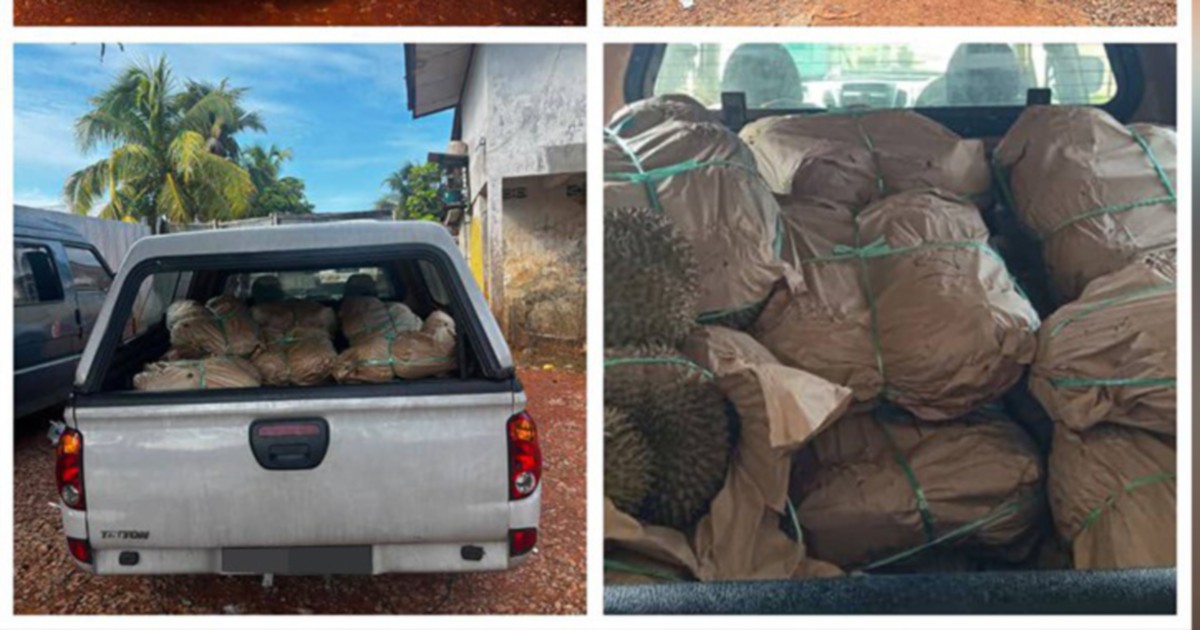
Enforcement authorities in Kelantan have made a significant interdiction in their ongoing battle against cross-border smuggling, nabbing a young driver and confiscating a substantial cargo of illegally trafficked durians at a clandestine landing point along the porous Malaysia-Thailand maritime boundary. The General Operations Force successfully apprehended a 20-year-old man during an operation at the Abe Li Posmen illegal jetty in Rantau Panjang, simultaneously recovering 350 kilogrammes of durian fruit and a four-wheel-drive vehicle with a combined estimated value exceeding RM50,000.
The interception underscores the persistent vulnerability of Malaysia's northern maritime frontier to smuggling networks that exploit informal crossing points to circumvent border controls and customs duties. The Rantau Panjang area, situated along the volatile Perlis-Kelantan coastal zone adjacent to Thailand, has emerged as a recurring hotspot for contraband operations, particularly involving agricultural products destined for illicit distribution in domestic markets or across the Southeast Asian region.
Durians, Malaysia's prized national fruit and a commodity commanding premium prices in regional export markets, have increasingly become a target for smugglers seeking to bypass formal export regulations and taxation frameworks. The motivation is straightforward: unregulated cross-border trafficking eliminates licensing requirements, quality certification procedures, and duty payments that legitimate exporters must navigate, allowing black-market operators to undercut official channels while pocketing substantial profits from the price differential.
The apprehension reflects GOF's stepped-up surveillance and interdiction capabilities along vulnerable maritime corridors, where informal jetties and remote landing zones facilitate the movement of contraband with minimal detection risk. The force's presence at Abe Li Posmen suggests intelligence-driven operations targeting known smuggling infrastructure, an approach that has yielded tangible results in recent months as authorities gradually map and disrupt established trafficking networks.
The confiscated vehicle represents a significant asset recovery, as smuggling operations typically depend on motorised transport to rapidly move contraband from collection points to distribution hubs or secondary markets. By removing these logistical assets from circulation, enforcement agencies constrain the operational capacity of trafficking organisations and raise the financial cost of conducting illicit cross-border commerce.
The arrested driver, at just 20 years of age, exemplifies the demographic profile that criminal networks routinely exploit for field operations—young men with limited economic prospects who accept marginal wages in exchange for assuming the legal risks inherent in physical smuggling operations. These individuals typically occupy the lowest rungs of trafficking hierarchies, insulating senior organisers from direct law enforcement exposure while bearing disproportionate criminal liability.
The broader economic context for this interception involves Malaysia's complex relationship with informal agricultural trade along its land and maritime borders. While legitimate farmers and traders navigate stringent regulatory frameworks governing fruit exports, illicit operators exploit regulatory arbitrage to gain competitive advantages, distorting market pricing and eroding the profitability of compliant businesses operating within official channels.
This seizure arrives amid heightened focus on supply-chain integrity and the movement of agricultural commodities across Southeast Asia, where regulatory standards, phytosanitary requirements, and tariff regimes vary considerably between jurisdictions. Thailand's lenient oversight of agricultural exports combined with premium pricing in Malaysian and Singapore markets creates compelling incentives for smuggling operations that source product from Thai suppliers and distribute them through unregulated domestic networks.
Author ities have not disclosed details regarding the nationality of the apprehended driver or the origin point of the contraband, though the operational location and vehicle type suggest a well-organised transshipment model involving coordinated movement across maritime boundaries. The sophistication of such operations, which require reliable transport assets and logistical coordination, indicates involvement of established criminal syndicates rather than isolated opportunistic traders.
The GOF's actions align with broader regional initiatives to strengthen border security and combat organised smuggling, particularly following escalating cross-border criminal activity across the Malaysia-Thailand frontier. Enhanced interagency coordination between Malaysian customs, maritime authorities, and Thai counterparts has facilitated improved intelligence sharing and joint enforcement operations targeting trafficking networks that exploit bilateral borders.
Moving forward, the implications for Malaysian fruit exporters and agricultural traders hinge on whether authorities translate these tactical interdictions into systematic dismantling of smuggling infrastructure. Sustained pressure on informal maritime crossing points, combined with enhanced scrutiny of logistics networks and vehicle registration patterns, could meaningfully constrain trafficking while improving conditions for legitimate agricultural commerce.
The case also highlights the persistent challenge authorities face in protecting Malaysia's agricultural reputation and market access globally. Unregulated cross-border fruit movements undermine quality assurance mechanisms and create food-safety risks that potentially contaminate perceptions of Malaysian agricultural products in foreign markets, damaging export competitiveness even as black-market operators avoid regulatory costs.

