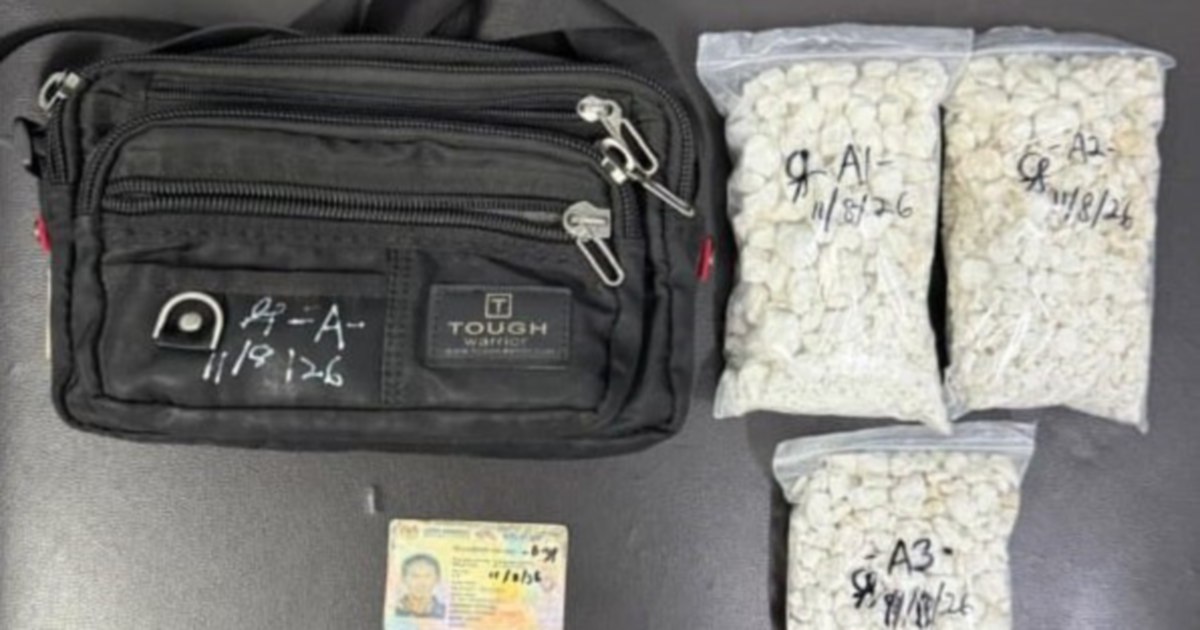
Police in Johor have dismantled another significant drug supply chain following an early-morning raid in Simpang Renggam, securing 1.055 kilograms of heroin estimated at RM10,128 and placing a 42-year-old man into custody. The operation underscores the continued vigilance of law enforcement agencies in tracking narcotics trafficking networks within the southern region, where drug-related offences remain a persistent challenge for community safety.
The seizure, conducted by officers stationed in the Kluang district, reflects the ongoing strategic efforts by the Royal Malaysia Police to intercept drug shipments before they reach street-level dealers and vulnerable users. Simpang Renggam, situated in Johor's densely populated zones, has long been identified as a strategic trafficking corridor due to its proximity to major transportation routes and residential areas, making it a priority target for narcotics enforcement teams.
The timing of the pre-dawn raid—a common tactical choice in drug operations—demonstrates police commitment to catching suspects when they are least prepared to dispose of evidence or flee the scene. By conducting operations during off-peak hours, enforcement teams maximise the likelihood of securing contraband intact and apprehending targets before networks can mobilise alternative contingencies or alert distribution networks downstream.
Heroin seizures of this magnitude represent intermediate-scale narcotics busts that typically point to distribution operations rather than mass production or import networks. The street value assignment of RM10,128 reflects current market pricing in the region, where pure heroin commands premium rates due to heightened enforcement pressure and restricted supply chains. This pricing indicates that the confiscated substance was destined for wholesale distribution to multiple retailers or street-level dealers.
The arrest of a single suspect in connection with the seizure suggests the police operation may have been surveillance-based intelligence work rather than a dragnet response. The suspect's age—42 years old—aligns with demographic patterns in mid-level drug trafficking, where individuals in their 40s and 50s frequently serve as supply chain intermediaries between major suppliers and street networks, leveraging experience and established relationships within underworld hierarchies.
Johor has consistently recorded among the highest drug seizures nationwide, a reflection both of the state's geographic significance and the intensity of anti-narcotics operations deployed there. The Kluang district, encompassing Simpang Renggam, sits within a broader region where police have documented systematic attempts by transnational criminal organisations to establish supply corridors feeding demand across southern Peninsular Malaysia and through to Singapore.
The heroin market in Malaysia has shown resilience despite decades of enforcement pressure, with addiction rates climbing in certain communities and diversified supply routes complicating interdiction efforts. Synthetic heroin precursors and production capacity in neighbouring regions ensure that domestic seizures, though significant for preventing immediate street availability, represent only a fraction of overall trafficking volumes.
For Malaysian drug policy, individual busts like this serve dual purposes: they remove immediate supplies from distribution networks and they generate intelligence data on trafficking patterns, supply chain vulnerabilities, and distribution networks. Police leverage information from arrested suspects to map wider criminal organisations and identify higher-value targets further along the supply chain.
The prosecution pathway for the 42-year-old suspect will likely proceed under the Dangerous Drugs Act 1952, where possession of 1.055kg of heroin places the offence well into trafficking territory rather than simple possession for personal use. Malaysian courts typically impose substantial prison sentences for quantities at this level, with sentences frequently ranging from 10 to 20 years depending on aggravating factors and the suspect's prior criminal history.
For residents and businesses in Simpang Renggam and surrounding communities, the operation provides temporary reassurance of police presence and enforcement action against drug networks. However, sustained effort remains necessary to achieve lasting community safety, as individual seizures address symptoms rather than root causes driving narcotics demand and the profitability of trafficking operations.
Moving forward, this bust exemplifies why intelligence-sharing between federal, state, and district police units remains essential for effective drug enforcement. The successful identification and execution of the Simpang Renggam operation depended on coordination across multiple policing levels and likely incorporated information from community informants and prior surveillance work.
As Malaysia grapples with evolving drug market dynamics, including the emergence of synthetic substances and changes in trafficking routes, operations targeting heroin distribution chains remain central to broader law enforcement strategy. The RM10,128 value confiscated represents resources that will not flow into criminal organisations or fuel addiction in vulnerable populations, a modest but cumulative impact across numerous operations.

