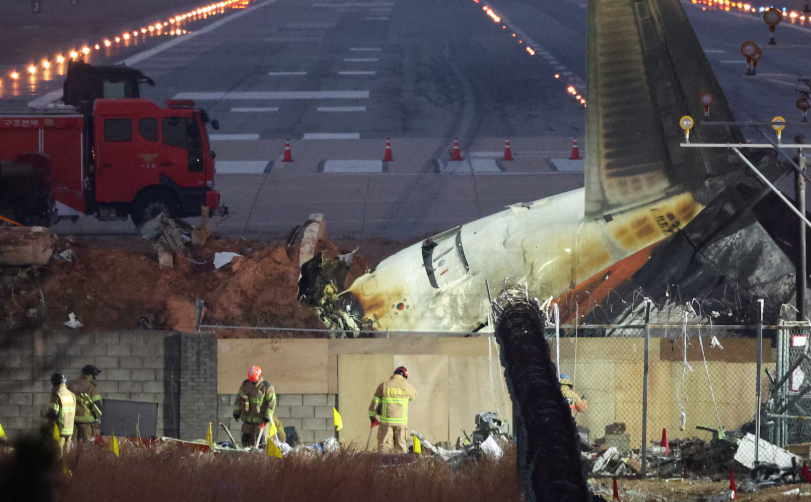
South Korean law enforcement has escalated its investigation into the Jeju Air disaster by conducting coordinated raids across multiple aviation-related agencies. Police teams descended on Korea Airports Corp (KAC), the transport ministry, and the Busan Regional Office of Aviation on Tuesday to collect additional evidence as they pursue what has become one of South Korea's deadliest aviation incidents in recent memory.
The December 2024 Muan International Airport crash killed 179 people, leaving investigators scrambling to understand how such a catastrophic loss of life occurred and whether negligence by relevant authorities contributed to the tragedy. The breadth and timing of Tuesday's operations underscores the seriousness with which authorities are treating potential systemic failures across South Korea's aviation infrastructure and regulatory framework.
KAC, which manages the majority of South Korea's major domestic airports with the notable exception of Incheon International Airport, has become a focal point in the investigation. The corporation's operational procedures, maintenance protocols, and emergency response capabilities are now under intense scrutiny. Investigators believe evidence held by KAC could illuminate critical details about airport conditions, safety procedures, and decision-making during the incident.
The raid on the transport ministry marks the third occasion that authorities have searched this agency's offices, suggesting that investigators have identified documentary evidence or procedural lapses worth examining multiple times. This pattern indicates a methodical approach to building a comprehensive case, potentially uncovering layers of administrative responsibility or oversight failures that may have contributed to the disaster.
Investigators are specifically pursuing charges of professional negligence resulting in death or injury against a total of 74 suspects identified so far. This charge category focuses on whether individuals or organisations failed to exercise the duty of care expected of their position, directly leading to fatal or harmful consequences. The breadth of the suspect list points to a complex incident potentially involving multiple failures across different organisational levels and entities.
Beyond the negligence charges, police have signalled they may pursue additional counts of causing a serious public disaster. This more serious charge carries significant legal implications and would suggest that authorities view the crash not as an isolated operational failure but as evidence of systemic inadequacy in South Korea's aviation safety culture. Such charges typically require demonstrating that negligent actions endangered the public on a mass scale.
The investigation's core focus remains determining the precise technical and operational factors that led to the crash at Muan International Airport. This encompasses both the immediate causes—mechanical failure, pilot error, or procedural breakdown—and the broader question of whether regulatory agencies, airport operators, and the transport ministry properly implemented safety standards and responded appropriately when emergency situations unfolded.
For Southeast Asian aviation regulators and airport authorities, the Jeju Air investigation carries important lessons about accountability and oversight. Countries across the region operate under varying standards of aviation safety regulation, and this case demonstrates the importance of robust independent investigations and transparent accountability mechanisms when disasters occur. Malaysian airport operators and civil aviation authorities can observe how South Korea's approach to investigating aviation incidents addresses systemic versus individual responsibility.
The involvement of multiple agencies in both the incident and the investigation itself raises questions about jurisdictional clarity and coordination that resonate beyond South Korea. When accidents occur, determining which organisation bears responsibility for which safety function becomes crucial for preventing future incidents. The Jeju Air case appears to be testing whether South Korea's institutional framework adequately distributes and enforces aviation safety responsibilities.
The sustained intensity of the investigation, now months after the December crash, suggests that authorities have not yet identified a satisfactory explanation for how a major airport operation and its regulatory overseers failed to prevent such massive loss of life. The continued searches and expanding list of suspects indicate that investigators are following complex threads linking technical failures to human decision-making and organisational procedures.
Regional aviation experts have begun examining whether South Korea's transport ministry and airport authorities operate with sufficient independence from political pressure and resource constraints that might compromise safety. The repeated raids suggest investigators are pursuing documentary evidence that could establish whether budget limitations, staffing shortages, or administrative directives influenced safety decisions at critical moments.
For victims' families and the broader South Korean public, the continuing investigation represents both a promise of accountability and a prolonged period of seeking answers. The charges being considered—negligence resulting in death and causing public disaster—carry prison sentences in South Korea, establishing real consequences if guilt is proven. The transport ministry and KAC now face institutional reputation damage alongside potential legal liability as investigators pursue their examination of whether these organisations failed in their most fundamental duty to ensure safe air travel.

