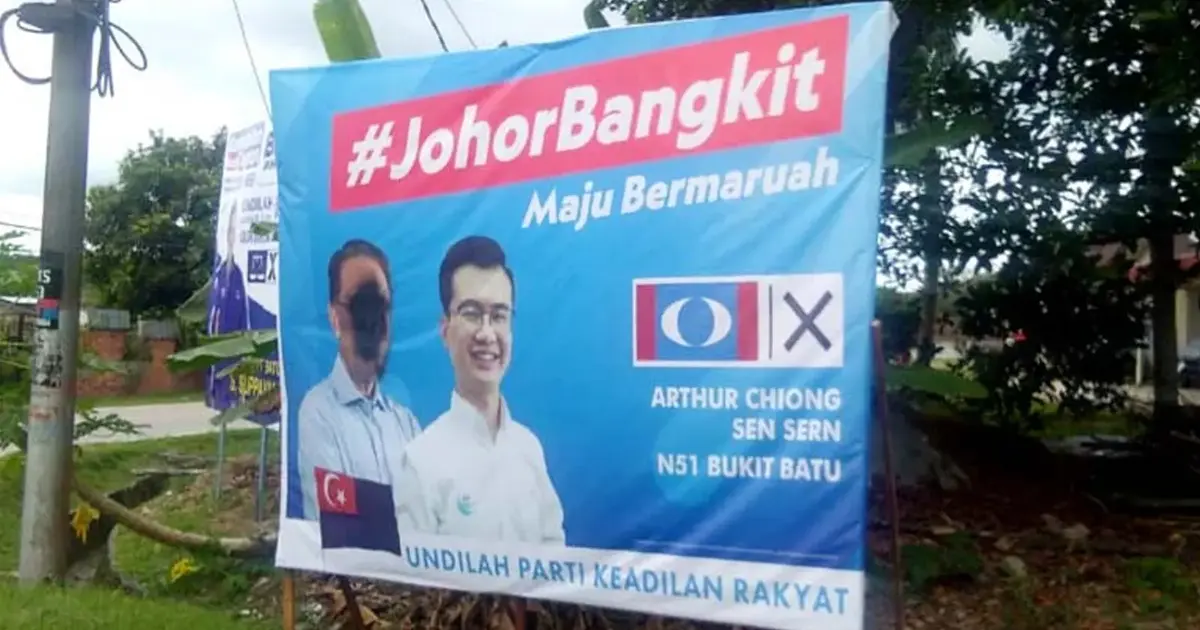
The Royal Malaysia Police registered 90 complaints across the nation during the recent campaign phase, with 25 of these advancing to formal investigation papers, Inspector-General of Police Khalid Ismail disclosed. The announcement provides a snapshot of the law enforcement response to maintaining order and managing public safety concerns that emerge during electoral periods when political activity intensifies across the country.
Khalid Ismail emphasised that the bulk of these complaints stem from relatively minor offences that occur in public spaces. The infractions predominantly involve acts of vandalism—such as unauthorised posting of campaign materials, defacement of public property, and similar property-related violations. This characterisation suggests that police resources remained focused on maintaining public order and preventing property damage rather than pursuing allegations tied directly to political parties or individual candidates contesting in the elections.
The distinction drawn by the Inspector-General carries significance for understanding how Malaysia's election environment functioned during the campaign period. By clarifying that the complaints did not centre on party or candidate misconduct, Khalid Ismail was essentially signalling that law enforcement detected no widespread systematic abuse by political entities themselves. This framing reflects a nuanced approach to electoral supervision, where authorities differentiate between the organised conduct of political actors and the peripheral misbehaviour often triggered when supporters or opportunists exploit the heightened political atmosphere.
The ratio of formal investigation papers to total complaints—approximately 28 percent—indicates a filtering process whereby police assessed the severity and merit of each complaint before committing to full investigative procedures. Cases that met evidentiary thresholds or demonstrated sufficient legal grounds progressed to the formal stage, while others were either resolved through informal means, referred to other agencies, or discontinued. This gatekeeping mechanism is standard practice within Malaysian law enforcement, reflecting professional judgment about resource allocation and case prioritisation.
Vandalism during election campaigns represents a perennial challenge for authorities across Southeast Asia. In Malaysia's context, the phenomenon typically emerges when competing groups seek to remove or deface rival campaign signage, or when individuals exploit the loosened social controls that accompany electoral periods to commit opportunistic property crimes. The prominence of vandalism complaints in this dataset underscores how campaign activities, while legitimate democratic expression, can generate secondary harms that necessitate police intervention and public resources to remedy.
The police's performance metrics during campaigns serve as indicators of electoral health and the overall security environment. A manageable complaint volume like 90 cases suggests that while infractions occurred, they remained within acceptable parameters for a nation conducting national-level elections. Comparative regional context indicates that campaign periods in other democracies frequently generate similar or substantially higher complaint volumes, suggesting Malaysia's experience was relatively routine.
Inspector-General Khalid Ismail's public accounting of these figures represents transparency in electoral oversight, an important practice for maintaining public confidence in the impartiality of law enforcement. By breaking down the nature of complaints and distinguishing between cases and formal investigations, the police leadership communicated that their response was proportionate, evidence-based, and not politically motivated. This transparency counters potential perceptions that authorities might weaponise law enforcement against particular political contenders.
The 25 investigation papers opened represent a subset of cases deemed sufficiently serious or well-substantiated to warrant formal prosecution pathways. These cases would proceed through standard criminal investigation protocols, potentially culminating in prosecution if evidence warranted charges. The investigation process itself typically spans weeks or months, with outcomes determined by prosecutorial review rather than political considerations—at least theoretically within Malaysia's law enforcement framework.
For Malaysian voters and political observers, the police report offers assurance that mechanisms exist to address election-related misconduct, even if focused on minor infractions rather than major electoral violations. It demonstrates that authorities maintained a presence and monitoring capacity throughout the campaign, ready to respond to breaches of public order. However, the limited scope—primarily vandalism cases—also suggests that enforcement resources may not have been deployed extensively toward investigating alleged violations of electoral law itself, such as campaign financing breaches or other regulatory transgressions that fall under different statutory frameworks.
The timing and content of this police announcement reflect standard practice for Malaysian authorities concluding electoral campaigns. By releasing aggregate statistics and characterising the nature of complaints, the Inspector-General provided closure to the campaign phase and signalled the resumption of normal policing priorities. This narrative framing helped situate the election period as manageable and orderly from a law enforcement perspective, an important message for democratic stability and public confidence in institutions.
For Southeast Asia's emerging democracies monitoring Malaysian electoral practices, such transparency in police reporting offers benchmarks for how law enforcement can maintain oversight while respecting democratic processes. The differentiation between minor infractions and serious electoral misconduct, combined with public disclosure of complaint volumes and investigation outcomes, represents one model for balancing security imperatives with democratic pluralism—a balance that remains contested across the region.

