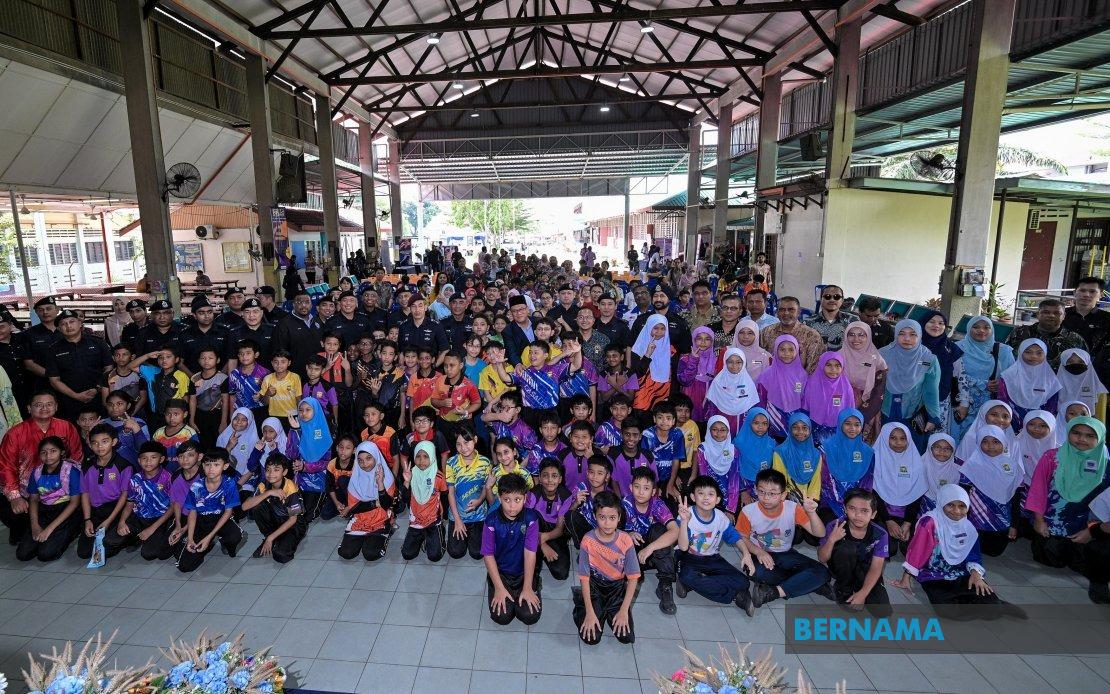
The Royal Malaysia Police has widened the reach of its character-building and discipline initiative to encompass primary schools across Kuala Lumpur, marking a significant expansion of an effort previously concentrated in secondary institutions. The decision reflects growing confidence in the programme's capacity to develop moral foundations among younger pupils before ingrained behavioural problems take root. By introducing these values-based interventions during the formative primary school years, education authorities hope to establish stronger ethical frameworks that will carry through students' secondary education and into adulthood, ultimately creating more disciplined and conscientious citizens.
Megat Affandi Datuk Ismail, who directs the Federal Territory of Kuala Lumpur Education Department (JPNWPKL), unveiled the expanded initiative at Sekolah Kebangsaan La Salle 2 Jinjang alongside a road safety awareness campaign. He emphasised that the programme's extension arose from concrete evidence demonstrating the effectiveness of collaborative policing efforts within secondary schools over recent years. The partnership between PDRM and JPNWPKL has yielded measurable improvements across multiple performance indicators, justifying the considerable investment in rolling out comparable structures to younger age cohorts.
The results achieved through police involvement in secondary schools have been striking. Student attendance figures in Kuala Lumpur have improved noticeably, while criminal and disciplinary cases involving teenagers have fallen substantially. These gains extend beyond mere behavioural metrics; Kuala Lumpur recorded its strongest Sijil Pelajaran Malaysia (SPM) examination results in a decade, while both the Sijil Tinggi Persekolahan Malaysia (STPM) and Sijil Tinggi Agama Malaysia (STAM) achieved their peak performances across the same ten-year window. Such comprehensive improvements across attendance, conduct, and academic achievement underscore the multiplier effect of integrating law enforcement perspectives into educational governance.
One particularly significant outcome has been the reduction in school bullying incidents, driven by PDRM's commitment to maintaining visible police presence in school environments. Regular visits to boarding facilities and common areas have created an environment where students understand that misconduct carries consequences, whilst simultaneously building rapport between young people and police officers. This demystification of law enforcement during formative years potentially reshapes how young Malaysians view their relationship with authority and civic responsibility. The consistent engagement has transformed police from abstract figures into approachable adults invested in student welfare.
Megat Affandi stressed that educational excellence cannot be achieved through schools operating in isolation. Rather, he noted, sustained improvement requires coordinated action among multiple stakeholders, with law enforcement agencies playing a critical role alongside educators, parents, and community leaders. This ecosystem approach recognises that student conduct and academic performance are influenced by factors extending well beyond classroom instruction—including neighbourhood safety, peer group dynamics, family engagement, and the deterrent effect of visible authority figures. The philosophy underpinning the expanded programme reflects this sophisticated understanding of how young people develop.
Parental vigilance emerges as another cornerstone of the initiative. Megat Affandi appealed to mothers and fathers to remain alert to behavioural shifts, particularly during adolescence when teenagers often conceal struggles or poor choices from adults. He recommended that concerned parents proactively engage school counsellors rather than waiting for formal complaints to surface. This preventative approach recognises that early intervention during the initial stages of problematic behaviour—whether substance experimentation, antisocial friendships, or academic disengagement—yields far better outcomes than attempting remediation after serious incidents occur.
The vaping issue has emerged as a particular focus area for joint enforcement efforts. JPNWPKL and PDRM will continue conducting unannounced inspections across educational facilities, coordinating with Kuala Lumpur City Hall (DBKL) to tighten enforcement mechanisms against illegal nicotine product sales targeting minors. This multi-agency approach recognises that vaping presents a modern challenge requiring coordination across education, policing, and municipal governance. The normalisation of vaping among young people in recent years has prompted authorities to treat nicotine addiction prevention with the same seriousness previously reserved for cigarette and drug prevention campaigns.
The JPNWPKL manages educational oversight across more than two hundred schools throughout Kuala Lumpur's jurisdiction. Resource allocation and monitoring intensity vary based on socioeconomic indicators and population density patterns, with school liaison officers strategically positioned in higher-risk areas. This targeted deployment reflects pragmatic recognition that behavioural challenges concentrate in specific neighbourhoods facing greater economic disadvantage and social fragmentation. Rather than applying uniform interventions, authorities identify zones requiring heightened attention and concentrate personnel and resources accordingly, maximising impact per dollar spent.
The expansion to primary schools represents logical progression grounded in developmental psychology. Primary-age children remain more malleable than teenagers, their values systems still forming through interaction with immediate adults. By introducing disciplinary frameworks, character education, and positive police engagement during these years, the programme seeks to establish prosocial norms before secondary school brings increased independence and peer influence. The staggered approach—building habits and relationships in primary school, reinforcing them through secondary years—creates continuity that amplifies outcomes compared to sudden introduction of such programmes at secondary stage alone.
For Malaysia more broadly, the Kuala Lumpur model suggests that police-education partnerships, when properly resourced and strategically implemented, can reduce youth crime whilst simultaneously elevating academic performance. As other Malaysian jurisdictions grapple with discipline challenges and rising youth involvement in criminal activity, the documented success in Kuala Lumpur provides both a blueprint and evidence base for replication. The initiative demonstrates that investment in preventative social infrastructure—particularly integrating multiple government agencies toward shared youth development objectives—offers superior long-term outcomes to reactive enforcement alone, whilst building community trust in police institutions through positive early-life interactions.

