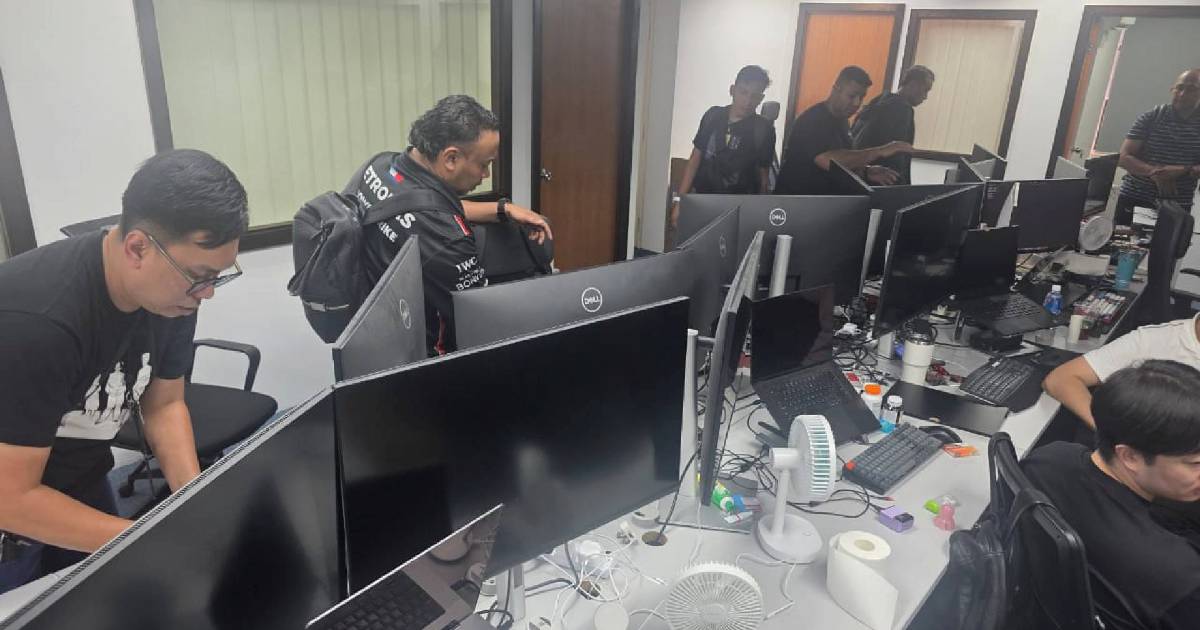
Malaysian authorities moved decisively against organised gambling operations yesterday, executing a raid on an illegal sports betting call centre operating from a commercial office building in Taman Desa, Brickfields. The enforcement action resulted in the detention of 11 suspects, a significant portion of whom were identified as nationals of South Korea, highlighting the transnational nature of clandestine betting networks operating across Southeast Asia.
The bust represents another chapter in Malaysian law enforcement's ongoing struggle against illegal gambling syndicates, which have become increasingly sophisticated in their operations. These networks exploit major sporting events, particularly the FIFA World Cup, to process large volumes of wagered funds. The syndicate's decision to operate from a commercial office setting rather than a more obvious gaming venue underscores how criminal gambling enterprises have adapted to evade detection, blending into ordinary business environments where suspicious activity might escape casual notice.
The presence of six South Korean nationals among those arrested indicates the involvement of international criminal networks with established connections across multiple countries. South Korea has become a notable source of both manpower and expertise in regional gambling syndicates, with operators leveraging networks that span from East Asia through Southeast Asia. This pattern reflects broader trends in organised crime, where international cooperation and cross-border recruitment allow illegal enterprises to operate with greater efficiency and reduced vulnerability to local law enforcement.
World Cup periods present particularly lucrative opportunities for illegal betting operations. The tournament's global reach, the sheer volume of matches occurring simultaneously, and the magnetic appeal of the competition to sports bettors create ideal conditions for underground operations to channel substantial sums through clandestine call centres. The timing of this raid during World Cup season suggests that Malaysian authorities are actively monitoring for increased gambling activity coinciding with major international sporting events.
The call centre model employed by this syndicate represents a well-established operational structure within organised betting networks. Operators typically recruit agents who field bets from networks of punters, with call centres serving as the central nervous system where wagers are processed, odds are calculated, and winnings determined. The physical infrastructure of such operations—staffed call centres rather than purely digital platforms—creates identifiable targets for law enforcement while simultaneously suggesting a lower-tech, more vulnerable operation than purely online alternatives.
Malaysia's legal framework treats illegal gambling as a serious criminal matter with significant penalties. The authorities' willingness to conduct targeted raids during major sporting events demonstrates an appreciation for the enforcement opportunity these occasions present, when illegal activity surges and becomes more conspicuous. However, the persistence of such operations despite regular enforcement actions reflects the ongoing profitability of illegal betting and the difficulty of completely eliminating demand-driven criminal enterprises.
The arrest of multiple foreign nationals raises questions about immigration compliance and employment verification procedures at commercial office buildings in Kuala Lumpur. Legitimate businesses sharing facilities with illegal operations may face scrutiny regarding their due diligence processes. This incident serves as a reminder to property managers and landlords about the importance of tenant vetting and monitoring, as unwitting property owners can inadvertently become complicit in criminal activity.
From a regional perspective, the operation underscores Southeast Asia's ongoing challenge with transnational organised crime. The interconnectedness of modern economies means that criminal networks operate with relative ease across borders, recruiting talent and establishing operations wherever regulatory conditions permit. Malaysian authorities' response to this specific syndicate reflects broader regional cooperation efforts, though the continued emergence of such operations suggests that enforcement efforts require sustained resources and international coordination.
The investigation and detention of these 11 individuals represents substantial police work, yet enforcement agencies across Southeast Asia acknowledge that dismantling one syndicate typically results in the emergence of successor operations. Criminal entrepreneurs rapidly adapt to enforcement outcomes, relocating operations, changing organisational structures, and developing new recruitment strategies. The challenge for authorities lies not merely in arresting individuals but in disrupting the underlying economic model that makes illegal gambling operations profitable and sustainable.
Looking forward, this incident may prompt increased scrutiny of commercial office spaces and call centre operations in Kuala Lumpur and surrounding areas. Building security, tenant verification, and cooperation between property managers and law enforcement may be enhanced. For Malaysian punters and those in neighbouring countries, the bust serves as a cautionary reminder about the legal and personal risks associated with participation in illegal betting syndicates, which operate without regulatory oversight or consumer protections.

