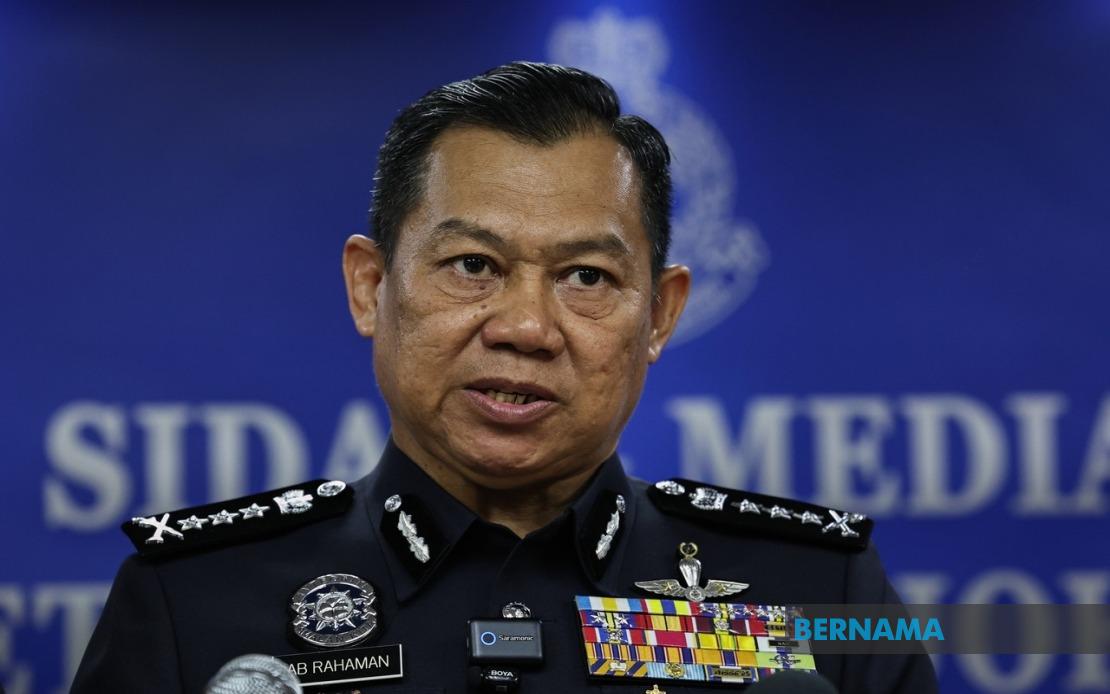
The Royal Malaysia Police has unveiled a substantial security deployment for the forthcoming Johor State Election, mobilising 11,926 officers and personnel to safeguard the electoral process and maintain public order throughout voting operations. Johor Police Chief Datuk Ab Rahaman Arsad announced the comprehensive arrangement at the Johor Police Contingent Headquarters, emphasising that the force structure would adapt dynamically according to operational demands as the election progresses through its various stages.
The deployment strategy divides the election operation into five distinct phases, allowing the police to calibrate their presence and resources as circumstances evolve from pre-polling activities through to the final stages of vote counting and result declaration. This phased approach reflects contemporary best practices in electoral security, enabling authorities to concentrate manpower where most needed at each juncture while maintaining flexibility to respond to unforeseen developments. Datuk Ab Rahaman indicated that commanders on the ground would possess authority to adjust personnel positioning based on real-time intelligence and field assessments, ensuring that security measures remain proportionate and responsive rather than rigidly predetermined.
Beyond the main police contingent, the Johor operation will benefit from reinforcement by specialised federal units operating under the Internal Security and Public Order Department. This auxiliary force comprises 54 officers and 701 personnel sourced from the General Operations Force, the Federal Reserve Unit, the PDRM Air Unit, and the Marine Police Force. The inclusion of these diverse specialised units reflects the multifaceted security challenges inherent in managing a major electoral event across a sprawling state like Johor, which encompasses urban centres, rural constituencies, and maritime zones requiring distinct policing approaches.
The General Operations Force contribution brings paramilitary expertise in public order management and crowd control, skills particularly valuable during peak voting periods when large numbers of citizens gather at polling stations. The Federal Reserve Unit provides additional tactical capability and rapid-response capacity, ensuring that police can mobilise swiftly to address any incidents that threaten electoral integrity or public safety. The PDRM Air Unit's inclusion indicates preparedness for aerial surveillance and rapid mobility across Johor's diverse geography, while the Marine Police Force deployment acknowledges the state's significant coastal dimensions and the need to maintain security across maritime boundaries and island constituencies.
For Malaysian observers, this deployment represents a substantial commitment of national security resources to a single state election, underscoring official determination to ensure the electoral process proceeds without disruption or violence. The scale of the operation—nearly 12,000 personnel—demonstrates the seriousness with which authorities approach election management in Johor, a state that has historically wielded considerable political significance within the Malaysian federation. The deployment reflects lessons learned from previous elections and the recognition that even geographically manageable events demand extensive preparation and robust personnel allocation to prevent disorder or undermine public confidence in the democratic process.
The five-phase structure suggests careful planning around the election timeline, with distinct security postures likely required during the campaign period, polling day itself, the counting phase, and the post-election transition. Each phase presents different risks and operational requirements—campaign periods demand protection of candidates and prevention of violent incidents between rival supporters, while polling day necessitates securing polling stations and maintaining orderly queues. The counting phase requires protecting ballot integrity and preventing unauthorised access to counting centres, while post-election operations may involve managing potential disputes or public demonstrations depending on outcomes.
Johor's status as Malaysia's southern anchor and its position as a crucial economic hub adjoining Singapore make electoral stability particularly important for regional confidence and cross-border relations. The comprehensive police deployment sends a reassuring signal to investors and neighbouring jurisdictions that Malaysia manages its democratic processes in an orderly, professionally controlled manner. Disruption or violence during a Johor election could reverberate across the region, potentially affecting economic activity and investor perception of Malaysia's political stability during what remains a competitive period for regional foreign direct investment.
The deployment also reflects broader trends in Malaysian electoral management, where police involvement has grown increasingly sophisticated with each successive major election. The police service has progressively refined its approach to election security, moving beyond simple physical presence towards intelligence-led operations that anticipate trouble spots and deploy resources preventatively. The phased deployment model mentioned by Datuk Ab Rahaman represents evolution in this direction, suggesting that Johor Police has assessed likely problem areas and crafted a flexible response architecture rather than applying uniform security levels across all five phases indiscriminately.
The incorporation of specialist units from beyond the state police contingent indicates coordination between state and federal policing hierarchies, a coordination mechanism that remains essential in Malaysia's federalised police system. Such multi-layered deployments require careful command structure planning and clear communication protocols to prevent overlap, gaps, or conflicts between different units operating under separate command chains. The fact that authorities felt confident announcing detailed deployment figures suggests confidence in their planning and expectation that the operation would proceed without major hitches requiring security recalibration.
For Johor residents and Malaysian electoral participants more broadly, this deployment aims to create an environment where citizens can exercise their democratic franchise without fear of violence or intimidation. Public confidence in electoral security directly influences voter turnout and the legitimacy of eventual results—elections conducted amid visible disorder or violence tend to generate suspicions about result integrity regardless of actual facts. The substantial police presence, while perhaps creating a militarised atmosphere in some locations, fundamentally exists to protect the democratic exercise rather than constrain it, a distinction worth emphasising as Johor voters prepare to participate in their state election.

%22%2F%3E%3C%2Fpattern%3E%3C%2Fdefs%3E%3Crect%20width%3D%22100%25%22%20height%3D%22100%25%22%20fill%3D%22url(%23ph1354vg)%22%2F%3E%3Crect%20width%3D%22100%25%22%20height%3D%22100%25%22%20fill%3D%22url(%23ph1354vp)%22%2F%3E%3Ctext%20x%3D%2250%25%22%20y%3D%2250%25%22%20text-anchor%3D%22middle%22%20dominant-baseline%3D%22central%22%20fill%3D%22rgba(255%2C255%2C255%2C0.95)%22%20font-family%3D%22Georgia%2C%20'Times%20New%20Roman'%2C%20serif%22%20font-weight%3D%22700%22%20font-size%3D%22320%22%20letter-spacing%3D%22-0.02em%22%3EGRS%3C%2Ftext%3E%3C%2Fsvg%3E)