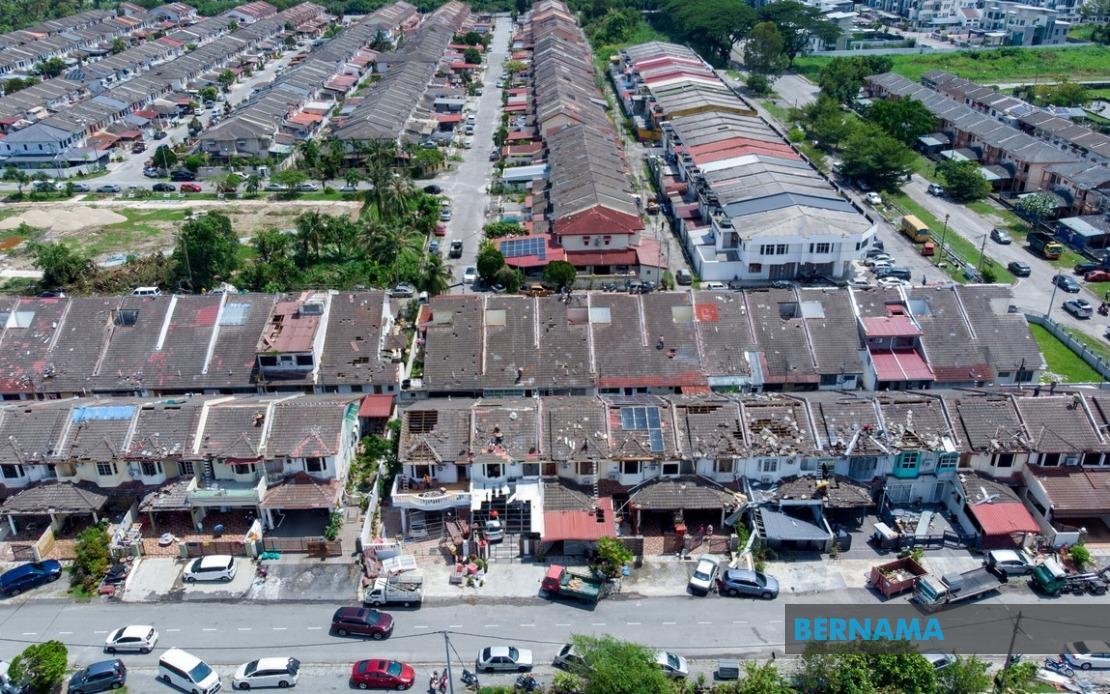
Law enforcement in Ipoh has implemented a comprehensive containment strategy in Bercham, establishing security cordons across five separate zones within the storm-damaged areas and controlling vehicular and pedestrian traffic to deter criminal opportunism in the aftermath of Friday's destructive weather event. The measure comes as authorities race to protect vulnerable neighbourhoods still grappling with the immediate aftermath of what officials describe as an extraordinary meteorological phenomenon that swept through the region with devastating force.
ACP Muhammad Najib Hamzah, who leads the Ipoh district police contingent, outlined the reasoning behind the restriction protocol during a site inspection of the Incident Control Post at Bercham police station. While acknowledging the legitimate needs of residents attempting to salvage and clean their properties, the police chief emphasized that night-time restrictions would remain particularly stringent, given that several neighbourhoods including Anjung Bercham remain without power supply, creating conditions where illicit activity could occur undetected.
The operational flexibility permits residents to enter cordoned zones for genuine cleanup and recovery purposes, though authorities intend to verify ownership and purpose before granting access. This balanced approach reflects the challenge of maintaining public order whilst allowing disaster victims to assess and recover their possessions. However, the darker aspect of disaster response—looting and opportunistic burglaries—has prompted police to remain vigilant during evening hours when darkness and confusion provide cover for criminal activity.
By 8 o'clock on the morning of the announcement, the police operations centre designated Op Bencana had fielded 492 storm-related reports from residents claiming damage to property. Notably, authorities have clarified that no temporal deadline governs the filing of damage reports, allowing residents breathing room to lodge official claims as they navigate the immediate crisis and begin the longer process of documentation and recovery. This open-ended reporting window acknowledges the practical reality that disaster victims may require days or weeks to fully assess their losses.
Quantifying the total financial and material damage across the affected neighbourhoods remains incomplete. Officials have indicated that comprehensive damage assessments are still underway, and preliminary figures are not yet available. This assessment phase is critical for insurance claims, government relief applications, and coordinating reconstruction efforts across the affected communities. The complexity of cataloguing damage across more than two hundred residential structures, coupled with the need to verify claims and prevent fraudulent reporting, requires meticulous documentation.
According to M. Kulasegaran, the Member of Parliament representing Ipoh Barat, the storm's impact was genuinely extraordinary in scale and intensity. The legislator, who simultaneously serves as Deputy Minister in the Prime Minister's Department overseeing Law and Institutional Reform, characterised the incident as unprecedented for the Bercham locality. His assessment that the event affected more than two hundred residential properties underscores the breadth of the disaster and its significance as a substantial natural disaster for the region.
Meteorological experts consulted by local authorities have attributed the storm's ferocity to a rare atmospheric phenomenon known as a landspout, a rotating column of air that forms over land without developing from a supercell thunderstorm. Landspouts differ from traditional tornadoes in their genesis and structure but can produce comparable wind velocities and destructive capability. This meteorological explanation provides context for why the event struck residents as unusually violent and localised, rather than representing the conventional thunderstorm patterns residents might anticipate during monsoon seasons.
The geographical distribution of damage spans multiple residential enclaves across the Bercham area, including Anjung Bercham Utara, Taman Mujur, Kampung Bercham, Kampung Tersusun Tasek, Taman Pusat Bercham, and Taman Indah Sakti. This enumeration of affected neighbourhoods illustrates how the weather system's destructive path carved through several distinct residential communities, each with its own population demographics and property characteristics. The diversity of affected zones suggests the storm's impact was geographically diffuse rather than concentrated in a single location.
For Malaysian readers and those throughout Southeast Asia, this incident illustrates the region's vulnerability to extreme weather phenomena, particularly during transitional monsoon periods when atmospheric conditions can produce unusual and dangerous storms. Climate scientists have increasingly documented a correlation between warming oceans and intensified local weather systems, suggesting that events previously considered once-in-a-generation occurrences may become more frequent. The police response demonstrates how security forces adapt disaster management protocols to address both the immediate humanitarian crisis and the secondary challenge of preventing criminal exploitation of neighbourhoods already stressed by emergency conditions.
The Bercham situation underscores broader regional challenges: infrastructure resilience, coordinated disaster response, equitable access to relief resources, and the need for communities to develop preparedness frameworks for increasingly unpredictable severe weather. The fact that multiple residential zones lost electrical power simultaneously indicates potential fragility in distributed utility infrastructure, a vulnerability affecting not only Ipoh but urban and peri-urban areas throughout Malaysia where overhead power distribution remains standard.
As police maintain their cordons and residents navigate the checkpoint processes to access their homes, the incident serves as a practical reminder that natural disasters generate cascading consequences extending far beyond the initial meteorological event. Reconstruction timelines, insurance disputes, financial hardship for uninsured property owners, and the psychological impact on affected communities represent challenges persisting long after weather systems dissipate. The police initiative to prevent looting, whilst necessary, also highlights the socioeconomic pressures that disaster creates, where some individuals resort to opportunistic theft when social order temporarily fractures.

