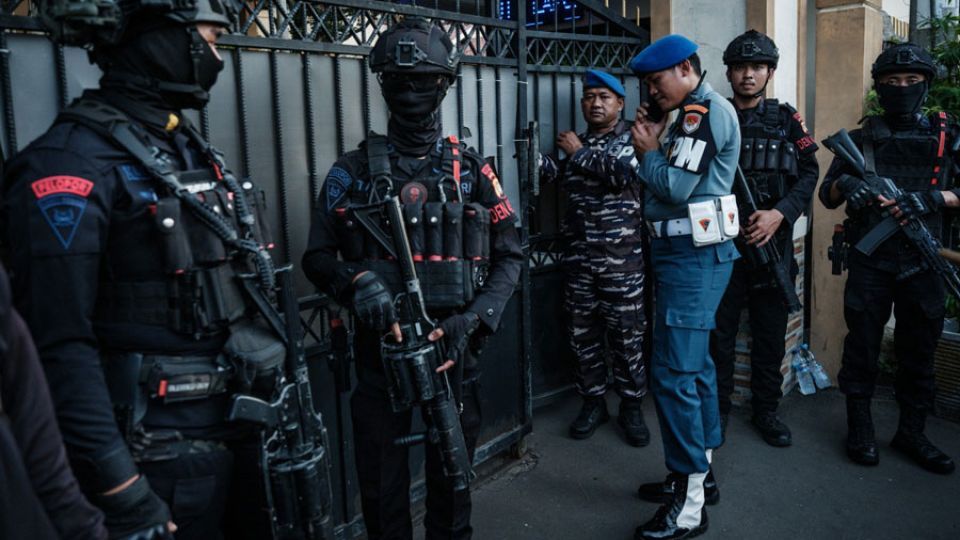
A 34-year-old man has been arrested by Indonesian police following a bomb threat that interrupted classes at SD Srengseng Sawah 15 Pagi state elementary school in Jagakarsa, South Jakarta, on the first day of the academic year. The suspect, identified only by initials MY, was apprehended near the school premises hours after sending a WhatsApp message claiming that explosives had been positioned at eleven different locations throughout the school complex.
The threatening message was distributed to school teachers and administrative personnel whilst students participated in a flag-raising ceremony marking the start of the school term. Upon receiving the alert following the ceremony, school officials immediately initiated evacuation procedures and notified authorities of the credible threat. The rapid response highlighted the heightened security awareness now expected at educational institutions across Indonesia's capital region, where previous incidents have demonstrated the potential consequences of unchecked threats.
In response to the alert, the Greater Jakarta Police mobilised specialist units including personnel from Gegana, the national bomb disposal division, and Densus 88, the specialised counterterrorism squad responsible for high-threat security matters. These agencies conducted a comprehensive search of the entire school complex, methodically examining the eleven locations mentioned in the threat message. Despite the extensive sweep by trained bomb detection officers and equipment, no explosives or suspicious devices were discovered anywhere on the school grounds, indicating the threat may have been hoax-based rather than representing a genuine attack plan.
Greater Jakarta Police spokesperson Sr. Comr. Budi Hermanto confirmed on Monday that the suspect had been transferred to the South Jakarta Police headquarters for formal interrogation. Investigators are currently working to establish MY's motivation for crafting and disseminating the threatening message, and to understand what underlying grievance or psychological factor may have driven such disruptive behaviour. Hermanto noted that the suspect resided in close proximity to the school, raising questions about whether personal knowledge of the institution influenced the threat's specificity regarding location.
The incident underscores a troubling trend across Southeast Asia where bomb threats—whether genuine or hoaxes—continue to cause significant disruption to educational systems and public confidence. In Indonesia's context, the distinction between actual threats and false alarms carries particular weight given the nation's past experiences with extremist violence. Schools, which serve as vulnerable gathering points for large numbers of children and staff, have become focal points for both genuine security concerns and individuals seeking attention through false threats.
The swift identification and arrest of the suspect suggests that WhatsApp's message metadata and the proximity of the perpetrator to the school location both facilitated rapid police investigation. Modern digital forensics have made it increasingly difficult for threat-makers to operate anonymously, particularly when using commonly monitored platforms like WhatsApp rather than encrypted or anonymous channels. The arrest within hours of the threat's transmission reflects the police's improved technical capacity to trace digital communications.
For parents and the broader school community in Jagakarsa, the incident represents a jarring disruption to what should have been a routine administrative milestone. The first day of the school year carries particular significance in Indonesia's education calendar, marking the beginning of a new academic journey for students from primary through secondary levels. The forced evacuation and extended lockdown transformed a day of anticipation into one of anxiety and uncertainty, potentially affecting students' confidence in their school environment.
The lack of discovered explosives at all eleven mentioned locations may eventually work in the suspect's legal favour if authorities determine the threat was entirely fabricated rather than reflecting genuine intent. However, Indonesian law takes a serious view of hoax threats that unnecessarily deploy emergency services and disrupt critical infrastructure. Prosecutors will likely pursue charges that reflect both the malicious intent and the broader public safety implications of such actions, which tie up counterterrorism resources that might be deployed to address genuine threats elsewhere.
This incident also raises questions about school security protocols and emergency preparedness across Jakarta's education system. While the rapid evacuation and police response functioned effectively in this instance, schools must balance openness and accessibility with basic protective measures. The fact that a bomb threat can be distributed to school staff via WhatsApp highlights the vulnerability of digital communication channels that schools routinely depend upon for administrative purposes.
For Malaysian observers, the incident offers instructive comparison to how similar threats are managed in the region. Both nations face analogous security challenges and rely on comparable emergency response infrastructure. The case demonstrates that even in a major metropolitan area with sophisticated policing resources, the initial uncertainty surrounding such threats remains stressful and disruptive regardless of ultimate verification outcomes.

