A 70-year-old Polish cancer patient's concern for her shelter dog has catalysed a legislative push that could transform end-of-life care across Poland. When Ewa Lutka-Krawczyk received her gallbladder cancer diagnosis, her primary worry was not for herself but for Gaja, a rescue dog she had nurtured for three years. She pleaded with her physician for reassurance that she would survive long enough to spare her cherished companion from abandonment. The grim prognosis that followed led to her admission to a Warsaw hospital's palliative ward, where she now rests with a drainage tube, separated from Gaja, who has stopped eating at home while awaiting her return.
This poignant situation has inspired a broader movement within Polish healthcare. Proposed legislation currently under review in parliament would establish an explicit legal framework granting terminally ill patients the right to receive visits from their own pets during hospice and palliative care stays. Although many individual clinics already permit such visits, no universal legal protection currently exists across Poland's healthcare system. The absence of standardized regulation leaves the practice vulnerable to inconsistent implementation and leaves vulnerable patients uncertain whether they will be reunited with their animals during their final days.
Dr Tomasz Dzierzanowski, who directs the Palliative Medicine Clinic at the Medical University of Warsaw where Lutka-Krawczyk receives treatment, has emerged as the driving force behind this initiative. He presented the proposal to parliament through a member of Prime Minister Donald Tusk's centrist party, bringing medical authority and institutional support to what might otherwise remain a peripheral concern. Dzierzanowski's clinical experience has convinced him that pets serve a profound function beyond mere companionship—they address what he describes as a contemporary societal crisis of isolation among the dying.
The physician frames the issue in starkly human terms. He observes that modern society faces an "epidemic of loneliness" that intensifies as people approach death. Many of his older patients have outlived their social circles, exhausted friendships developed over decades, and find themselves without human visitors during their final admission. Younger patients, paradoxically, often lack the deep friendships their predecessors cultivated, instead inhabiting digital social networks that evaporate when physical presence becomes essential. In these circumstances, the animals that have provided daily companionship in earlier life become lifelines to emotional connection.
Dzierzanowski's commitment crystallized around a specific patient named Waldemar, a cancer sufferer gripped not by fear of his own mortality but by anxiety over his two cats' fate. The doctor arranged for the animals to be brought into the hospital ward, witnessing firsthand the transformative power of their presence. The patient's tears of joy, the cats' emotional response to the reunion, and the profound effect on other patients and staff members observing the scene revealed to Dzierzanowski that institutional policy needed to catch up with human need. This became his moment of clarity—the recognition that addressing pet visitation in palliative care was no longer optional but essential.
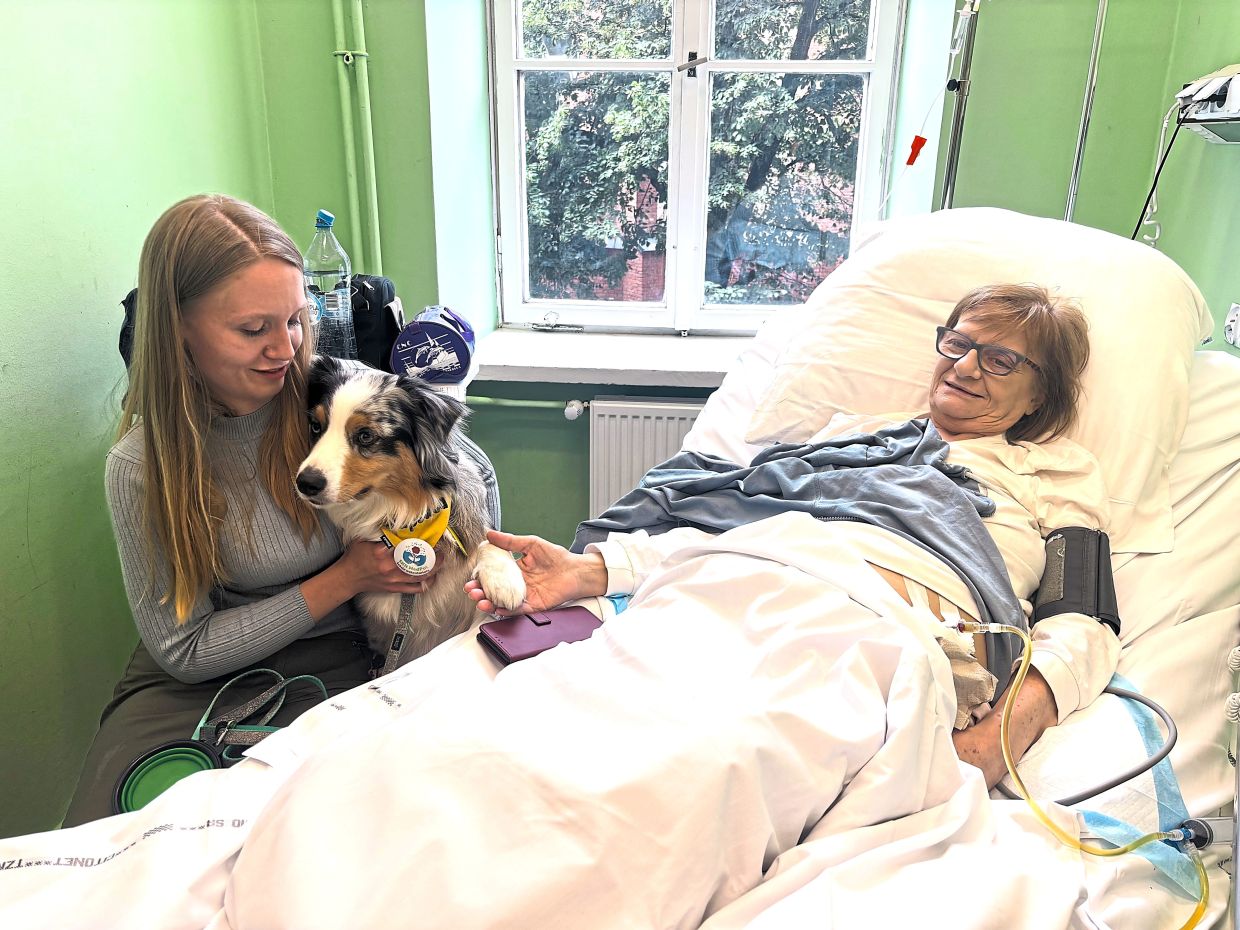
Within his own clinic, Dzierzanowski has already implemented permissive visitation policies that allow patients to spend time with their own animals when conditions permit. This means Lutka-Krawczyk can now anticipate visits from Gaja, a prospect that lifted her spirits when communicated. The clinic also welcomes certified therapy animals, including Kluska, an Australian shepherd who makes regular rounds through the ward accompanied by her handler, Malgorzata Brzozowska. During one such visit, the fluffy dog provided distraction and comfort to Lutka-Krawczyk, who held Kluska's paw and smiled—a small but significant moment of joy in the difficult landscape of palliative care.
The therapeutic benefits extend throughout the hospital ecosystem. Wojciech Zelik, a 58-year-old patient admitted with a tumour, roused himself from his bed to watch Kluska perform tricks, marvelling at the dog's soft fur and finding momentary distraction from his condition. Even nursing staff, cooks, and other workers caring for terminally ill patients experience stress relief from animal interaction. Several staff members were observed crouching in hallways to pet Kluska, with one cook even offering slices of ham—small acts of human warmth that underscore the broader psychological benefit that extends beyond patients to caregivers.
Brzozowska, a medical student who coordinates therapy dog visits, emphasises that the impact is substantially magnified when patients encounter their own beloved animals rather than unfamiliar therapy dogs. Familiar animals calm not only the patients but also their families and, critically, the animals themselves. The dogs demonstrate reduced stress when reunited with their owners, suggesting an intuitive awareness of the changed circumstances. Brzozowska interprets this animal behaviour as evidence that dogs comprehend the transformation—they sense that the person who was constantly present has disappeared, and the reunion provides essential reassurance and stability.
Lawmaker Katarzyna Piekarska, who introduced the legislation to parliament's health committee, frames the proposal as a matter of regulatory clarity. She notes that in practical reality, animals already inhabit hospital spaces in various capacities; what is required is comprehensive legal codification that standardizes and protects the practice. Without explicit legislative backing, individual facilities retain discretionary power to deny patients what has become recognized as therapeutic necessity. The legislation aims to replace ad hoc accommodation with systematic entitlement.
For Malaysian readers and other Southeast Asian observers, Poland's legislative approach offers a valuable case study in how rapidly evolving healthcare ethics intersect with animal welfare and palliative care standards. As ageing populations expand across the region and end-of-life care receives increasing attention, the question of whether institutional policies should accommodate patient-animal bonds becomes relevant to hospital administrators and policymakers. The Polish model suggests that recognising the emotional and psychological utility of pets during terminal illness need not compromise medical protocols but rather enhances the holistic care that palliative medicine aspires to deliver.
The broader significance of this legislative initiative transcends the specific case of one patient and her dog. It represents institutional acknowledgement that terminal care encompasses dimensions beyond physical symptom management—that spiritual comfort, emotional security, and the preservation of meaningful relationships constitute legitimate medical goals. By establishing a legal framework that guarantees pet visitation rights, Poland would formally recognize what palliative care practitioners increasingly understand: that dying patients deserve surroundings that include the sources of their deepest attachments, whether human or animal, and that healthcare institutions have responsibility to facilitate those connections.
As the legislation progresses through parliamentary committees, it carries implications for how modern healthcare systems conceptualize end-of-life environments. The proposal challenges the notion that hospitals must remain austere institutional spaces segregated from the domestic relationships that give life meaning. Instead, it suggests that the final chapter of life deserves the same comfort and connection that patients cherish in their healthier years, and that facilitating reunion between dying patients and their beloved animals represents not sentimentality but essential compassionate care.

