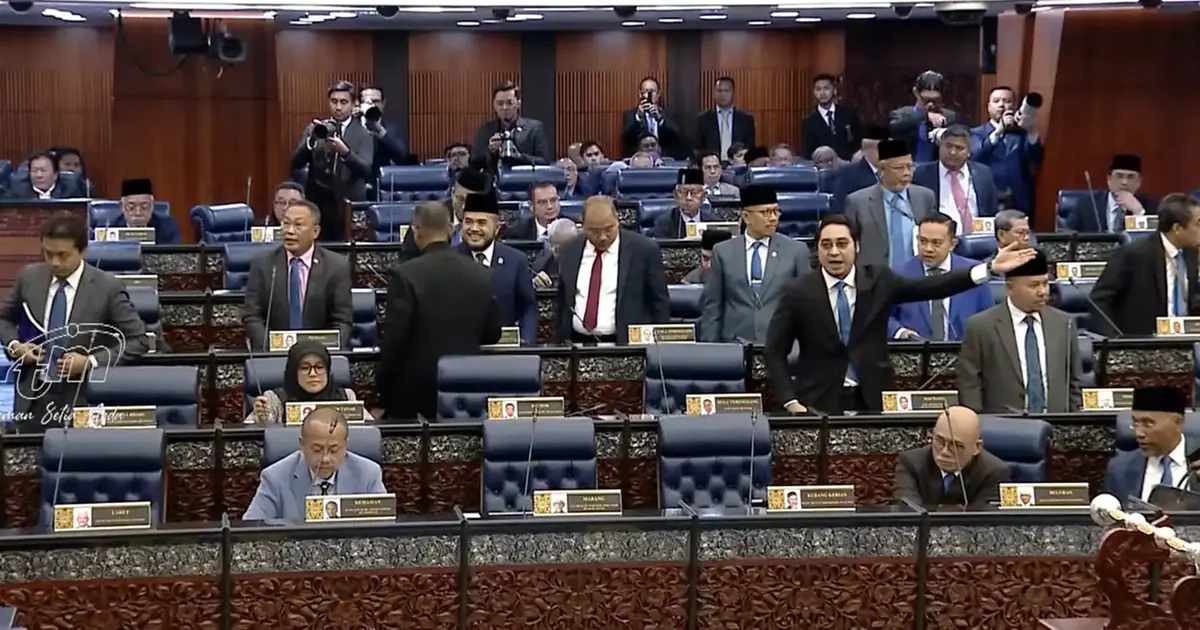
Opposition lawmakers from Perikatan Nasional staged a dramatic walkout from the Dewan Rakyat on Thursday after the speaker declined their plea to reschedule a special parliamentary sitting. The bloc, which has emerged as a significant voice in Malaysia's fractured political landscape, mounted the protest to underscore their insistence that such sessions should only proceed when the prime minister is present to participate in deliberations.
The walkout represents an escalation in tensions within Parliament and reflects deeper disagreements over parliamentary procedure and the government's conduct in the chamber. Perikatan Nasional's position centres on the principle that major parliamentary sittings demand the prime minister's presence to ensure full accountability and proper engagement with legislators. The refusal to grant this extension triggered the collective departure of PN-aligned MPs, dramatising their opposition and signalling that the coalition views the matter as one of constitutional principle rather than mere procedural convenience.
However, the walkout was complicated by a notable absence: members from Bersatu, the Bumiputera Majlis Amanah Rakyat faction that formally aligned with Perikatan Nasional, notably did not participate in the protest. This fracture within the opposition coalition suggests underlying tensions and divergent strategic calculations among its constituent parties. Bersatu's decision to remain seated while its nominal allies departed highlights the fragility of cross-party arrangements in Malaysian politics and raises questions about the cohesion of the broader PN alliance.
The incident underscores a recurring pattern in Malaysian Parliament where disputes over procedural matters often mask deeper political struggles. The special sitting itself remains significant, though the prime minister's absence—whether by choice or circumstance—created a constitutional quandary that the opposition seized upon. Perikatan Nasional's insistence on the premier's participation reflects a broader parliamentary tradition that important legislative business warrants executive presence, though such conventions are not uniformly codified in standing orders.
The speaker's decision to proceed despite the objections demonstrates the government's determination to maintain its parliamentary schedule and exercise its procedural prerogatives. This friction between the executive and opposition over parliamentary timing and attendance reflects the adversarial nature of contemporary Malaysian politics, where control over parliamentary business has become a contested terrain between government and opposition factions.
For Malaysian political observers, the walkout illustrates how opposition coalitions navigate the complexities of challenging government actions when they lack legislative majority. Perikatan Nasional, despite commanding significant numbers, remains numerically insufficient to block government business through conventional parliamentary means. Tactics such as public walkouts therefore serve both symbolic and strategic purposes—they register dissent, energise party supporters, and attempt to delegitimise proceedings in the eyes of the public and media.
Bersatu's non-participation in the walkout carries particular significance given its recent political trajectory. The party has occupied an unusual position within Malaysia's political ecosystem, having served in government under Dr Mahathir Mohamad before transitioning into opposition politics. Its reluctance to join the PN walkout may reflect lingering calculations about maintaining communication channels with government, or alternatively, disagreements about the strategic value of the protest itself.
The special sitting proceeds regardless, but the episode has injected additional friction into parliamentary proceedings at a time when cross-party tensions already run high. The prime minister's unavailability—whether due to international engagements, health considerations, or strategic choice—remains a subject of speculation, adding another layer to the political drama surrounding Parliament's functioning.
Regionally, Malaysia's parliamentary theatrics draw attention from observers across Southeast Asia where legislative-executive relations remain contested. The walkout demonstrates how opposition groups in democracies with competitive politics employ non-cooperation and public protest to amplify their limited formal power, a pattern visible across the region where governments command legislative majorities but face emboldened oppositions.
The broader implications of this incident extend beyond immediate parliamentary procedure. It signals that Malaysian Parliament remains a site of genuine contestation, where opposition lawmakers actively challenge government actions and procedural decisions. However, the fissures within Perikatan Nasional—exemplified by Bersatu's absence—suggest that unified opposition will remain difficult to sustain, potentially limiting the bloc's ability to mount sustained challenges to government initiatives.
Government backbenchers largely remained unmoved by the PN theatrics, and the sitting proceeded with business as scheduled. For many Malaysians observing from outside Parliament, such procedural disputes may seem arcane, yet they reflect fundamental questions about accountability, parliamentary tradition, and the balance of power between competing political forces in the nation's legislative chamber.

