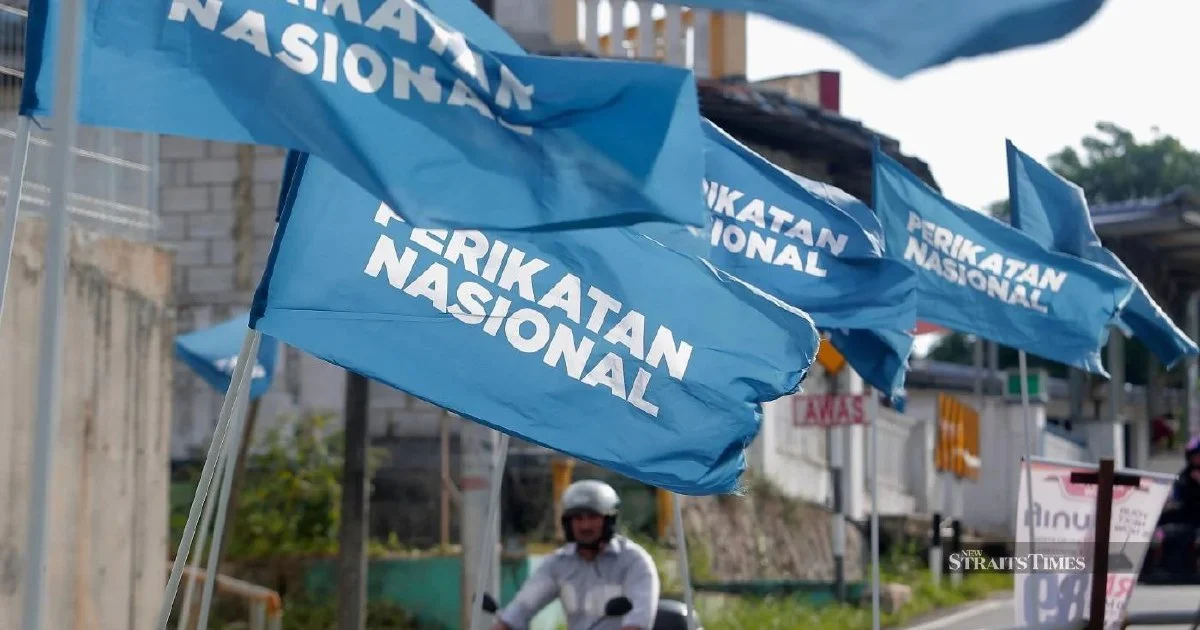
Perikatan Nasional appears willing to weather internal pressures to maintain its working relationship with Bersatu as both coalitions prepare for consequential state elections in Johor and Negri Sembilan. Political analysts suggest the coalition leadership recognises that a public split or breakdown in negotiations could undermine their combined electoral prospects at a critical juncture, making pragmatism the dominant force shaping current political manoeuvres.
The timing of these state-level contests places PN in a delicate strategic position. Johor and Negri Sembilan represent significant political battlegrounds where PN and Bersatu have demonstrated electoral strength in recent contests. Fracturing the partnership now would signal internal weakness to voters, potentially allowing opposition forces to capitalise on divisions within what has been positioned as a cohesive political force. This calculation explains why senior leaders from both parties have continued diplomatic engagement despite reported disagreements over seat allocations and policy directions.
Bersatu's position within the broader coalition structure has evolved considerably since the 2020 general election, when the party emerged as a kingmaker capable of determining government formation. The party's influence has fluctuated based on electoral performance and its ability to command parliamentary support. Maintaining PN's confidence in Bersatu's viability as a coalition partner requires demonstrating continued relevance and organisational strength, particularly in states where the party maintains traditional support bases.
For PN itself, preserving coalition unity serves multiple strategic objectives. The alliance encompasses parties with distinct organisational capabilities and regional strongholds, creating a mosaic of political power across Malaysia. Allowing Bersatu to splinter or exit would create vacuums that neither PN's core parties nor rival coalitions might easily fill. The broader PAS-led coalition structure within PN benefits from Bersatu's presence as a buffer against accusations of religious extremism and as a vehicle for attracting moderate, urban-oriented voters who might otherwise gravitate toward other political options.
The forthcoming state elections carry implications extending well beyond provincial governance. These contests function as mid-term political health checks for the ruling federal government and provide opposition coalitions with opportunities to build momentum. A strong showing in Johor, Malaysia's second-largest state by population and economic output, would reinforce PN's positioning as a credible national alternative to the Pakatan Harapan-led administration. Conversely, losses would accelerate internal recriminations and potentially trigger the very ruptures that coalition leaders are currently keen to avoid.
Bersatu's historical trajectory adds another dimension to current alliance management. The party was founded by former Prime Minister Mahathir Mohamad and has positioned itself as a vehicle for Malay-Muslim interests while maintaining a centrist political brand. This positioning sometimes creates tension with PAS, the Islamist-oriented party that forms the backbone of PN in many regions. Navigating these ideological differences requires constant negotiation and compromise, particularly when seat allocations could determine electoral outcomes in marginal constituencies.
Analysts note that coalition partners often employ patience strategically during election cycles. Parties that might otherwise air grievances publicly instead channel complaints through private diplomatic channels, maintaining public unity as a means of maximising collective electoral appeal. Both PN and Bersatu understand that voters typically punish coalitions that appear fractious, viewing internal discord as symptomatic of deeper governance failures. This awareness encourages restraint even when underlying tensions run high.
The regional context further shapes these calculations. Southeast Asian coalition politics frequently feature temporary accommodations between parties with divergent philosophies. Bersatu occupies a particular niche—significant enough that losing it would damage PN's diversity, yet not so dominant that PN cannot survive its departure. This middle position paradoxically provides Bersatu with negotiating leverage. The party can credibly threaten withdrawal, knowing such action would create complications for PN, while PN can implicitly suggest that alternative arrangements are possible if Bersatu becomes too demanding.
Electoral mathematics also favour maintaining the coalition. In multiple constituencies across both Johor and Negri Sembilan, PN and Bersatu combined vote shares exceed those available to individual parties competing alone. Coalition arrangements typically amplify each party's effective strength by concentrating campaign resources, consolidating supporter bases, and presenting unified candidate slates that reduce vote splitting. Dissolution would reverse these advantages immediately, potentially benefiting opposition parties positioned to claim spoils from PN's fragmentation.
The broader political environment reinforces incentives for coalition stability. The federal government under Pakatan Harapan faces its own structural challenges, and PN has positioned itself as a coherent alternative capable of delivering stable governance. Allowing internal squabbles to undermine this positioning would weaken PN's narrative appeal precisely when external conditions might otherwise favour its electoral prospects. The discipline required to maintain coalition unity despite disagreements represents a form of political maturity that voters increasingly demand from potential ruling alternatives.
Looking forward, analysts expect the coalition to hold through the state elections, with serious restructuring discussions unlikely until after results are tallied. The party leadership understands that premature ruptures could become self-fulfilling prophecies, where attempts to resolve underlying problems instead accelerate deterioration. By maintaining public unity while addressing grievances through internal mechanisms, both PN and Bersatu hope to maximise their electoral prospects while preserving options for future reconfiguration if circumstances warrant such changes.