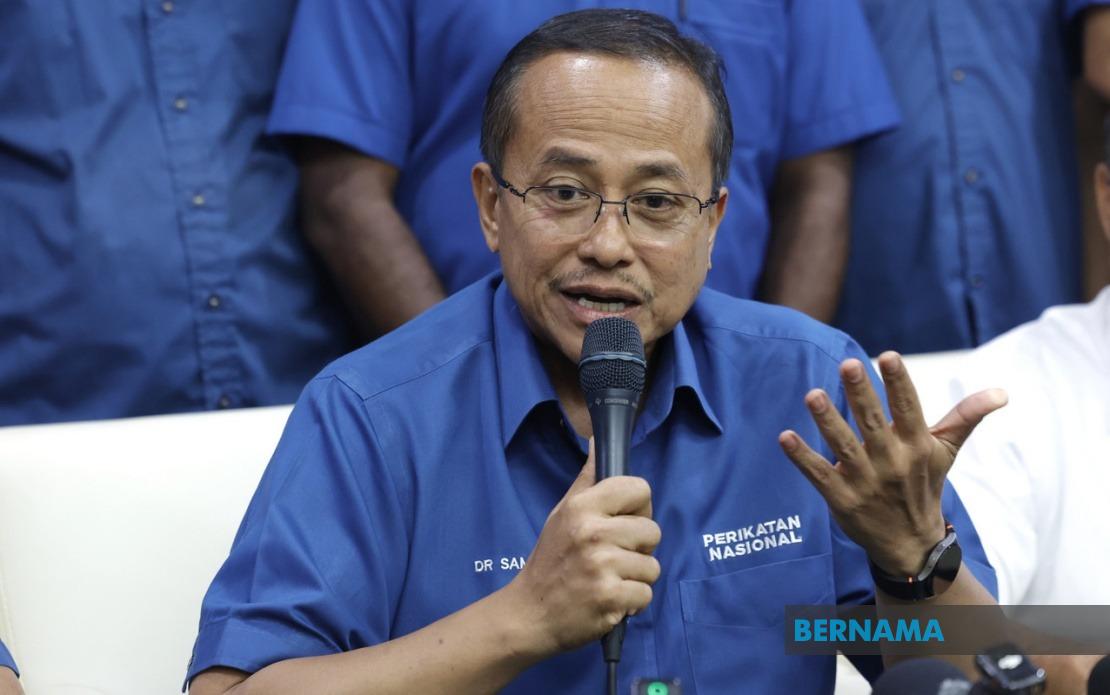
The Perikatan Nasional coalition has formally approved its candidate arrangement for the upcoming 16th Negeri Sembilan state election, marking a significant step toward unified opposition mobilisation in the state. The decision, ratified during a special Supreme Council meeting, establishes the allocation framework that will distribute available seats among the coalition's four participating component parties: PAS, Gerakan, Wawasan, and MIPP. By centralising candidacy around the Perikatan Nasional logo rather than individual party symbols, the coalition aims to present a coherent political message to voters across the state.
Datuk Seri Dr Ahmad Samsuri Mokhtar, who chairs the Perikatan Nasional coalition, articulated the strategic reasoning behind the unified branding decision. He stressed that the arrangement serves broader objectives extending well beyond mere electoral competition. The coalition frames its candidacy as centred on improving the welfare of ordinary citizens, accelerating development initiatives throughout Negeri Sembilan, and strengthening communal harmony across the state's diverse population. This positioning reflects a deliberate effort to shift electoral discourse away from narrow partisan interests toward governance outcomes that might resonate across demographic lines.
The significance of the seat allocation approval extends beyond procedural formality. The arrangement was fashioned through detailed preliminary consultations among component parties, a process that Dr Ahmad Samsuri explicitly confirmed occurred under his direction and with his formal sanction as coalition chairman. This clarification appears designed to reinforce institutional coherence and address concerns about decision-making transparency within the alliance. By emphasising his knowledge and approval of all earlier discussions, the PN chairman sought to project a unified coalition structure rather than one fractionalised by competing internal interests.
Yet the timing and framing of this announcement must be understood against the backdrop of Bersatu's conspicuous absence. Tan Sri Muhyiddin Yassin, who leads the Malaysian United Indigenous Party, publicly contested the narrative of coordinated coalition decision-making, asserting that Bersatu had not participated in discussions regarding seat allocations or potential cooperation frameworks with Barisan Nasional. This exclusion, or perceived sidelining, prompted Bersatu to chart an independent electoral course, fielding candidates under its own party symbol rather than the Perikatan Nasional banner.
The fragmentation of the broader opposition coalition reflects deeper structural tensions within anti-establishment political formations in Malaysia. Bersatu's decision to contest separately, despite being nominally associated with the Perikatan Nasional grouping, suggests underlying disputes over strategic direction, power-sharing arrangements, or personality conflicts among senior leadership figures. For Malaysian voters in Negeri Sembilan, this schism complicates the opposition landscape, potentially dispersing anti-government votes across multiple party logos rather than consolidating them behind a single political alternative.
From a Negeri Sembilan-specific perspective, the implications are substantial. The state has historically served as a significant political battleground, and the manner in which opposition forces organise themselves carries tangible consequences for seat distributions and government formation prospects. The consolidation of PN's component parties under a unified logo may enhance voter recognition and turnout among certain demographic segments that view the coalition as a coherent alternative to incumbent administrations. Conversely, the absence of Bersatu from this unified arrangement may fragment opposition momentum in constituencies where Bersatu retains organisational capacity or voter loyalty.
Geographically, Negeri Sembilan occupies a strategically important position within the broader Malaysian political ecosystem. As a state where multiple competing coalitions vie for influence, the structural choices made by opposition blocs often serve as bellwethers for national political trends. The Perikatan Nasional's move to project unified branding sends signals to voters about coalition cohesion and readiness for governance, even as the simultaneous decision by Bersatu to contest independently undermines that messaging by signalling internal disagreement among ideological allies.
The stated policy priorities articulated by the Perikatan Nasional through Dr Ahmad Samsuri's statement—welfare enhancement, development acceleration, and communal harmony—represent conventional political framing designed to appeal across traditional ideological divides. However, the specificity of this formulation matters for understanding how the coalition intends to differentiate itself from incumbent power-holders and from Bersatu's independent challenge. Whether these pledges resonate with Negeri Sembilan voters will depend significantly on the track records of individual candidates and the degree to which the coalition's messaging penetrates local media environments.
The coalition's decision to employ a single electoral symbol also carries implications for post-election alliance mathematics. Should the Perikatan Nasional alliance succeed in accumulating sufficient seats to form government, the unified candidacy arrangement suggests a potentially more coherent basis for governing coalition construction compared to arrangements where multiple party logos diluted voter choice. The visual consistency of campaign materials and party identification may reinforce brand recognition among less politically engaged voters who rely on simple visual cues when making ballot decisions.
Bersatu's independent candidacy simultaneously reflects and reinforces broader questions about the viability of multi-party opposition coalitions in the Malaysian context. The party's decision suggests that senior party leadership has calculated greater political advantage from maintaining organisational autonomy and distinct party identity rather than accepting subordinate positioning within a larger coalition structure. This calculation may reflect confidence in Bersatu's capacity to win support on its own terms, or alternatively, frustration with perceived marginalisation in seat-sharing negotiations.
Looking forward, the Negeri Sembilan election will provide empirical data about voter preferences regarding coalition versus independent opposition candidacies. Should the unified Perikatan Nasional approach yield improved electoral performance compared to previous fragmented opposition arrangements, it may encourage broader coalition cohesion at national level. Conversely, if Bersatu demonstrates strong independent performance, it could validate the party leadership's decision and potentially prompt other political actors to reconsider the value of constraining themselves within larger groupings.
For Malaysian political observers and regional analysts monitoring democratic competition in Southeast Asia, the Negeri Sembilan contest represents an important test case for coalition stability and opposition coordination. The interplay between unified branding strategies and factional divisions within anti-establishment political forces will illuminate persistent challenges facing multi-party democratic systems attempting to generate meaningful political alternation.

