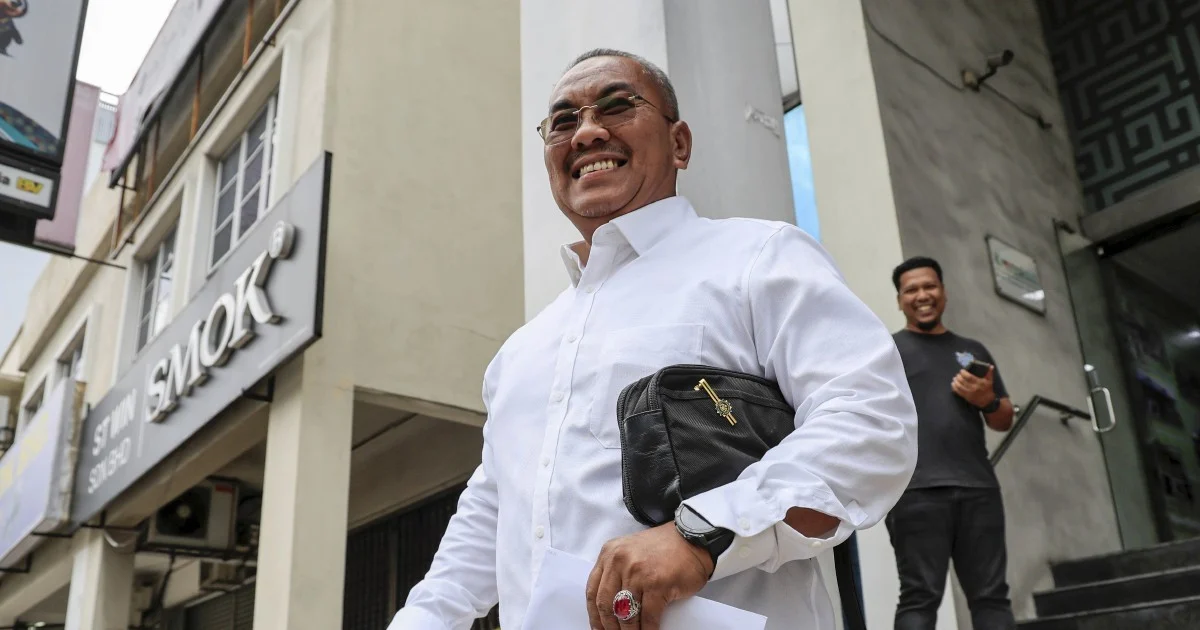
Perikatan Nasional's election machinery has cleared a crucial hurdle in preparing for the Johor state election, with coalition election director Datuk Seri Sanusi Md Nor confirming today that protracted seat negotiations among member parties have reached a definitive conclusion. The announcement marks the resolution of disputes over 34 overlapping constituencies where multiple PN component parties had competing claims, a process that typically proves contentious and time-consuming in multi-party coalitions operating in Malaysia's competitive electoral landscape.
Seat negotiations within coalition frameworks represent one of the most delicate phases of electoral preparation, as they directly determine which parties contest which constituencies and therefore distribute the spoils of anticipated victory. The 34 overlapping seats in Johor illustrate the complexity of managing competing organisational interests within a political alliance that spans parties with distinct regional bases, support networks, and leadership expectations. Resolving such conflicts without triggering internal acrimony or defections requires careful negotiation and compromise from coalition leadership.
Johor, Malaysia's southernmost peninsular state and historically a significant political battleground, holds particular importance for PN's broader political ambitions. The state's electoral dynamics have shifted considerably in recent years, with various coalitions gaining and losing ground during successive electoral cycles. A cohesive PN performance in Johor would signal the coalition's organisational maturity and capacity to function effectively as an integrated political force, qualities essential for maintaining voter confidence and managing internal stability ahead of potential federal-level contests.
The completion of seat negotiations by this stage suggests that PN leadership has prioritised getting internal mechanics in order well before polling day, a departure from past patterns where some coalition seat distributions remained contentious until the final moment. This advance preparation allows component parties sufficient time to mobilise campaign machinery, recruit candidates, and prepare ground-level organisation without the disruption of last-minute reassignments or disputes that might alienate grassroots activists or candidates.
For PN's constituent parties—primarily Bersatu, PAS, and Perikatan's other members—the settlement represents an opportunity to present a unified electoral front to Johor voters. In a state where opposition coalitions, particularly those led by longstanding national parties, maintain established voting patterns and organisational networks, PN's ability to avoid public disputes over seat allocations carries strategic value in framing the coalition as a disciplined, competent alternative to incumbent arrangements.
Sanusi Md Nor's role as election director places him at the centre of PN's electoral strategy and internal coordination. His public announcement of the concluded negotiations serves as formal confirmation to party members, candidates, and the media that the coalition has moved beyond the bargaining phase and entered the campaign preparation phase. Such clarity benefits all parties involved, as uncertainty about final seat allocations can dampen campaign enthusiasm and complicate local-level planning.
The resolution of all 34 overlapping seats within the established timeframe also reflects confidence among senior PN figures that the coalition's internal mechanisms for dispute resolution function adequately. Whether these mechanisms favoured particular parties or distributed allocations relatively equitably remains unclear from the announcement alone, but the absence of any reported dissent or public complaints from component parties suggests that the settlement achieved sufficient buy-in from PN leadership tiers.
Johor's significance within the broader Malaysian political context cannot be overstated. As a state with a substantial population, considerable economic resources, and a voting bloc that has swung between different political configurations, electoral performance in Johor frequently influences perceptions of momentum and viability at the national level. A successful PN showing in Johor would provide tangible evidence of the coalition's electoral appeal and organisational capacity, while a poor result would reinforce questions about PN's ability to convert regional positioning into sustained political advancement.
The timing of this announcement, though not explicitly detailed, suggests PN is pushing forward with campaign preparation amid a fluid national political environment. Malaysia's electoral calendar remains unpredictable, with state elections potentially triggering cascading political consequences. PN's readiness to contest Johor with clearly defined candidate rosters and seat allocations positions the coalition to respond rapidly should state polling be scheduled in the near term, avoiding the chaos that often accompanies rushed or late campaign preparations.
For Malaysian voters in Johor, the significance of PN's internal settlement lies in its implications for electoral choice and campaign quality. A coalition operating with resolved internal conflicts tends to present clearer policy platforms and more energetic campaigning than one embroiled in seat disputes. Whether PN's resolution of these negotiations translates into actual electoral gains will ultimately depend on factors beyond internal party mechanics—including voter sentiment, policy resonance, candidate quality, and the performance of competing coalitions contesting the same constituencies.
The broader pattern of PN successfully concluding seat negotiations without major ruptures also suggests that the coalition retains sufficient ideological and structural coherence to function as a coordinated political entity. This operational competence, while administratively pedestrian, carries political weight in an environment where coalition stability remains uncertain and where previous political alignments have frequently fractured under pressure.
As Johor edges closer to a potential electoral contest, the conclusion of seat allocation disputes removes one significant barrier to unified campaign messaging and coordinated mobilisation. Whether this internal settlement translates into electoral success for PN remains contingent on factors both within and beyond the coalition's direct control, but the completion of negotiations at least ensures that voters will encounter a unified coalition front rather than one distracted by internal disputes.

