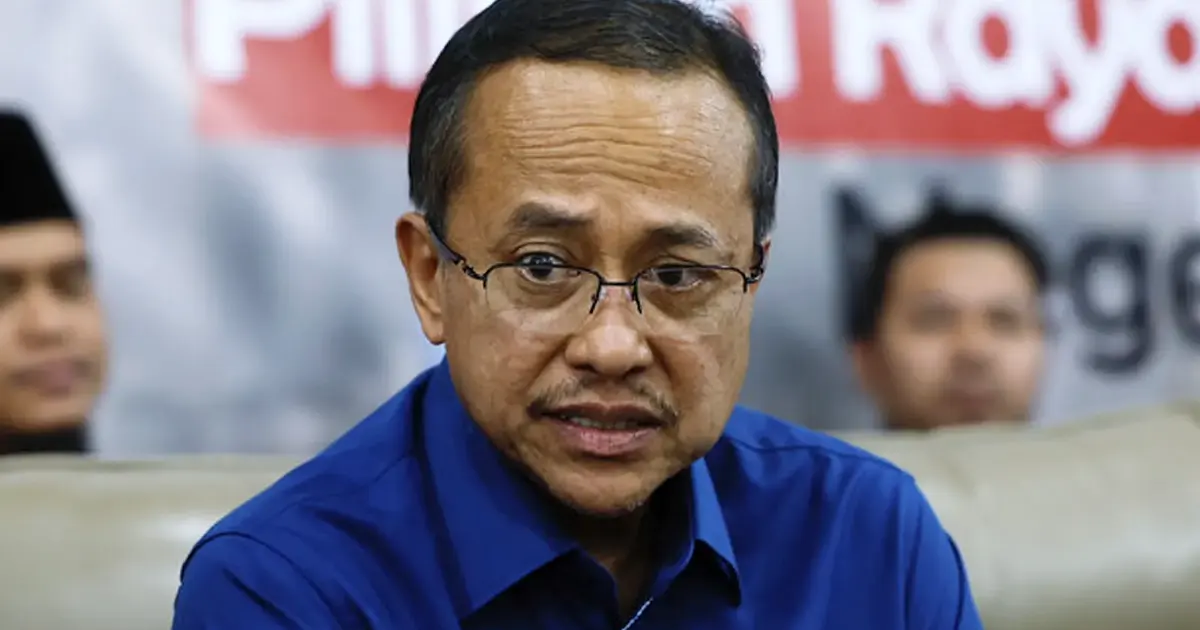
Perikatan Nasional coalition chairman Samsuri Mohamad has moved to allay public concerns about potential voter confusion arising from the use of a unified coalition logo by multiple component parties during campaign activities. The assurance comes as both PAS and Bersatu have begun deploying the shared PN symbol across their political operations, a decision that sparked questions about clarity at the ballot box and the mechanics of coalition cohesion in Malaysia's increasingly complex political landscape.
The crux of Samsuri's position rests on a straightforward organisational principle: the two parties are not fielding candidates in the same electoral contests. This structural arrangement, he emphasised, creates a natural safeguard against the sort of voter confusion that might otherwise emerge if multiple parties competed simultaneously under identical branding in any given constituency. The logic reflects a broader understanding that Malaysian voters, while diverse in their sophistication with electoral symbols, generally understand the relationship between party logos and candidate selection at the polling station.
The decision to allow shared logo usage represents a notable evolution in how the PN coalition is projecting its collective identity to the electorate. Unlike previous coalition arrangements where strict logo demarcation maintained clear visual separation between partners, this approach signals a deliberate effort to build brand recognition around the PN coalition itself rather than solely around individual party identities. Such a strategy can prove effective in bolstering cohesion messaging, particularly important for a coalition that has experienced significant restructuring and realignment in recent years.
For Malaysian voters in constituencies where either PAS or Bersatu is contesting, the unified logo approach may actually streamline political messaging by emphasising shared policy platforms and collective governance vision. This is particularly relevant in regions where the PN coalition has established itself as a credible alternative political force. The visual consistency could help voters who support the coalition's broader agenda quickly identify which candidate represents their preferred option, even if multiple parties operate under the same umbrella in different areas.
The arrangement does raise broader questions about coalition management and the balance between individual party autonomy and collective branding. In Malaysian politics, where coalition formations have historically proven fragile and subject to rapid reconfiguration, maintaining distinct party identities has often served as insurance against total collapse when component parties disagree on major issues. The move toward shared symbolism could be interpreted as confidence in the PN's durability, or conversely, as a calculated risk that prioritises short-term messaging cohesion over traditional safeguards.
PAS and Bersatu's decision to embrace the PN logo jointly also reflects the practical realities of contemporary campaign strategy. In an era where digital platforms dominate political communication, consistent visual branding across social media, campaign materials, and public events carries significant weight in shaping voter perception. The unified approach allows both parties to leverage PN's organisational resources and campaign infrastructure more efficiently, avoiding the redundancy that can emerge when coalition partners maintain entirely separate promotional operations.
From a regional perspective, Malaysia's approach to coalition branding differs notably from other Southeast Asian democracies. While Indonesia's coalition structures often maintain stronger visual distinction between partners, and Thailand's recent experiments with electoral coalitions have experimented with various branding strategies, the PN model offers a middle-ground approach that acknowledges both collective identity and individual party autonomy. This may serve as a template for other political coalitions grappling with similar questions about unity and differentiation.
Samsuri's explicit reassurance suggests that concerns about confusion had circulated within party circles or among political observers. Such apprehension might stem from Malaysia's electoral history, where ballot design and voter understanding of electoral mechanics have occasionally become subjects of controversy. The chairman's proactive clarification indicates that PN leadership has considered potential complications and determined that their seat-division arrangement adequately mitigates risks.
The practical effectiveness of this arrangement ultimately depends on consistent execution by party machinery at ground level. Local campaigns must clearly communicate which candidate represents the PN in each contest, ensuring that the unified logo functions as a coalition identifier rather than as a substitute for specific party or candidate recognition. This requires sophisticated coordination between PAS and Bersatu campaign teams, particularly in constituencies where both parties have active memberships and supporter bases.
Moving forward, observers will watch whether the shared logo approach strengthens PN cohesion or creates unforeseen complications in voter communication. The arrangement also reflects broader evolution in how Malaysian political coalitions are adapting to contemporary electoral challenges, including fragmentation of voter bases and the need for clearer, more compelling messaging in crowded political markets. For Malaysian voters, the approach ultimately depends on parties' ability to clearly articulate the distinction between PN as a collective entity and the individual parties competing under its banner.

