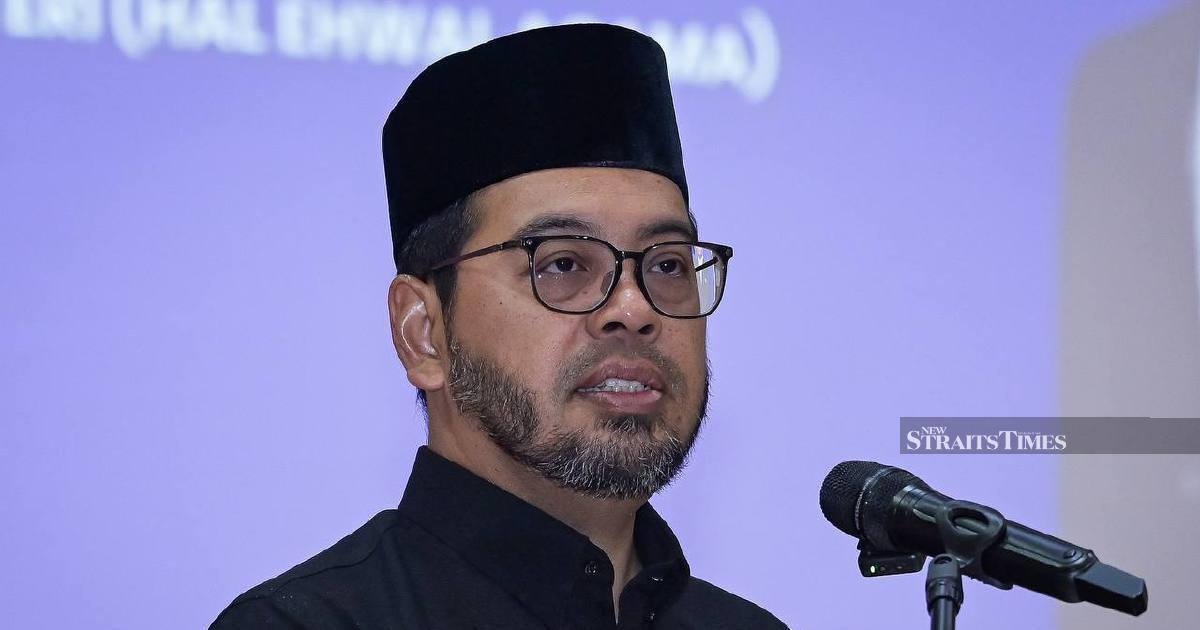
The Prime Minister's Department responsible for religious affairs has formally aligned itself with Sultan Ibrahim, King of Malaysia, in calling for a meticulous and impartial examination of the Royal Commission of Inquiry findings concerning Lembaga Tabung Haji. This endorsement from Putrajaya signals governmental commitment to the investigative process that will follow the RCI's conclusions about the hajj fund manager.
The backing from the Prime Minister's Department carries significant weight in Malaysia's institutional landscape. As the focal point for religious administration at the federal level, the department's explicit support demonstrates that responses to the RCI inquiry will not be treated as a routine bureaucratic exercise. By publicly affirming the King's directive, the department is essentially pledging that due process and accountability will take precedence over any institutional convenience or political considerations.
The emphasis on conducting investigations "thoroughly" reflects recognition that Tabung Haji's operations and governance structures warrant nothing less than exhaustive scrutiny. As one of Malaysia's largest Islamic financial institutions managing billions of ringgit in hajj savings for millions of Muslim pilgrims, the fund's integrity is central to public confidence in religious institutions. Any lapses identified by the RCI demand proportionately serious investigative responses.
Transparency, the second pillar of the directive, holds particular importance for Malaysian citizens and the broader Muslim community. Tabung Haji operates as a quasi-public institution with direct links to government, and its management affects everyday Malaysians planning to perform the hajj pilgrimage. Transparent investigations allow stakeholders—pilgrims, investors, and the public—to understand what went wrong and what corrective measures are being implemented. This openness also serves to rebuild trust in institutional frameworks that may have been compromised.
The "without compromise" element signals zero tolerance for informal settlements, face-saving arrangements, or selective accountability. In Malaysian governance contexts, this phrasing indicates that investigative authorities will be expected to pursue leads wherever they lead and to ensure that findings result in concrete action. This is particularly crucial when investigations may implicate senior figures or established institutional practices that might otherwise be protected by informal networks.
Contextually, the RCI's establishment itself reflected widespread concern about Tabung Haji's management and performance. The commission was tasked with examining the fund's operations, governance, and investment decisions—areas that had generated sufficient public questioning to warrant a formal inquiry. The royal directive now ensures that the RCI's work does not languish in bureaucratic channels; instead, it must trigger substantive action.
For Malaysian investors and pilgrims, this coordinated messaging from both the palace and the Prime Minister's Department provides some assurance that institutional reform is being taken seriously at the highest levels. The convergence of royal and governmental support creates a framework within which investigative agencies and enforcement bodies have political and institutional backing to pursue their work without obstruction.
The religious affairs portfolio's involvement is also symbolically important. Since Tabung Haji operates under Islamic principles and serves predominantly Muslim pilgrims, having the religious affairs apparatus endorse rigorous investigation strengthens the religious legitimacy of the process. This alignment suggests that accountability and good governance are being framed as consonant with Islamic values rather than external impositions.
Looking forward, this public commitment sets expectations for how findings will be handled. Malaysian civil society and international observers will likely reference this endorsement when evaluating whether subsequent investigations meet stated standards. The clarity of the public position also makes it more difficult for implementing agencies to dilute investigative outcomes or settle matters quietly.
For the broader Southeast Asian region, Malaysia's response to its major financial institution inquiry carries instructive weight. As other countries grapple with governance challenges in Islamic finance and pilgrimage fund management, Malaysia's approach—combining royal authority, governmental coordination, and publicised commitment to rigorous investigation—offers a model of institutional response to crisis that balances religious and administrative dimensions.
The practical implications of this stance remain to be seen in the investigative phase ahead. However, the explicit backing from the Prime Minister's Department signals that stakeholders should expect genuine accountability measures rather than symbolic gestures. This foundation may prove essential in restoring confidence in Tabung Haji and in demonstrating that Malaysian institutions can conduct meaningful self-examination when public trust has been questioned.

