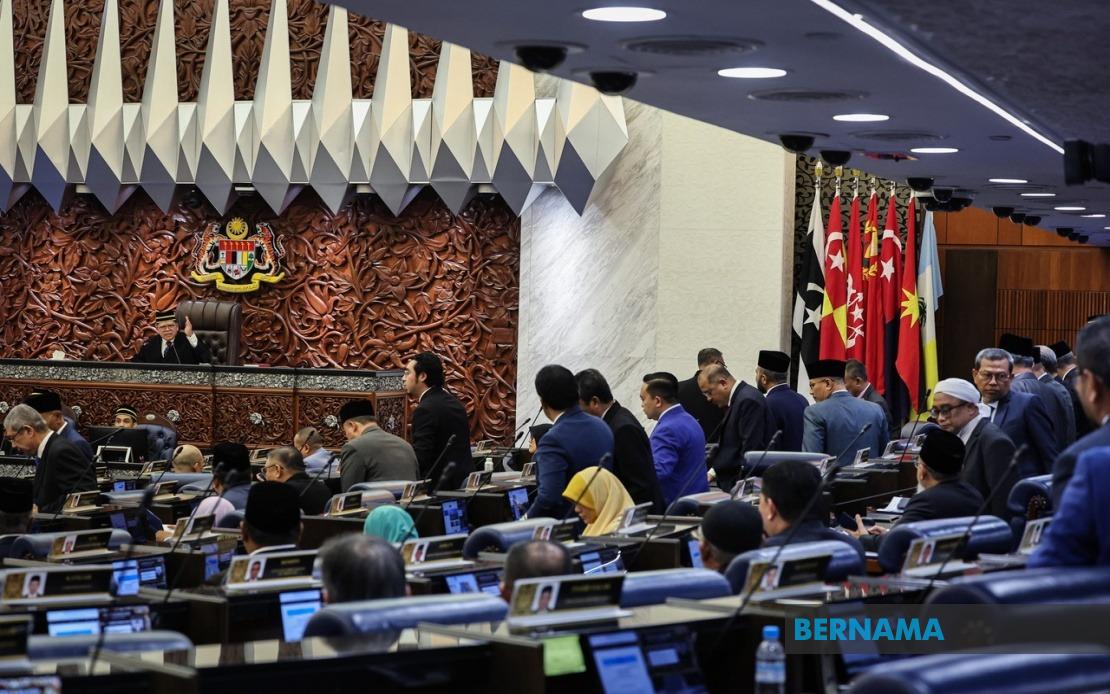
The Prime Minister's non-attendance at a special parliamentary session should not provide cover for lawmakers to abandon their duty to scrutinise a report affecting the savings of millions of Muslims, according to Tengku Datuk Seri Zafrul Tengku Abdul Aziz, the Prime Minister's Senior Political Adviser. His remarks came after several opposition members staged a walkout during the Dewan Rakyat debate on the Royal Commission of Inquiry findings regarding Lembaga Tabung Haji, the Islamic pilgrimage savings fund that holds billions in deposits from Malaysian Muslims across all social strata.
The special parliamentary sitting, held on August 11, was convened to examine a 211-page RCI report on Tabung Haji's management and operations between 2014 and 2020. The document had been released to the public on July 29 following government approval, marking a significant moment of transparency around one of Malaysia's most sensitive financial institutions. Yet the proceedings were marked by notable absences, with opposition figures including Perikatan Nasional chief Datuk Seri Hamzah Zainudin, PN chief whip Datuk Seri Takiyuddin Hassan, and PN chairman Datuk Seri Dr Samsuri Mokhtar all vacating the chamber during the presentation and debate phase.
Tengku Zafrul's intervention through social media highlighted what he saw as a troubling contradiction in parliamentary conduct. He posed a direct question to the departing MPs: if the Prime Minister is absent, does that automatically relieve members of their obligation to listen, absorb, and engage in substantive discussion about matters affecting their constituents? His framing sought to reorient the debate away from partisan theatre toward the core issue at stake—the financial wellbeing and retirement security of millions of Malaysian pilgrims whose money is held within the Tabung Haji system.
The adviser underscored that this was fundamentally a matter concerning the Muslim and Malay economy, positioning it among the country's largest ever controversies in this domain. By invoking the broader economic significance beyond individual accounts, Tengku Zafrul attempted to elevate the discourse above political scoring, suggesting that the RCI findings touched on structural questions affecting not merely a specific constituency or demographic segment but a foundational pillar of Islamic financial practice in Malaysia. The Tabung Haji's role in facilitating Hajj pilgrimages while simultaneously managing one of the nation's substantial pools of retail savings gives the institution unique importance in both religious and economic terms.
His statement explicitly endorsed the parliamentary right to dissent and challenge the government. Tengku Zafrul articulated that MPs are not only permitted but expected to stand and voice objections if they believe policies are misguided, to debate points of disagreement vigorously, and to demand evidence-based responses from ministers. This framing attempted to distinguish between legitimate opposition and what he characterised as performative absence—leaving the chamber in a manner that suggested indifference to the subject matter itself rather than principled disagreement with a specific proposal.
The walkout by opposition figures, particularly those from Perikatan Nasional, carried political weight given PN's standing as the primary opposition coalition. Their departure during Dr Zulkifli Hasan's presentation of the RCI report—the Religious Affairs Minister's role reflecting the piety-laden nature of the issue—suggested a coordinated message. However, Tengku Zafrul's rebuttal sought to frame such tactics as abandonment of fiduciary duty to constituents, especially those Muslim Malaysians whose retirement and pilgrimage savings depend on proper institutional oversight and transparent accountability mechanisms.
The Tabung Haji RCI itself had been a response to longstanding concerns about the organisation's governance, financial performance, and operational transparency. The commission's work culminated in detailed findings that the government deemed sufficiently important to release publicly rather than restrict to confidential channels. This decision reflected growing pressure for accountability in religious institutions managing public funds, a theme resonating across Southeast Asian democracies grappling with similar tensions between institutional autonomy, religious sensitivity, and governance transparency. The report's public release therefore represented a watershed moment in how Malaysia addresses such matters.
Tengku Zafrul's intervention also carried implicit criticism of what he viewed as the politicisation of a fundamentally non-partisan matter. By walking out, opposition members risked being portrayed as indifferent to Muslim welfare or as prioritising partisan advantage over substantive policy discussion. His appeal to MPs to engage factually and rigorously, to criticise government when warranted but to do so on evidential grounds, articulated a vision of parliamentary function that transcends tribal politics. This resonates with broader concerns across the region about the health of legislative institutions when members treat major deliberations as opportunities for dramatic gestures rather than detailed examination.
The debate itself represented one of the few parliamentary opportunities for detailed examination of the RCI's 211-page findings. For MPs not to participate actively, regardless of whether they agreed with government policy, meant ceding the discursive space entirely to government speakers and sympathetic backbenchers. From an information perspective, the public record of parliamentary debate provides crucial documentation of how institutions have interpreted the commission's work and what remedial actions are being contemplated. Opposition MPs' absence thus reduced democratic scrutiny and public understanding of the findings.
The broader context involves Tabung Haji's financial trajectory and governance challenges that had accumulated over years. The RCI was tasked with examining specific concerns about investment performance, administrative efficiency, and whether depositor interests had been adequately prioritised. These were not ideological questions suitable for partisan division but technical matters of fiduciary responsibility. Whether one supported the current government or opposed it should have been secondary to the substance of how the institution was managed and whether depositors' savings had been handled appropriately according to professional standards and Islamic principles.
Tengku Zafrul's appeal also implicitly suggested that opposition walkouts undermine their own political standing with Muslim voters who depend on Tabung Haji for pilgrimage financing. By appearing to disregard the RCI report's implications, opposition figures might face criticism from their own constituents concerned about their savings and retirement security. This political dimension adds weight to the adviser's argument that the walkout carried reputational risks for those staging it, particularly within religious and conservative constituencies that form core opposition voter bases in Malaysia.
Looking forward, the RCI report's implications will likely shape forthcoming legislative and regulatory responses from the government. Whether parliamentary debate occurs comprehensively or becomes fragmented by continued opposition boycotts will influence how thoroughly the commission's recommendations are interrogated and implemented. The quality of parliamentary scrutiny directly affects institutional reform prospects, making the advisers's call for substantive engagement rather than tactical absence particularly pertinent for Malaysia's ongoing governance evolution and the protection of Muslim citizens' financial interests.

