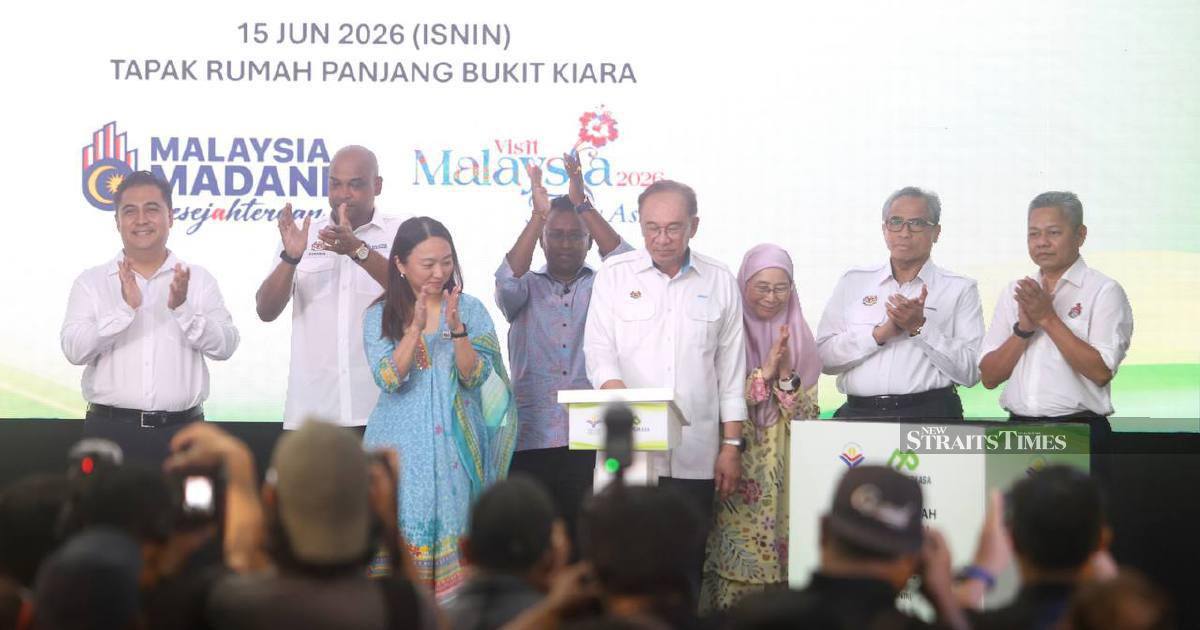
Prime Minister Datuk Seri Anwar Ibrahim has sounded an alarm over what he characterises as deliberate attempts to fracture Malaysia's multicultural fabric through inflammatory political messaging. Speaking directly to Malaysians, the premier stressed the importance of rejecting campaigns designed to fracture communities along ethnic boundaries, a warning that carries particular resonance in a nation whose stability has historically depended on racial harmony and interethnic accommodation.
The prime minister's intervention reflects growing concerns within the political establishment about the use of divisive racial rhetoric as an electoral strategy. Such campaigns have become increasingly visible across Malaysian politics, with various actors attempting to mobilise their respective communities by emphasising grievances and stoking anxiety about the status of particular groups. Anwar's public appeal represents an effort to counter this trend by appealing directly to voters' better instincts and shared national interests.
Central to Anwar's message is the contention that ordinary Malaysians—regardless of their ethnic background—suffer tangible consequences when politicians prioritise divisive rhetoric over substantive governance. When resources and public attention become consumed by racial controversies, the argument goes, essential issues affecting all communities fall by the wayside. Economic policy, healthcare delivery, educational standards, and infrastructure development recede in importance, leaving all Malaysians worse off regardless of which group holds political advantage.
This framing represents a deliberate pivot from zero-sum racial narratives toward a conception of shared national interest. By emphasising that everyone loses when politicians stir tensions, Anwar attempts to reposition racial harmony not as a concession to particular groups but as a prerequisite for national development that benefits the entire population. The approach acknowledges that Malaysia's continued prosperity depends on maintaining the delicate constitutional arrangement that underpins interethnic coexistence.
The timing of these remarks carries significance within Malaysia's current political context. The country continues to navigate periodic outbreaks of communal tension, often accompanied by inflammatory statements from political actors seeking to consolidate support within their respective electoral bases. Anwar's intervention suggests that senior government figures perceive a genuine risk that such tactics could undermine social cohesion or destabilise the political environment.
Historically, Malaysian governance has relied upon a bargain enshrined in the Federal Constitution: the recognition of Malay-Muslim special rights in exchange for guaranteeing citizenship and equal rights to non-Malay Malaysians. While this arrangement has proven durable, it remains subject to periodic challenge from actors arguing that one group or another has received inadequate recognition. Politicians leveraging these grievances risk unravelling the consensus that underpins this constitutional settlement.
Anwar's appeal operates on multiple levels simultaneously. To UMNO's traditional base and Malay-Muslim voters more broadly, he positions the government as capable of advancing Bumiputera interests without requiring the inflammatory rhetoric associated with opposition parties. To non-Malay communities, his message provides reassurance that the government recognises their concerns about divisive politics and remains committed to inclusive governance. To centrist voters across all communities, he offers the prospect of politics oriented toward practical problem-solving rather than identity mobilisation.
The prime minister's warning also reflects awareness that social media has dramatically amplified the reach and velocity of divisive messaging. Inflammatory posts, doctored images, and misleading narratives about intercommunal relations can spread rapidly across platforms, generating real-world consequences before fact-checking can occur. By directly addressing Malaysians, Anwar attempts to inoculate the public against such material by pre-emptively framing divisive campaigns as tactics that benefit politicians rather than ordinary people.
For Southeast Asian observers, Malaysia's experience holds lessons about the fragility of multicultural democracy. The region contains numerous nations with significant ethnic and religious diversity, yet political competition increasingly proceeds along communal lines in several countries. Malaysia's relative success in maintaining interethnic stability despite periodic tensions contrasts with outcomes elsewhere in the region, a distinction that depends substantially on political elites choosing to prioritise cohesion over mobilisation.
Anwar's intervention also carries implicit criticism of opposition figures and parties that have deployed racial rhetoric aggressively. While not naming specific actors or campaigns, his remarks address a broader pattern that observers across the political spectrum acknowledge exists. By publicly opposing such tactics, the prime minister positions his administration as committed to a different mode of political competition.
The effectiveness of Anwar's appeal will ultimately depend on whether voters choose to embrace his message or whether political actors can successfully mobilise communities through divisive campaigns regardless. Recent election results in various democracies suggest that warnings against identity-based politics often prove insufficient to prevent voters from supporting politicians offering communal mobilisation. Nevertheless, explicit prime ministerial opposition to such tactics may constrain the extent to which even opposition parties feel comfortable deploying the most inflammatory rhetoric.
Moving forward, the question for Malaysia becomes whether political elites across the spectrum can be persuaded that electoral competition based on substantive policy differences offers a viable path to power without requiring racial mobilisation. Anwar's statement represents an opening for such a conversation, though converting rhetorical commitment into sustained political practice requires more than words alone. The stakes are considerable, for the alternative to managed interethnic accommodation in a diverse society often proves far costlier than the compromises democracy requires.

%22%2F%3E%3C%2Fpattern%3E%3C%2Fdefs%3E%3Crect%20width%3D%22100%25%22%20height%3D%22100%25%22%20fill%3D%22url(%23ph1354vg)%22%2F%3E%3Crect%20width%3D%22100%25%22%20height%3D%22100%25%22%20fill%3D%22url(%23ph1354vp)%22%2F%3E%3Ctext%20x%3D%2250%25%22%20y%3D%2250%25%22%20text-anchor%3D%22middle%22%20dominant-baseline%3D%22central%22%20fill%3D%22rgba(255%2C255%2C255%2C0.95)%22%20font-family%3D%22Georgia%2C%20'Times%20New%20Roman'%2C%20serif%22%20font-weight%3D%22700%22%20font-size%3D%22320%22%20letter-spacing%3D%22-0.02em%22%3EGRS%3C%2Ftext%3E%3C%2Fsvg%3E)