%22%2F%3E%3C%2Fpattern%3E%3C%2Fdefs%3E%3Crect%20width%3D%22100%25%22%20height%3D%22100%25%22%20fill%3D%22url(%23ph4pn7hg)%22%2F%3E%3Crect%20width%3D%22100%25%22%20height%3D%22100%25%22%20fill%3D%22url(%23ph4pn7hp)%22%2F%3E%3Ctext%20x%3D%2250%25%22%20y%3D%2250%25%22%20text-anchor%3D%22middle%22%20dominant-baseline%3D%22central%22%20fill%3D%22rgba(255%2C255%2C255%2C0.95)%22%20font-family%3D%22Georgia%2C%20'Times%20New%20Roman'%2C%20serif%22%20font-weight%3D%22700%22%20font-size%3D%22320%22%20letter-spacing%3D%22-0.02em%22%3EPM%3C%2Ftext%3E%3C%2Fsvg%3E)
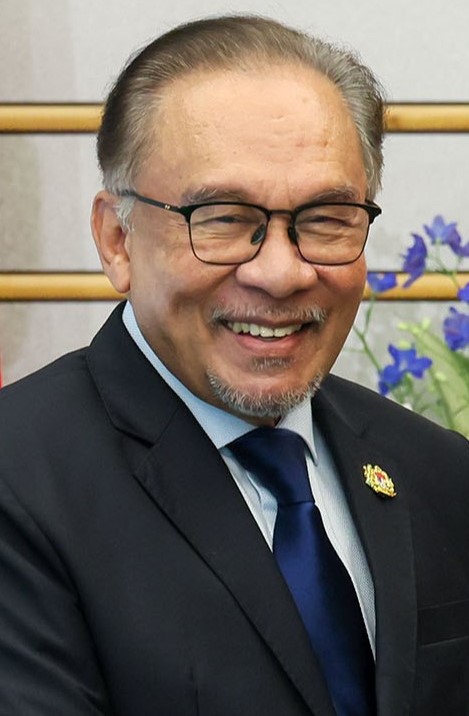
Prime Minister Datuk Seri Anwar Ibrahim has drawn a firm distinction between electoral competition and institutional boundaries, cautioning stakeholders to maintain distance between the forthcoming Johor state election and the royal institution. Speaking in Tangkak on June 23, the premier stressed the importance of preserving the monarchy's position by ensuring the democratic contest remains confined to political parties and candidates rather than involving constitutional bodies that sit above partisan competition.
Anwar's statement reflects growing sensitivity around the relationship between electoral politics and Malaysia's constitutional framework. The monarchy occupies a unique position within the nation's system, serving as a unifying symbol that transcends party politics. By emphasising that participants must "know our limits," the Prime Minister appears to be signalling to all contenders—whether from the ruling coalition or opposition benches—that the palace should remain insulated from campaign rhetoric and political maneuvering.
The timing of this intervention carries particular significance. Johor, Malaysia's southernmost state and home to approximately 4.3 million people, represents a crucial electoral battleground. The state has traditionally been a stronghold for Umno-led coalitions, though recent electoral cycles have seen shifting allegiances and rising opposition presence. Any attempt to leverage royal sentiment or institution-related issues could prove deeply divisive, potentially undermining the electoral process's legitimacy and creating unnecessary friction between political actors and the palace.
Constitutionally, Malaysia's monarchical system vests the Yang di-Pertuan Agong and state sultans with important custodial roles over Islamic affairs, indigenous rights, and certain ceremonial functions. However, the executive authority rests with elected governments and appointed officials. This separation—though occasionally tested in practice—remains foundational to Malaysia's constitutional democracy. Anwar's statement essentially reminds participants that the election is about choosing representatives to govern the state, not about questioning or mobilising sentiment around royal prerogatives.
For opposition parties, the caution likely serves as a warning against using royal institutions as political ammunition. Historically, attempts to intertwine palace matters with electoral campaigns have sometimes backfired, alienating voters who view such tactics as disrespectful to cherished institutions. For the ruling coalition, the message similarly implies that proximity to royal patronage, while traditionally advantageous, should not be weaponised explicitly during campaigning.
The statement also reflects the Prime Minister's broader governance philosophy, which has emphasised institutional stability and constitutional observance. Since taking office, Anwar has navigated numerous constitutional challenges, from managing relations with an appointed upper house to respecting state rulers' prerogatives. By explicitly demarcating boundaries around the royal institution in the context of elections, he sends a signal that constitutional conventions matter as much as electoral outcomes.
Johor's Sultan holds significant influence within the state's political ecosystem. A state election conducted with scrupulous respect for institutional boundaries demonstrates to voters, especially those in rural and traditional communities where the monarchy commands deep reverence, that competitive democracy and institutional respect are compatible values. This becomes increasingly important as Malaysia seeks to rebuild institutional trust following periods of political turbulence.
The prospect of a Johor election also comes as the country continues to grapple with questions about the proper relationship between different power centres. The statement suggests the federal government intends to model appropriate conduct, expecting all participants to exercise similar restraint. This approach contrasts with election campaigns elsewhere where institutional touchstones are routinely mobilised for partisan advantage.
For Southeast Asian observers, Anwar's position illuminates how Malaysia's constitutional monarchy system operates in practice. Unlike purely ceremonial monarchies, the Malaysian sultans retain genuine authority in specific domains, necessitating careful calibration between popular sovereignty and constitutional respect. Elections therefore become opportunities to demonstrate whether electoral democracy can flourish while maintaining deference toward non-elected institutions.
The implication for candidates and party officials is straightforward: mount your campaigns on policy platforms, track records, and vision for governance, not on claims about royal blessing or institutional alignment. Such boundaries may appear restrictive to some, but they serve the paradoxical function of protecting both democratic legitimacy and monarchical authority by preventing each from colonising the other's domain.
As Johor voters prepare for the ballot, Anwar's cautionary remarks establish the ground rules for an election that should demonstrate political maturity. By keeping the royal institution scrupulously separate from electoral contestation, Malaysian democracy affirms that it can be robust and competitive without undermining the constitutional foundations upon which the nation rests. The message ultimately reflects confidence that democratic processes require no royal intervention to generate legitimate outcomes, while the monarchy requires no electoral role to maintain its vital constitutional position.