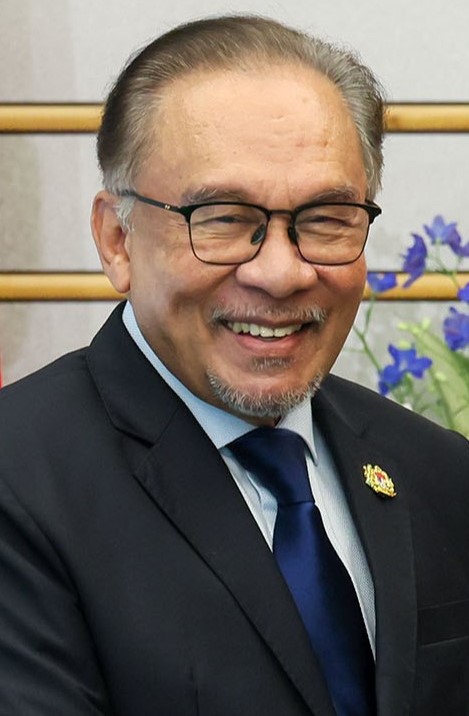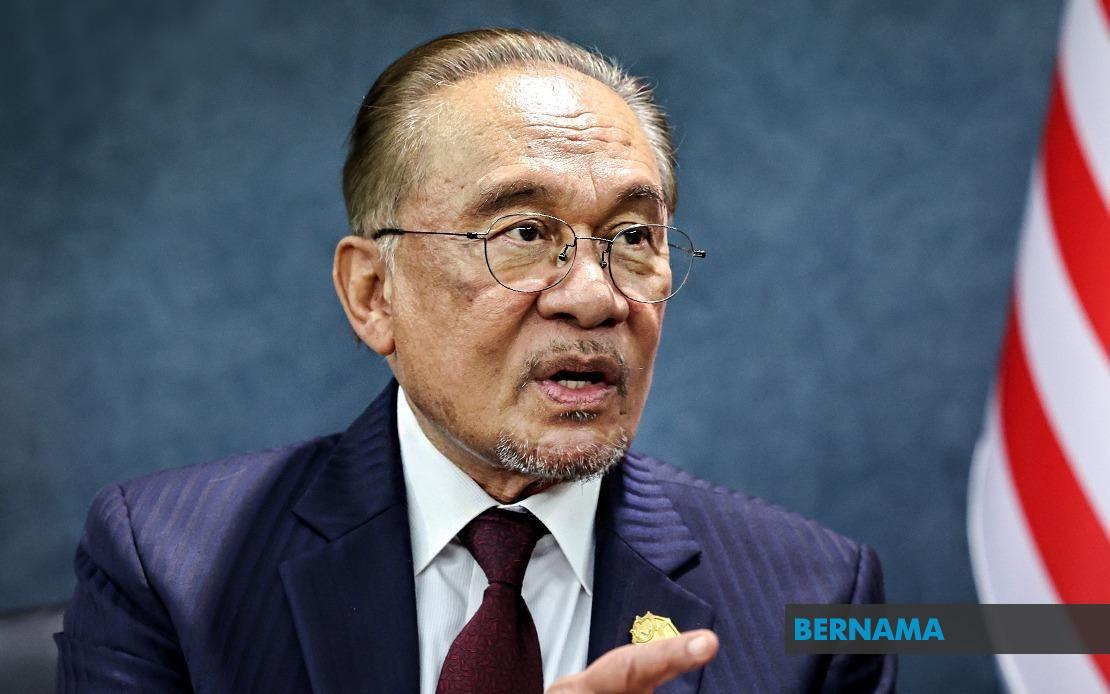
Prime Minister Datuk Seri Anwar Ibrahim is participating in the ASEAN-Russia Business Forum in Kazan, delivering remarks to assembled business leaders and officials from across the ten ASEAN member states and Russia. The gathering, held at Kazan IT Park, represents a high-level economic engagement aimed at strengthening commercial links between the two regions at a time when geopolitical tensions are reshaping global trade patterns. Anwar, who concurrently holds the portfolio of Finance Minister, brings significant credibility to Malaysia's delegation, signalling the country's commitment to leveraging this dialogue platform for tangible economic advantage.
The forum forms part of the broader ASEAN-Russia Commemorative Summit, a marquee diplomatic event that underscores the evolving nature of engagement between Southeast Asia's regional bloc and Moscow. Anwar is scheduled to attend a gala dinner at the Tatar State Academic Theater, where he will also participate in a courtesy meeting with Russian President Vladimir Putin, affording Malaysia's leadership direct access to the Russian presidency. Such face-to-face encounters at the presidential level remain valuable for small and medium-sized economies seeking to influence bilateral agendas and secure commitments on areas of mutual interest.
The year 2024 marks the 35th anniversary of ASEAN-Russia dialogue relations, a milestone that contextualises the summit's significance within a longer historical arc. The relationship began modestly in 1991 with initial dialogue arrangements, but progressed substantially when Russia attained full Dialogue Partner status in 1996, formally cementing its role within ASEAN's wider engagement architecture. In 2018, the partnership was upgraded to the Strategic Partnership level, a designation that acknowledged growing cooperation across the political-security, economic, and socio-cultural domains. This trajectory reflects how bilateral relations can mature through institutionalised frameworks, even amid periods of international instability.
The choice of Kazan as the venue carries symbolic weight for the discussions taking place. Located approximately 800 kilometres east of Moscow at the confluence of the Volga and Kazanka rivers in European Russia, Kazan functions as the capital of the Republic of Tatarstan and hosts a population of roughly 1.3 million residents. The city frequently earns the description of Russia's "third capital" after Moscow and St Petersburg, a designation rooted in its economic prominence and cultural standing. With a documented history spanning more than a millennium, Kazan has emerged as a principal repository of Islamic culture and heritage within the Russian Federation, a characteristic that imparts particular relevance to an ASEAN gathering, given that Islam represents a significant faith across the Southeast Asian bloc.
Kazan's historical and cultural positioning as a bridge between the Russian and Muslim worlds creates an environment conducive to discussions centred on mutual understanding and intercultural dialogue. The city's role as a crossroads between Eurasian civilisations mirrors ASEAN's own positioning within global affairs, operating as an intermediary between competing great powers and navigating complex geopolitical currents. For participants from predominantly Muslim ASEAN nations, the venue offers an opportunity to engage with a Russian city where Islamic identity and Russian state interests coexist, potentially illustrating pathways for future cooperation.
The economic dimensions of the ASEAN-Russia relationship, while substantial, remain underdeveloped relative to the region's engagement with other major trading partners. In 2024, total bilateral trade between ASEAN and Russia reached USD18.1 billion, a figure reflecting the impact of sanctions regimes and geopolitical fractures that have constrained commercial activity. Russian foreign direct investment in ASEAN totalled USD92.97 million, equivalent to RM367.90 million, indicating limited capital flows into the region from Moscow-based investors. These metrics suggest considerable untapped potential for economic expansion, particularly if geopolitical conditions stabilise or if new sectors become accessible for joint ventures and collaborative projects.
For Malaysia specifically, Russia ranked as the country's ninth-largest European trading partner in 2025, with bilateral trade valued at RM8.72 billion or USD2.04 billion. The composition of this trade reveals complementarity between the two economies: Malaysia exports electrical and electronic products, machinery, equipment, components, and processed food items, while importing petroleum products, minerals, chemicals, and chemical-based goods from Russia. This bilateral structure, heavily weighted towards Malaysian exports of value-added manufactured goods and Russian exports of raw materials and energy products, reflects classical patterns of North-South commerce. However, it also demonstrates Malaysia's capacity to serve as a technology supplier and consumer goods exporter to Russian markets, a role that could expand if bilateral business networks are strengthened through initiatives such as the ASEAN-Russia Business Forum.
The timing of the commemorative summit carries implications beyond ceremonial significance. ASEAN's engagement with Russia, particularly through mechanisms like the ASEAN Regional Forum and ASEAN Plus Three arrangements, continues amid broader efforts by Southeast Asian nations to maintain balanced relationships with major powers. Malaysia, with its non-aligned foreign policy tradition and emphasis on strategic autonomy, benefits from preserving channels of communication and commerce with Russia, even as the country pursues deeper economic integration with Western markets and Japan. The business forum thus serves as a vehicle for exploring pragmatic commercial opportunities without necessitating alignment with any particular geopolitical bloc.
The participation of Malaysian leadership in these discussions also reflects the importance ASEAN accords to maintaining a rules-based international order and respecting sovereignty—principles that Moscow has invoked in its own messaging to Southeast Asia. By engaging constructively with Russia through established dialogue mechanisms, ASEAN and Malaysia demonstrate commitment to inclusive regionalism that does not exclude major powers, a posture that maintains flexibility in navigating an increasingly multipolar world. The forum's focus on business cooperation, rather than overtly political matters, provides a framework within which economic benefits can be pursued and relationships deepened without inviting controversy at home or abroad.