%22%2F%3E%3C%2Fpattern%3E%3C%2Fdefs%3E%3Crect%20width%3D%22100%25%22%20height%3D%22100%25%22%20fill%3D%22url(%23ph1t74jg)%22%2F%3E%3Crect%20width%3D%22100%25%22%20height%3D%22100%25%22%20fill%3D%22url(%23ph1t74jp)%22%2F%3E%3Ctext%20x%3D%2250%25%22%20y%3D%2250%25%22%20text-anchor%3D%22middle%22%20dominant-baseline%3D%22central%22%20fill%3D%22rgba(255%2C255%2C255%2C0.95)%22%20font-family%3D%22Georgia%2C%20'Times%20New%20Roman'%2C%20serif%22%20font-weight%3D%22700%22%20font-size%3D%22320%22%20letter-spacing%3D%22-0.02em%22%3EPM%3C%2Ftext%3E%3C%2Fsvg%3E)
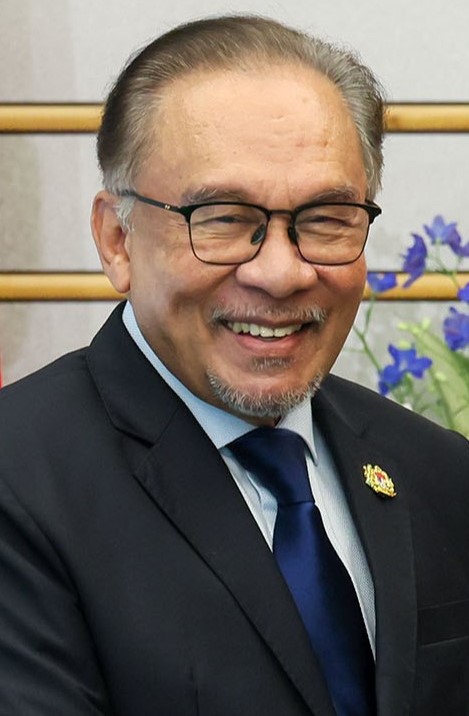
Prime Minister Datuk Seri Anwar Ibrahim travelled to Tangkak on June 22 to publicly acknowledge the Regent of Johor, Tunku Mahkota Ismail, for receiving him in Kuala Lumpur in what the Prime Minister characterised as a meaningful gesture of goodwill. Speaking at an event where Pakatan Harapan announced its candidates for the 16th Johor state election, Anwar emphasised that the audience itself demonstrated the strength of institutional relationships and served as a tacit rebuke to what he described as petty political manoeuvring.
Anwar's remarks carried an implicit criticism of rivals who he suggested had misappropriated royal names and institutions to advance electoral interests. He stressed that his acceptance of the audience with Tunku Mahkota Ismail was itself sufficiently illustrative and required no further explanation or defence. The Prime Minister's tone suggested frustration with opposition tactics, particularly the practice of invoking royal patronage or proximity as a political asset during campaign seasons. His message was direct: serious political contestants must distinguish themselves through policy and performance rather than through claims of royal favour or endorsement.
The Prime Minister elaborated that during his meeting with the Johor Regent, he had taken the opportunity to brief the royal household on developmental initiatives undertaken by the federal government under his administration that are designed to benefit Johor residents. This framing positioned the audience not merely as a courtesy call but as a substantive engagement on governance matters. By outlining federal projects to the Regent, Anwar implicitly underscored that the relationship between Putrajaya and the Johor palace extends beyond ceremonial niceties to encompass collaborative discussion of state development and public welfare.
Anwar articulated a broader philosophy regarding Pakatan Harapan's approach to Malaysia's constitutional monarchy and the institution of the Malay Rulers. He stated that his coalition government, as the custodian of federal executive power, views the preservation of cordial ties with all sultans as a fundamental responsibility. This commitment encompasses not merely accepting royal perspectives but actively engaging with them—soliciting counsel, presenting counterarguments, and demonstrating genuine receptiveness to monarchical advice and admonishment when offered. Such an approach reflects a deliberate recalibration of federal-royal relations compared to preceding administrations.
The Prime Minister acknowledged that consensus does not always emerge from his consultations with the sultans and with His Majesty Sultan Ibrahim, the reigning King. Disagreements surface, competing viewpoints are articulated, and positions sometimes diverge substantively. However, Anwar suggested that the process of respectful dialogue, formal audience-seeking, and transparent explanation of governmental rationale represents the mature management of a constitutional relationship. Rather than viewing the monarchy as a ceremonial fixture or as a political asset to be deployed strategically, his stance treats the institution as a co-participant in the governance conversation, deserving of consultation even when outcomes remain contested.
This philosophy extends consistently across Anwar's ministerial colleagues within Pakatan Harapan, he asserted. The coalition has reportedly established a settled practice of seeking royal counsel, explaining policy positions, and demonstrating deference to the advice of Malay Rulers even in circumstances where the federal government ultimately pursues alternative courses of action. This institutional discipline within the coalition distinguishes it from competitors who, in Anwar's characterisation, treat royal names as rhetorical ammunition and the institution itself as fair game for electoral positioning.
The event at which Anwar delivered these remarks—the announcement of Pakatan Harapan candidates for the forthcoming Johor state election—provided the platform for articulating these principles precisely because Johor constitutes a critical electoral battleground. The state election campaign environment creates particular temptation for political actors to invoke or claim proximity to the Johor Sultan and royal household. By publicly commending the Regent for his gesture and forcefully cautioning against the politicisation of royal institutions, Anwar sought to establish clear normative boundaries for the campaign that would follow.
The presence of senior coalition figures—including DAP secretary-general Anthony Loke Siew Fook and Amanah president Datuk Seri Mohamad Sabu—underscored that this messaging reflected coordinated coalition position rather than Anwar's individual perspective. The collective appearance conveyed to Johor voters that Pakatan Harapan's commitment to respectful royal relations and institutional propriety represented a shared commitment across the multiethnic coalition's constituent parties. For DAP, which has historically confronted accusations of anti-monarchy sentiment, the public endorsement of this framework carried particular symbolic weight.
For Malaysian political observers, Anwar's remarks illuminate a strategic recalibration of how coalition parties approach the relationship between electoral politics and constitutional institutions. The traditional playbook—wherein candidates and parties claim special proximity to sultans or invoke royal blessing as an electoral asset—remains prevalent across the political spectrum. By explicitly delegitimising such practices and framing them as beneath serious political contention, Anwar has attempted to establish higher institutional standards and to position Pakatan Harapan as the steward of constitutional propriety.
The timing of Anwar's statement, delivered during the activation phase of the Johor state election campaign, suggests his calculation that voters may respond positively to a party leadership that demonstrates respect for constitutional boundaries and that refrains from instrumentalising royal institutions for partisan advantage. Whether this principled positioning translates into electoral gains remains uncertain, particularly given the entrenched strength of opposition parties in Johor and the complex dynamics of state-level political competition.
For Southeast Asian governance contexts more broadly, Anwar's emphasis on consultation, dialogue, and mutual respect between executive government and constitutional monarchies—even where disagreement persists—offers a model that contrasts sharply with more confrontational approaches to institutional relationships. His insistence that consultation and deference do not necessitate capitulation or that disagreement does not preclude respect suggests a maturation of constitutional practice that remains valuable in region where tensions between elected and hereditary institutions periodically surface.