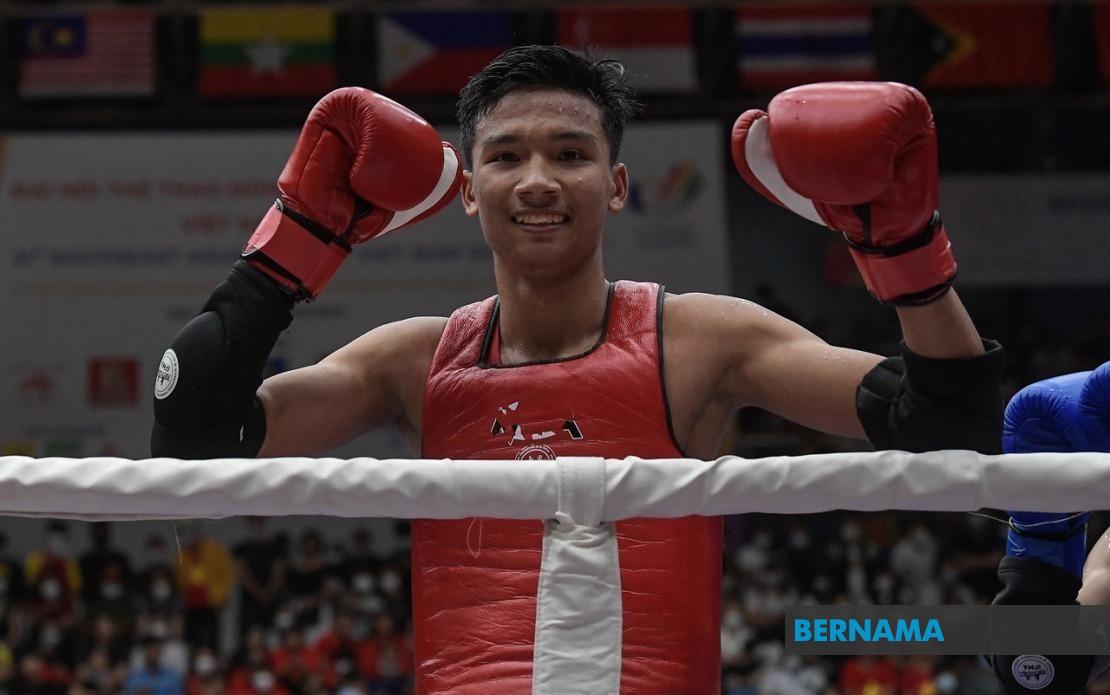
Prime Minister Datuk Seri Anwar Ibrahim has thrown his weight behind national Muay Thai champion Ahmad Nor Iman Aliff Rakib, calling on the Malaysian public to unite in supporting the athlete's pursuit of the ONE Interim Strawweight Muay Thai World Championship. Through a Facebook post released on July 22, Anwar emphasised the significance of the moment, framing Ahmad Nor Iman's upcoming bout as a watershed occasion for Malaysian combat sports on the global arena.
The Premier's endorsement underscores a broader political commitment to elevating Malaysia's standing in international sports competition. By leveraging his platform to mobilise public backing, Anwar positioned the athlete's triumph as a matter extending beyond individual achievement—transforming it into a national endeavour reflective of Malaysia's aspirations for global recognition. Such high-profile backing from the top echelon of government signals institutional support for the development and promotion of combat sports disciplines within the nation.
Ahmad Nor Iman Aliff Rakib faces an formidable challenge on Friday at Lumpinee Stadium in Bangkok, where he will contend against Sam-A Gaiyanghadao, a Muay Thai legend with considerable pedigree in the sport. Lumpinee Stadium holds iconic status within the Muay Thai world, recognised as one of the sport's most prestigious battlegrounds where champions and challengers test their mettle against elite-level competition. The venue's historical significance amplifies the magnitude of Ahmad Nor Iman's opportunity.
What distinguishes this moment for Malaysian sports is the pathway Ahmad Nor Iman has carved within the ONE Championship ecosystem. His progression to this championship opportunity represents a milestone—marking the first instance of a Malaysian athlete competing for a top-tier Muay Thai world title sanctioned by a major international promotion. This distinction carries weight particularly for aspiring athletes across the Southeast Asian region, who may perceive Malaysian success as validation of their own potential within global sports hierarchies.
The Strawweight division, in which Ahmad Nor Iman competes, occupies an increasingly prominent position within contemporary combat sports. The ONE Championship's emphasis on this weight class reflects evolving global demographics and athletic development patterns, creating opportunities for competitors who might otherwise find limited pathways in traditional weight divisions. Ahmad Nor Iman's emergence as a legitimate title contender within this framework demonstrates how strategic positioning in growing competition segments can facilitate rapid advancement through international rankings.
Sam-A Gaiyanghadao's status as a Muay Thai legend presents a dual narrative. On one hand, his reputation underscores the difficulty of Ahmad Nor Iman's assignment—facing an established adversary with years of elite-level experience. Conversely, competing against such an opponent carries intrinsic value, as victory would carry exponentially greater credibility than triumphing against a lesser-known challenger. A successful outcome would cement Ahmad Nor Iman's credentials and attract subsequent opportunities at the highest competitive levels.
The timing of Anwar's public endorsement carries strategic implications beyond mere ceremonial support. By mobilising public awareness and encouragement, the Prime Minister effectively created a supportive ecosystem extending beyond the confines of the sports arena itself. This approach acknowledges that international athletic competition functions within broader narratives of national pride, cultural representation, and soft power—elements that governments increasingly recognise as consequential to national standing and citizen engagement.
For Malaysian combat sports enthusiasts and the broader athletic community, Ahmad Nor Iman's championship opportunity signals potential for deepened investment and institutional support in disciplines traditionally marginalised within Malaysia's sports development frameworks. Historically, combat sports have received comparatively modest resources relative to mainstream athletic pursuits, yet this episode suggests shifting priorities within sports administration and political leadership. Successful outcomes could catalyse increased funding, coaching infrastructure, and talent identification programmes in Muay Thai and related disciplines.
The contest also intersects with Malaysia's regional positioning within Southeast Asian sports dynamics. Thailand maintains a pre-eminent position in Muay Thai globally, leveraging centuries of cultural and sporting tradition. Ahmad Nor Iman's challenge thus carries implicit regional dimensions—an opportunity for Malaysia to establish itself as a credible competitor within a discipline where regional neighbours possess established dominance. Such competitive achievements contribute incrementally to Malaysia's broader sporting reputation across the Southeast Asian landscape.
Beyond Ahmad Nor Iman himself, the opportunity he represents extends to younger athletes observing his trajectory. Anwar's explicit reference to inspiring the next generation acknowledges sport's pedagogical function—the capacity of athletic role models to shape aspirational pathways and motivate commitment to excellence. Ahmad Nor Iman's visibility and achievement could catalyse interest among Malaysian youth in pursuing combat sports at professional levels, expanding the talent pipeline from which future international competitors emerge.
The championship bout represents a convergence of individual athletic ambition, national aspirations, and institutional support structures. Ahmad Nor Iman's preparation and performance will be scrutinised not merely as a sporting contest, but as a referendum on Malaysian athletic development and the nation's capacity to cultivate world-class talent. The Prime Minister's backing ensures the occasion will receive sustained public attention, transforming a specialised sporting event into a moment of collective national interest—precisely the visibility that can transform individual achievement into lasting institutional and cultural legacy.

