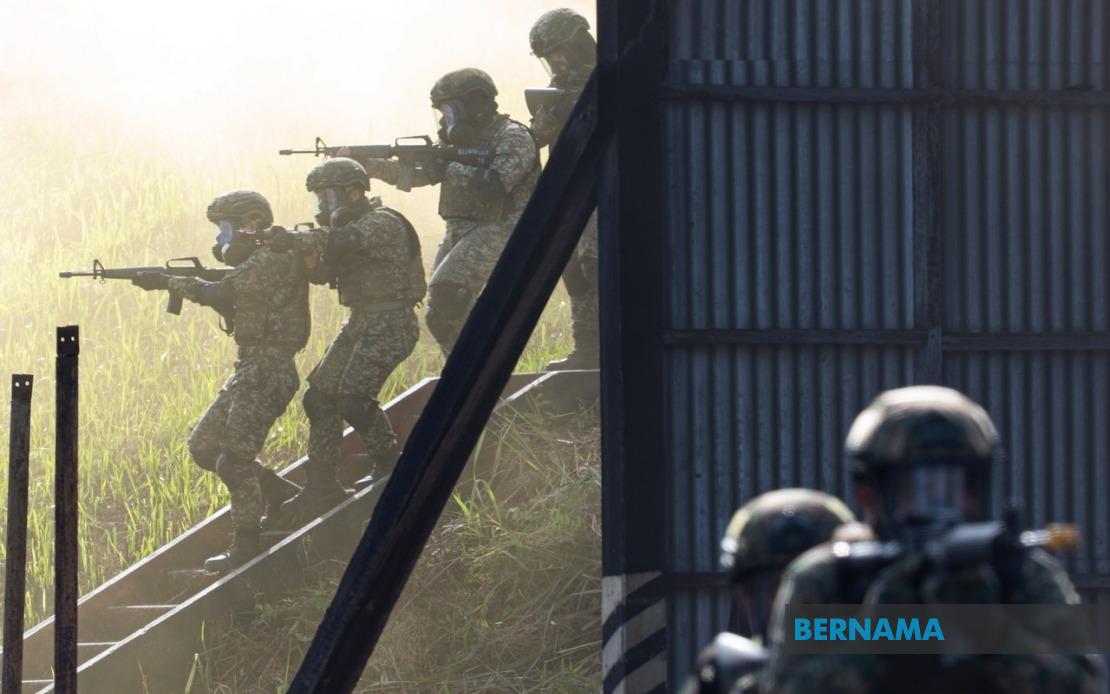
Prime Minister Datuk Seri Anwar Ibrahim has committed to securing a larger defence allocation in the 2027 budget, signalling the government's determination to bolster the Malaysian Armed Forces' operational capacity and enhance the wellbeing of military personnel. The pledge, made during an event in Melaka on August 7, reflects the administration's recognition that national security demands sustained financial commitment alongside careful stewardship of public resources. Anwar, who holds the concurrent position of Finance Minister, positioned the increased expenditure as essential to protecting Malaysia's fundamental asset: domestic peace and stability.
The Prime Minister articulated a strategic rationale for military preparedness that emphasises vigilance over complacency. His statement that "defence readiness must be maintained at all times because conflicts do not occur when expected" underscores the unpredictable nature of security threats and the necessity for constant vigilance. Anwar argued that waiting for hostilities to materialise before investing in military capability represents an unacceptable gamble with national survival. This philosophy aligns with broader regional security concerns, particularly given the complex geopolitical environment in Southeast Asia where territorial disputes, maritime security challenges, and evolving power dynamics demand credible armed forces.
Over the preceding three years, the MADANI government has already expanded the Defence Ministry's budget by more than 35 per cent, a substantial increase that Anwar acknowledged remains underappreciated by the general public. This prior expansion demonstrates a consistent policy trajectory rather than a sudden departure, suggesting that increased 2027 allocations will represent a continuation of deliberate prioritisation. The cumulative effect of these successive budget increases aims to modernise and professionalise the armed forces across multiple dimensions, from personnel management to infrastructure development and equipment procurement.
Personnel welfare constitutes a centrepiece of the proposed spending increases. Anwar specifically referenced improvements to military living quarters, construction of a new military hospital, and maintenance of fundamental infrastructure including water supply systems. These investments address longstanding concerns within the armed forces regarding accommodation standards and healthcare facilities. By enhancing quality of life for service members and their families, the government seeks to improve recruitment and retention while demonstrating commitment to those bearing the physical and psychological burdens of national defence.
Procurement transparency has emerged as a critical governance concern within Anwar's defence policy framework. The Prime Minister explicitly called for systematic, transparent weapons and equipment acquisition procedures that eliminate profiteering and excessive commissions to external agents. This statement reflects documented concerns regarding defence procurement in Malaysia, where historical cases have involved inflated costs and middleman arrangements that diminished value for money. Anwar's emphasis on eliminating such practices suggests an administration determined to extract maximum military capability from every ringgit spent, while maintaining ethical standards in government contracting.
The government's confidence in increasing defence allocations rests upon improved macroeconomic conditions that have strengthened Malaysia's fiscal position. Anwar cited several positive indicators: stronger economic growth, a more robust ringgit, increased foreign direct investment inflows, and inflation held within manageable parameters. These factors collectively provide the financial latitude necessary for enhanced defence spending without compromising allocations to health, education, and social programmes. A stronger currency particularly matters, as defence procurement involves significant foreign exchange components, making the ringgit's performance directly relevant to military purchasing power.
The timing of Budget 2027's parliamentary presentation on October 9 allows adequate time for public and legislative scrutiny of the proposed defence allocations before formal approval. This schedule provides stakeholders—including opposition parliamentarians, civil society organisations, and defence analysts—opportunity to examine the government's justification for increased military spending and to raise concerns regarding procurement procedures, budgetary adequacy, or competing priorities. Such parliamentary oversight reinforces accountability in defence spending, an area where transparency and rigorous oversight protect both national interests and public resources.
The event in Melaka brought together senior defence and government figures, including Deputy Defence Minister Adly Zahari, Chief Secretary to the Government Tan Sri Shamsul Azri Abu Bakar, and Army chief General Tan Sri Azhan Md Othman. This assembly of military and civilian leadership underscored the whole-of-government approach to defence policy formulation. Additionally, Anwar announced RM147,000 for the Armed Forces Family Welfare Association and RM1 million for maintaining mosques and prayer halls at four military camps in Melaka—Terendak, Sungai Udang, Masjid Tanah, and Bukit Beruang. These allocations demonstrate concern for both material welfare and spiritual wellbeing of military communities.
For Malaysian and Southeast Asian observers, the commitment to higher defence spending reflects broader regional security dynamics. As strategic competition intensifies among major powers with interests in Asian waters, and as non-traditional security threats including maritime piracy and transnational crime persist, credible military capabilities remain essential to national sovereignty and regional stability. Malaysia's defence modernisation contributes to the broader architecture of Southeast Asian security, particularly through ASEAN frameworks and bilateral partnerships. Enhanced Malaysian military capability strengthens the region's collective capacity to manage security challenges independently, reducing vulnerability to external pressure.
The economic foundation underpinning Anwar's defence spending pledge distinguishes this commitment from earlier periods when Malaysia faced fiscal constraints. The government's ability to simultaneously increase defence budgets while maintaining broader economic stability suggests confidence in sustained economic performance. This financial confidence permits long-term defence planning and equipment acquisitions—such as naval vessel construction, aircraft procurement, or cybersecurity infrastructure—that require multi-year funding commitments. Such projects cannot be funded through ad hoc allocations but demand predictable budget streams.
Critically, Anwar's emphasis on transparent, commission-free procurement reflects lessons from Malaysia's defence acquisition history. Previous defence contracts have attracted scrutiny and controversy regarding pricing, delivery timelines, and technological specifications. By making procurement integrity a defining characteristic of the government's defence policy, Anwar signals determination to break with problematic patterns. This approach appeals to both fiscal conservatives concerned with value-for-money and defence professionals who recognise that legitimate defence spending—unmarred by corruption—generates sustainable support among taxpayers and parliamentarians.
The pledged increase in defence allocation for 2027 must be understood within Malaysia's broader development and governance context. The government balances multiple competing priorities: infrastructure development, healthcare expansion, education improvement, and poverty alleviation. Defence spending, while necessary, competes with these objectives for limited resources. That Anwar has positioned increased defence budgets as feasible reflects genuine economic improvement and government confidence in managing fiscal priorities. This balanced approach—simultaneously strengthening defence capacity while advancing social development—represents the governing challenge that Malaysian policymakers navigate continuously.

