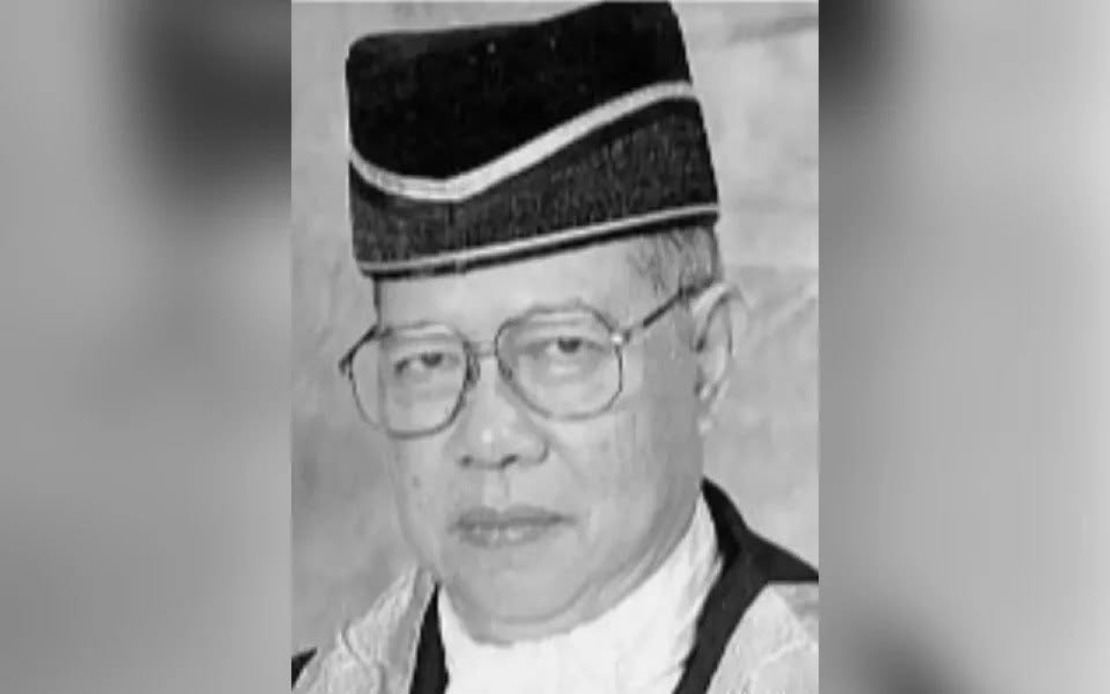
Prime Minister Datuk Seri Anwar Ibrahim has expressed his deepest sympathies to the family of former Chief Justice Tun Mohamed Eusoff Chin, who passed away on August 7. The eminent jurist, who was 91 years old, was laid to rest at the Section 9 Muslim Cemetery in Kota Damansara following Islamic burial rites.
Through a Facebook statement released on the day of his death, Anwar highlighted the extraordinary contribution that Mohamed Eusoff had made to Malaysia's legal system and the nation as a whole. The Prime Minister emphasised how the former Chief Justice had devoted much of his professional life to advancing the institutional strength of Malaysia's judiciary, a role that extended throughout his distinguished tenure in the highest judicial office.
Malaysia's legal fraternity lost a pioneering figure with Mohamed Eusoff's death. His seven-year tenure as Chief Justice, beginning in September 1994 and concluding in December 2000, represented a significant period in the nation's judicial history. During these formative years for Malaysia's legal institutions, he presided over the apex court during a time when the country was navigating complex constitutional and administrative questions that would shape the nation's governance framework.
In his tribute, Anwar underscored that the legacy of Mohamed Eusoff's work would endure beyond his lifetime, with his judicial philosophy and institutional reforms continuing to influence Malaysia's legal system. The Prime Minister's recognition of the former Chief Justice's service reflects the broad acknowledgment across Malaysia's political and institutional establishment of his contributions to strengthening the rule of law.
The passing of Mohamed Eusoff represents the loss of a custodian of Malaysia's judicial independence during a critical period in the nation's democratic development. As Chief Justice, he operated within the broader context of Malaysia's constitutional framework while working to safeguard the judiciary's role as an independent branch of government. His decisions and leadership during the 1990s established precedents that continue to be referenced in contemporary legal discussions.
Anwar's condolence message reflected the multicultural and multifaith character of Malaysia's highest offices. By concluding his tribute with a recitation of Al-Fatihah, a chapter from the Quran traditionally recited in Islamic prayer and reflection, the Prime Minister demonstrated respect for Mohamed Eusoff's Islamic faith while acknowledging the universal dimensions of the former Chief Justice's service to the nation.
The death of Mohamed Eusoff marks another milestone in Malaysia's evolving political and institutional landscape. Many of the generation that led the country through the post-independence decades and the transition to a modern constitutional democracy are increasingly becoming historical figures rather than contemporary participants in governance. This generational shift carries implications for how Malaysia's legal institutions continue to develop and adapt to contemporary challenges.
For legal professionals and judicial observers in Malaysia and across Southeast Asia, Mohamed Eusoff's passing prompts reflection on the role of courts in transitional democracies and the lasting impact of judicial leadership. The region faces ongoing questions about judicial independence, constitutional interpretation, and the proper relationship between courts and other branches of government—questions that were central to the era when Mohamed Eusoff served as Chief Justice.
The state funeral arrangements and the immediate tributes from Malaysia's political leadership indicate the respect in which Mohamed Eusoff was held across the country's institutional hierarchy. His death closes a significant chapter in Malaysia's post-1994 judicial history and invites consideration of how his legacy continues to shape the development of Malaysian jurisprudence and legal education. The institutional memory and precedents established during his tenure remain relevant as Malaysia's courts navigate contemporary constitutional and administrative law challenges.

