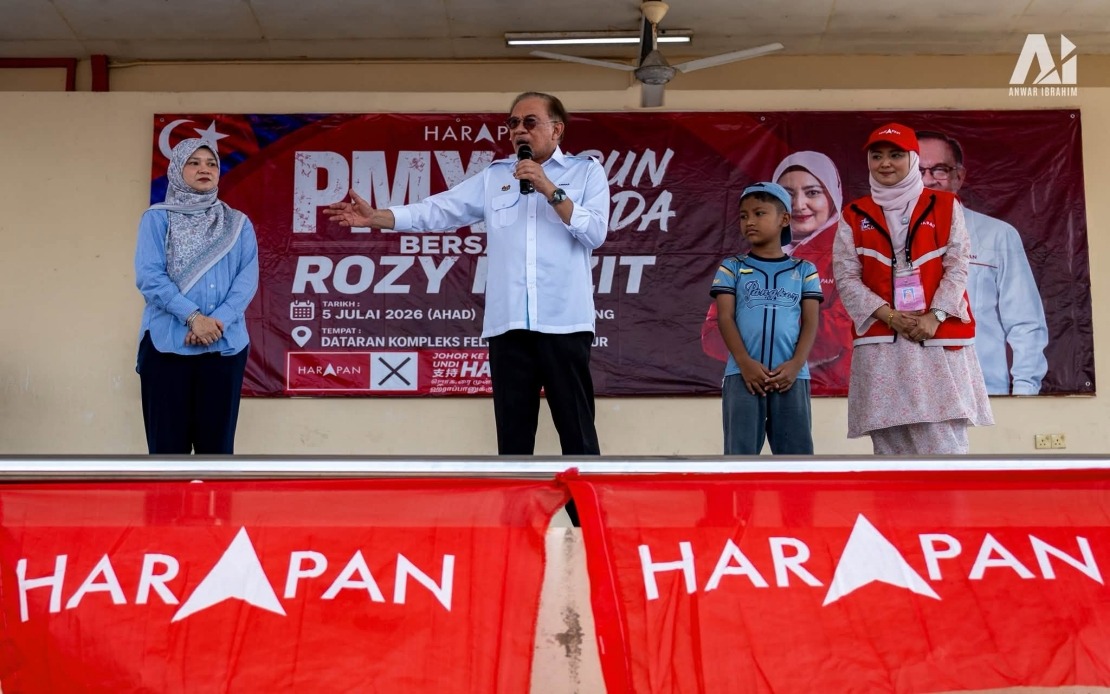
Prime Minister Datuk Seri Anwar Ibrahim has publicly reflected on an encounter with nine-year-old Muhammad Afif Ikhwan that left a lasting impression on him, describing how the boy's determination to meet him symbolised the kind of human connection that transcends the formalities of high office. The brief but meaningful meeting took place during an official programme at Felda Palong Timur in Segamat, where the child managed to catch Anwar's attention among the crowds gathered for the event. The simplicity of the moment—a young boy reaching through the press of people to shake the Prime Minister's hand—became a catalyst for Anwar to take personal action, arranging for someone to visit Muhammad Afif at his home and present him with a bicycle as a token of the encounter's significance.
What makes this episode particularly compelling is the sacrifice embedded in its background. Muhammad Afif's 58-year-old grandmother, Rosimah Mohammad, resident of Kampung Pudu in Segamat, undertook a determined journey along narrow motorcycle tracks cutting through vast oil palm plantations to give her grandson the chance to see the Prime Minister in person. This act of dedication by an elderly woman navigating through agricultural terrain underscores the deep emotional value that such a moment held for their family, and it is precisely this dimension that captured Anwar's attention and conscience. In his social media reflection, the Prime Minister emphasised how what might seem to observers as a trivial aspiration—a child's wish to meet the nation's leader—had proven substantial enough to inspire his grandmother to overcome considerable logistical challenges.
The Prime Minister's public commentary on the incident reveals an underlying message about maintaining empathy and humanity amid the demands of governance. Anwar acknowledged that regardless of how demanding his responsibilities are in steering the country through significant challenges, there remains an imperative to preserve compassion and reach out to citizens with genuine regard for their wellbeing and aspirations. This reflection comes at a time when political leaders in Malaysia and across Southeast Asia face mounting pressure to demonstrate that they remain connected to ordinary citizens and responsive to their hopes, particularly those from rural and economically disadvantaged areas where infrastructure and opportunities may be limited.
Felda Palong Timur, the site of this encounter, carries particular symbolic weight in Malaysian politics and society. Felda settlements have long been central to the country's narrative of rural development and land redistribution, serving as spaces where smallholder agricultural communities have been established and supported by the state. The choice of this location for an official programme signals an administration's commitment to engaging with these communities, and the encounter between a prominent political figure and residents from such areas often carries expectations of attentiveness to their specific concerns and aspirations.
For Muhammad Afif and his family, the follow-up gesture of the bicycle represents more than a material gift. It signifies acknowledgment and validation from the highest office in the land, transforming a fleeting moment of contact into a memorable milestone. The Prime Minister expressed hope that this experience would inspire the boy to continue his education diligently and eventually contribute meaningfully to his family unit, his community, and the broader nation. Such statements reflect an understanding that early positive interactions with authority figures can shape children's civic consciousness and aspirations for the future.
The broader context of this story resonates with contemporary Malaysian discourse about inequality and access. Rural communities, particularly in agricultural regions, often feel geographically and psychologically distant from national power structures. An elderly woman navigating plantation tracks to facilitate her grandson's encounter with the Prime Minister underscores how determined citizens from marginalised areas must sometimes be to bridge that gap. The fact that this effort succeeded and received public recognition from the highest office sends a message to similar communities that their voices and aspirations, however humble, do register within the national consciousness.
Anwar's framing of the incident also touches on themes of leadership that extend beyond policy implementation. In describing how the brief handshake carried unexpected emotional weight, he articulates a conception of political leadership that includes emotional intelligence and genuine engagement with citizens' lived experiences. This perspective stands in contrast to purely technocratic approaches to governance and suggests a vision of leadership grounded in interpersonal connection and empathetic understanding of what motivates ordinary Malaysians.
The story's emergence on social media platforms, where Anwar shared his reflections, amplifies its reach beyond those who witnessed the original event at Felda Palong Timur. In the digital sphere, such narratives take on additional significance as they circulate, allowing broader audiences to engage with themes of accessibility, hope, and human connection in governance. For rural communities and marginalised groups across Malaysia and the region, such public acknowledgment of genuine human interaction with high-level officials carries both symbolic and practical importance.
Looking forward, the trajectory of Muhammad Afif's life may well be shaped by this encounter and the attention it has garnered. The bicycle, the recognition, and the Prime Minister's public hope that the boy will channel this inspiration into academic and civic achievement could serve as motivational anchors during his formative years. For broader society, the incident offers a gentle reminder of the power of personal connection and the responsibility of those in leadership positions to remain attuned to the hopes and dignities of all citizens, regardless of their station or location.

