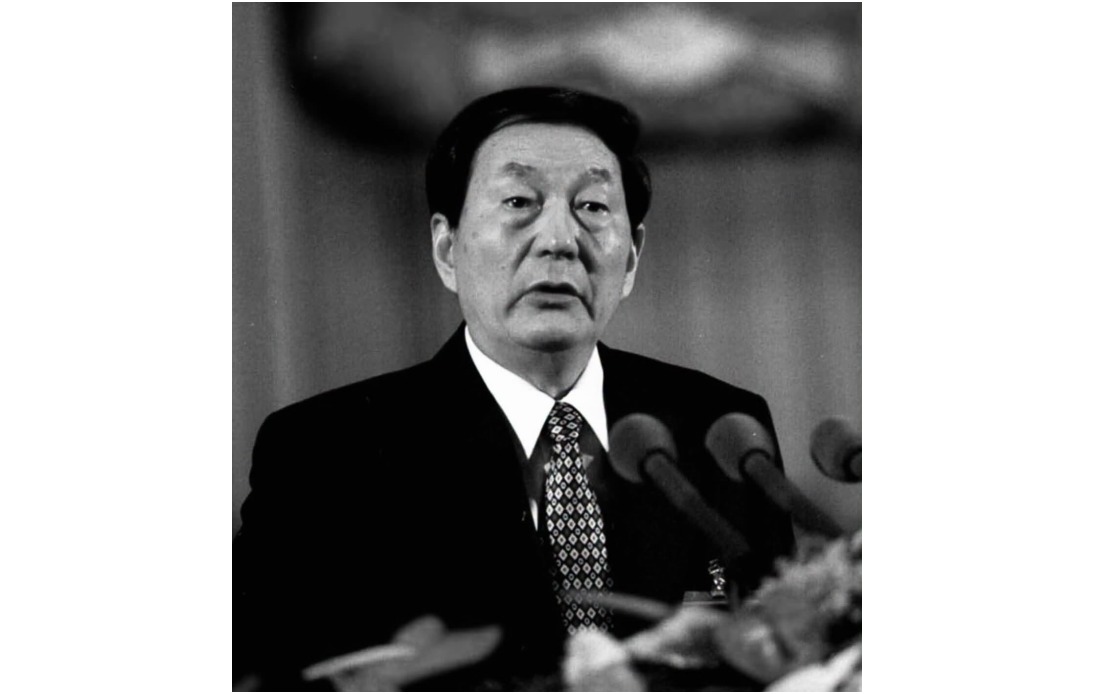
Prime Minister Datuk Seri Anwar Ibrahim has mourned the passing of Zhu Rongji, the former Premier of the People's Republic of China, who died at the age of 97. Through a Facebook post, Anwar expressed his condolences to Zhu's family while reflecting on the late statesman's profound impact on China's economic trajectory and their shared history of bilateral cooperation.
Anwar characterised Zhu as one of the principal architects responsible for reshaping China's economy, emphasizing that the former premier's reform agenda fundamentally enabled the nation's transformation into a global economic powerhouse. The Malaysian leader underscored how Zhu's policy decisions during his tenure laid the groundwork for China's contemporary economic dominance, a legacy that remains central to how policymakers across Asia understand modern economic development.
The personal dimension of Anwar's tribute highlighted the depth of their relationship beyond formal diplomatic channels. During the 1990s, a period of significant geopolitical repositioning in Southeast Asia, Anwar and Zhu collaborated directly to strengthen the economic and financial architecture binding Malaysia and China. This collaborative effort resulted in structural arrangements and institutional frameworks that have endured into the present day, continuing to shape how the two nations engage on trade, investment, and financial matters.
Anwar recounted specific memories that illustrated the human side of his relationship with Zhu, including guided visits to culturally significant Chinese locations such as the birthplace of Confucius and Tai Shan, as well as sites commemorating Admiral Zheng He's legendary voyages. These journeys reflected both leaders' appreciation for history and their understanding of how historical narratives inform contemporary statecraft. The Malaysian prime minister also described a memorable visit to Zhu's private library, during which the former Chinese premier personally curated and gifted him a selection of classical Chinese texts, an act symbolic of intellectual exchange between two civilizations.
Zhu's tenure as China's Premier, spanning from 1998 to 2003, coincided with a transformative period in Chinese history. His leadership oversaw the implementation of sweeping market-oriented reforms that fundamentally restructured the relationship between the state and private enterprise. These reforms addressed longstanding inefficiencies in China's state-owned enterprise sector, introducing competitive mechanisms and accountability measures that modernized the industrial base. Zhu's stewardship during this era positioned China for accelerated growth that would define the early twenty-first century.
Among Zhu's most consequential achievements was his instrumental role in facilitating China's entry into the World Trade Organisation, a development that irreversibly altered global trade patterns and supply chains. This accomplishment opened Chinese markets to international competition while providing Chinese exporters unprecedented access to global markets. For Malaysia and other Southeast Asian nations, China's WTO accession fundamentally reconfigured regional trade dynamics, creating both competitive challenges and new opportunities for cooperation.
Anwar's characterization of Zhu transcended conventional political eulogy by emphasizing qualities of personal character alongside institutional accomplishment. The Malaysian prime minister portrayed Zhu as driven by an unwavering commitment to national interest, suggesting that his reforms were motivated not by ideological zealotry but by pragmatic dedication to advancing his nation's welfare. This framing reflects how regional leaders often assess Chinese policymakers—evaluating their effectiveness through outcomes rather than ideological alignment.
For Malaysia and the wider Southeast Asian region, Zhu's legacy carries particular relevance. The economic architecture he helped construct in China created the demand and capacity for the regional trade networks that now integrate Malaysia deeply into Chinese supply chains and consumer markets. The economic ties Anwar references as having been nurtured during the 1990s represent foundations upon which contemporary Malaysia-China relations rest, encompassing manufacturing cooperation, infrastructure investment, and financial services integration.
The timing of Zhu's passing and Anwar's public tribute also reflects Malaysia's strategic positioning in an era of great-power competition. Anwar's emphasis on personal friendship and collaborative history serves to reinforce Malaysia's commitment to maintaining pragmatic, mutually beneficial relationships with major powers. By publicly acknowledging Zhu's contributions and their personal bonds, Anwar signals Malaysia's appreciation for China's economic development and its interest in sustained engagement regardless of shifting global geopolitical currents.
Zhu's impact on China's economic model continues to influence how Beijing approaches economic governance. The institutional innovations he championed—including enterprise reform, financial system modernization, and integration into global trading systems—established templates that subsequent Chinese leaders have built upon. Anwar's tribute acknowledges not merely a figure from recent history, but a thinker whose ideas continue shaping the strategic environment in which Malaysia operates.
The loss of Zhu represents the passing of a generation of Chinese leaders who navigated China's emergence into the contemporary global system. These figures, having directly experienced pre-reform China, brought distinctive perspectives to modernization that later generations lack. For regional statesmen like Anwar who worked alongside these pioneers, their passing marks the end of an era of direct personal relationships between Southeast Asian and Chinese leadership formed during the reform period.
Anwar's heartfelt condolences extended to Zhu's family and the broader Chinese population, positioning Malaysia as a sympathetic observer of China's loss. This gesture reinforces the broader narrative of Malaysia-China relations as rooted in genuine partnership rather than transactional engagement. As Malaysia continues navigating complex regional relationships and economic adjustments, the legacy of cooperation between leaders like Anwar and Zhu provides historical continuity to bilateral ties.

