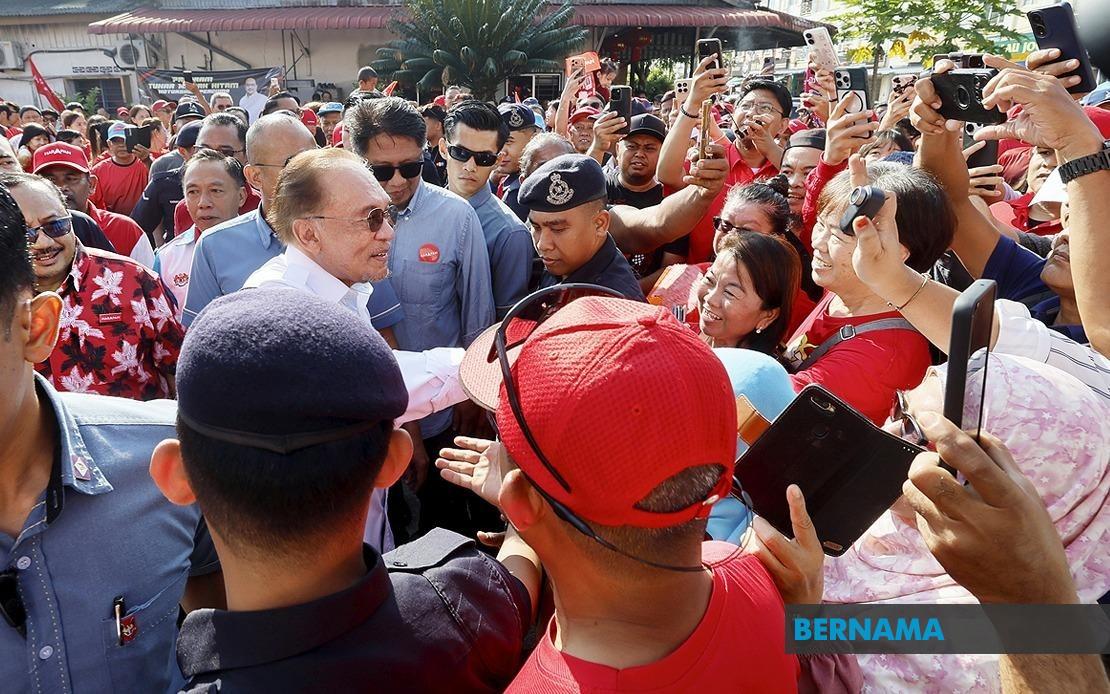
Prime Minister Datuk Seri Anwar Ibrahim seized the opportunity during a Johor state election campaign event to personally reconnect with Abdul Razak Pelangga, 86, and his wife Jamilah Samsudin, 64, whose determination to meet the nation's leader captured widespread public attention. The reunion took place at the "Yok! Meriahkan Johor! Undi Harapan" programme in Senggarang, where the couple's earlier journey had generated considerable online interest and goodwill across Malaysian social media platforms.
The backstory that brought this encounter about speaks to a touching moment of civic engagement. During the Prime Minister's breakfast visit to an eatery in the same locality the previous Sunday, Abdul Razak had pedalled a traditional trishaw for nearly a kilometre to fulfil his wife's heartfelt wish of seeing and greeting Anwar Ibrahim. The journey, modest in distance but significant in gesture, resonated with Malaysians who saw in it a symbol of grassroots support and the lengths ordinary citizens would go to participate in the democratic process during a pivotal election campaign.
The reunion itself unfolded with warmth and informality. Anwar engaged Abdul Razak in lighthearted conversation, making good-natured jokes about the octogenarian's impressive physical capability in pedalling the trishaw—a detail that seemed to amuse both men. Beyond the pleasantries, the Prime Minister extended his genuine gratitude to the couple for their steadfast backing, acknowledging their willingness to demonstrate support during a period when political engagement was reaching a crescendo in Johor.
The setting of this reunion carried political significance. The campaign event in Senggarang brought together several prominent figures from the Pakatan Harapan coalition, including Datuk Fahmi Fadzil, who serves as both the Communications director for PH and the Minister of Communications, lending ministerial weight to the occasion. The presence of multiple PH candidates for the imminent state election—Onn Abu Bakar contesting in Senggarang, Mohd Khuzzan Abu Bakar in Semerah, and Felicia Poh Rui Ling in Penggaram—underscored the coalition's concentrated push to consolidate support in this corner of Johor.
The Johor state election represents a significant political contest within Malaysia's electoral calendar, and such grassroots moments contribute to the broader narrative surrounding voter mobilisation and engagement. Early voting had already occurred the preceding Tuesday, with the main election scheduled for Saturday, meaning the campaign was in its final and most intensive phase. In this context, the reunion between Anwar and the elderly couple served multiple purposes: it demonstrated the Prime Minister's accessibility and appreciation for ordinary supporters, it generated positive media coverage for the coalition, and it humanised political campaigning beyond the usual rhetoric and policy announcements.
The story of Abdul Razak and Jamilah carries implications beyond Johor's immediate electoral dynamics. It reflects broader patterns of political participation among Malaysia's older demographic, who have demonstrated resilience and commitment to engaging with the democratic system despite physical constraints. Their willingness to undertake such a journey also suggests something about the quality of connection voters feel toward national leadership, a factor that pollsters and political analysts monitor closely as indicators of electoral sentiment.
Social media amplification of the couple's initial journey had already positioned them as unexpected symbols within the political discourse surrounding the Johor election. By the time of their reunion with Anwar, they had already become recognisable figures to many Malaysians following the campaign. This gave the subsequent meeting additional resonance—it was not merely a routine handshake with a supporter, but rather a public acknowledgement of a story that had already captured the nation's imagination and affection.
For the Pakatan Harapan coalition contesting in Johor, such moments are instrumentally valuable. They demonstrate that the party and its leadership are responsive to grassroots sentiments and willing to invest time in acknowledging supporters whose gestures, however modest, embody the spirit of democratic participation. In a state where electoral contests are closely fought and margins often determine outcomes, generating positive sentiment through authentic human interactions can influence both direct voters and the broader media narrative surrounding the campaign.
The broader context of Johor politics remains competitive and consequential. As one of Malaysia's most populous states with significant economic importance, Johor's electoral direction carries weight for national political calculations. The Pakatan Harapan coalition's performance in the state would provide insights into urban-rural divides, generational voting patterns, and the effectiveness of grassroots mobilisation strategies employed during the campaign period.
As the Johor state election moved closer to polling day, such interactions between leadership and constituents would likely feature prominently in campaign materials and public discourse. The image of an 86-year-old man having pedalled a trishaw to meet the Prime Minister, and then receiving personal recognition from that same leader days later, encapsulates the kind of narrative that transcends typical political messaging. It speaks to accessibility, humility, and a recognition that political support often stems from deeply personal motivations and genuine civic commitment rather than transactional calculations.

