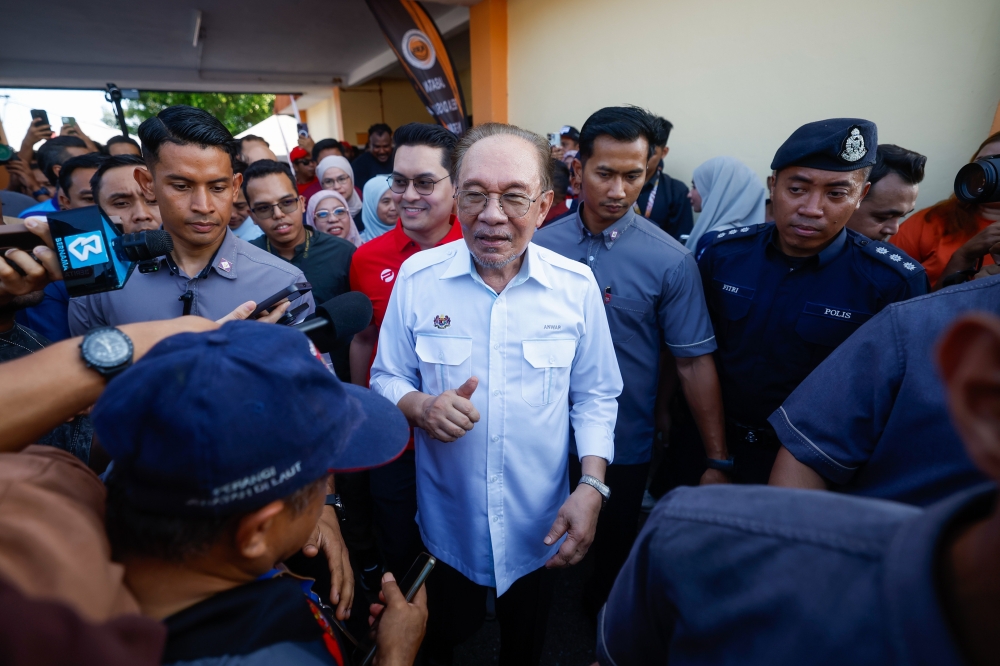
Prime Minister Datuk Seri Anwar Ibrahim has successfully undergone an elective laparoscopic surgical procedure, with his medical team confirming the operation proceeded without complications. The Prime Minister is now under strict medical observation as part of his post-operative care regimen, according to an announcement from his physicians on August 10.
The decision to proceed with the planned procedure reflects confidence from the medical team overseeing the Prime Minister's health. Laparoscopic surgery, a minimally invasive technique, typically involves smaller incisions and generally allows for faster recovery compared to traditional open surgical methods. The choice of this approach suggests careful consideration by specialists to balance medical necessity with the demands of his high-office position.
Details surrounding the specific nature of the elective surgery remain limited, with medical authorities prioritizing patient confidentiality while maintaining transparency about the procedure's success. This balance between public accountability and privacy is particularly delicate when the patient is the nation's chief executive, whose health status carries implications for government continuity and public confidence in institutional stability.
The timing of the announcement and the confirmation of successful completion underscores the institutional protocols in place for managing the health circumstances of Malaysia's top leadership. Such transparency, while respecting medical privacy, allows the public and international partners to maintain assurance regarding the continuity of government operations during periods when the Prime Minister requires medical attention.
Anwar Ibrahim's medical situation draws attention to broader questions about the health management of senior political figures in Malaysia and across Southeast Asia. The requirement for elective surgery, despite its non-emergency classification, indicates that the Prime Minister's medical team identified a condition requiring intervention that could not be indefinitely postponed without potential health consequences.
The period of strict medical observation following the procedure is standard practice in post-operative care, particularly for high-ranking officials whose schedules and stress levels differ significantly from the general population. This supervision phase allows medical professionals to monitor for any complications and ensure optimal healing before the Prime Minister gradually resumes his full range of governmental duties.
Government operations continue under established protocols during such periods, with the institutional machinery of Malaysian governance designed to function effectively even when the Prime Minister requires temporary medical focus. Deputy Prime Minister and other senior cabinet members maintain their portfolios and responsibilities, ensuring that critical decision-making and administrative functions proceed without disruption.
The successful completion of the surgery demonstrates the capabilities of Malaysia's medical establishment and the access to specialist care available to the nation's leadership. The country's healthcare system has developed significant expertise in laparoscopic procedures, which have become increasingly common across both public and private medical institutions throughout Malaysia.
From a regional perspective, the situation illustrates how Southeast Asian nations manage the health-related challenges affecting their political leadership. Transparency combined with appropriate privacy protections has become an expected standard, reflecting both democratic principles and practical governance needs in contemporary politics.
The focus on strict post-operative medical monitoring reflects recognition that recovery from surgical procedures requires careful attention, regardless of a patient's social status or official position. The medical team's commitment to comprehensive supervision suggests they are taking a measured, evidence-based approach to the Prime Minister's recuperation.
As Anwar Ibrahim progresses through his recovery period, attention will likely turn toward the timeline for his return to full operational capacity. The gradual resumption of duties, once medical clearance is obtained, remains a critical benchmark for assessing recovery and ensuring both the Prime Minister's wellbeing and the seamless functioning of the highest levels of government.
The confirmation of successful surgery and ongoing medical care provides reassurance to stakeholders ranging from government agencies to international partners regarding Malaysia's political stability. Such medical transparency, practiced responsibly, contributes to public confidence in governmental institutions during periods of leadership transition or health-related adjustments.

