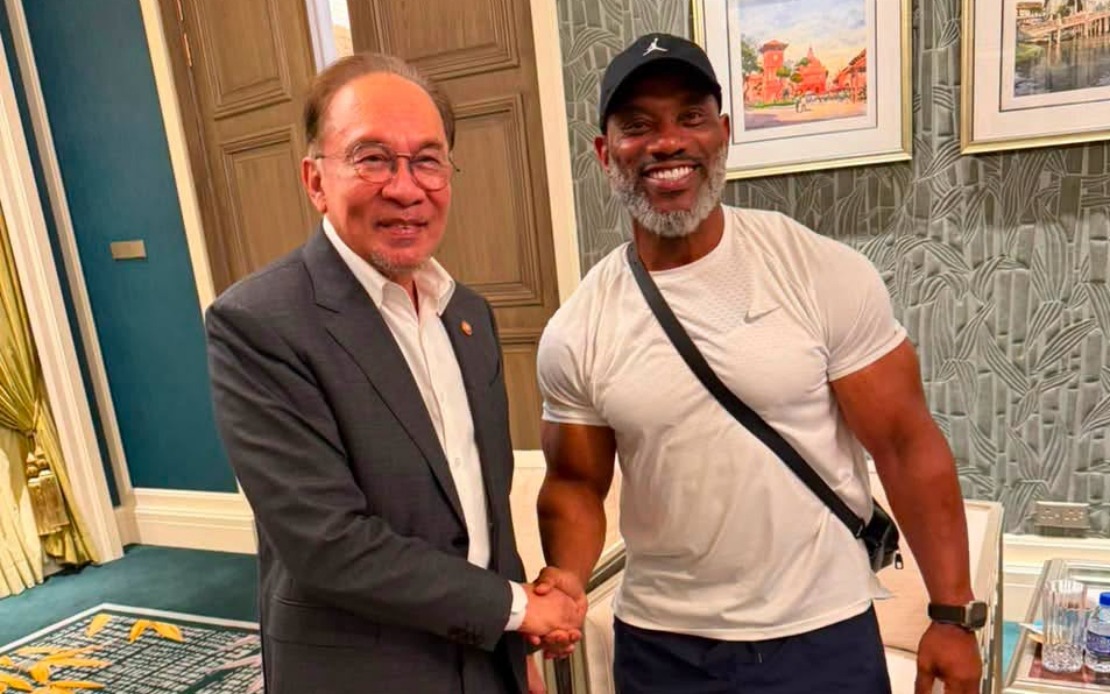
Prime Minister Datuk Seri Anwar Ibrahim crossed paths with one of bodybuilding's most decorated athletes this week, marking a brief but notable encounter between Malaysia's political leadership and the international sports world. The meeting with Dexter Jackson, whose accomplishments span multiple decades in competitive bodybuilding, generated enough enthusiasm from Anwar to warrant a public Facebook post capturing the moment alongside a photograph of the two shaking hands.
Jackson's credentials in the sport are formidable and speak to a career of extraordinary longevity and success. The 56-year-old athlete secured the Mr Olympia title in 2008, cementing his place among bodybuilding's elite, and followed that achievement with a Masters Mr Olympia victory in 2012, demonstrating his ability to compete and prevail across different competitive categories. These accomplishments, while significant, represent only part of his overall competitive legacy within the sport.
Perhaps more striking than any single championship is Jackson's unparalleled record at the Arnold Classic, one of bodybuilding's most prestigious and historically important competitions. His nine victories at this event stand as a record that underscores both his consistent peak performance over an extended period and the respect he commands within international bodybuilding circles. The Arnold Classic, named after Austrian-American actor and former bodybuilding champion Arnold Schwarzenegger, remains one of the two most coveted titles in professional bodybuilding alongside the Mr Olympia crown.
Anwar's response to meeting Jackson reflected a decidedly lighthearted tone befitting the circumstances of a casual encounter. In his Facebook post, the Prime Minister expressed genuine admiration for the bodybuilder's achievements, stating that the meeting had inspired him personally. He took the opportunity to inject humour into his remarks, suggesting with a wink that perhaps the time had come for him to resume serious gym training himself—a self-deprecating comment that resonated with the casual nature of the interaction and the social media audience to whom he was addressing his remarks.
The encounter, while seemingly brief and informal in nature, reflects the increasingly cosmopolitan character of Malaysia's highest offices and the openness of current political leadership to engaging with personalities from diverse fields and backgrounds. Anwar's willingness to publicly share such moments on social media platforms demonstrates a conscious effort to present a more accessible and human dimension to the prime ministerial office, moving beyond purely governmental communications.
Dexter Jackson's presence in Malaysia and the circumstances surrounding his meeting with Anwar remain unexplained in public statements, leaving some question as to whether the bodybuilding legend was in the country for a specific event, exhibition, or appearances. His status as an international sports personality of considerable standing could suggest involvement in fitness-related conferences, promotional activities, or other such engagements that occasionally bring global sporting figures to Malaysia.
The bodybuilding community itself has maintained a strong international presence and significant following across Southeast Asia, including Malaysia, where fitness culture has grown substantially over the past two decades. Competitive bodybuilding tournaments, fitness expos, and related sporting events regularly attract participants and spectators from across the region, creating opportunities for interactions between international champions and local populations that might otherwise seem unlikely.
Jackson's longevity in competitive bodybuilding stands as a testament to the dedication required to maintain elite-level athletic performance across multiple decades. Competing at the highest levels of bodybuilding demands not only exceptional genetic predisposition but also unwavering commitment to training regimens, nutritional protocols, and the discipline required to maintain such standards consistently. His success at both the Mr Olympia and Arnold Classic competitions, across different age categories, underscores the comprehensiveness of his sporting achievement.
The public nature of Anwar's engagement with this encounter—through immediate social media documentation and commentary—illustrates how contemporary political figures navigate the boundary between formal governmental roles and more personal, human moments. Such interactions, when shared publicly, often serve multiple purposes: they humanise political leadership, demonstrate engagement with international and cultural spheres beyond politics, and provide the kind of accessible content that resonates with social media audiences seeking less formal representations of public figures.
For Malaysian observers, the encounter represents a small but noteworthy moment of intersection between the country's political establishment and the international sporting world, reminding audiences that Malaysia's leaders regularly interact with figures and personalities from global spheres extending well beyond traditional diplomatic or political contexts. Whether such meetings translate into substantive engagement with fitness promotion or sports development initiatives at the policy level remains to be seen, though Anwar's humorous invocation of personal gym plans suggests the encounter was primarily social in nature rather than governmental.

