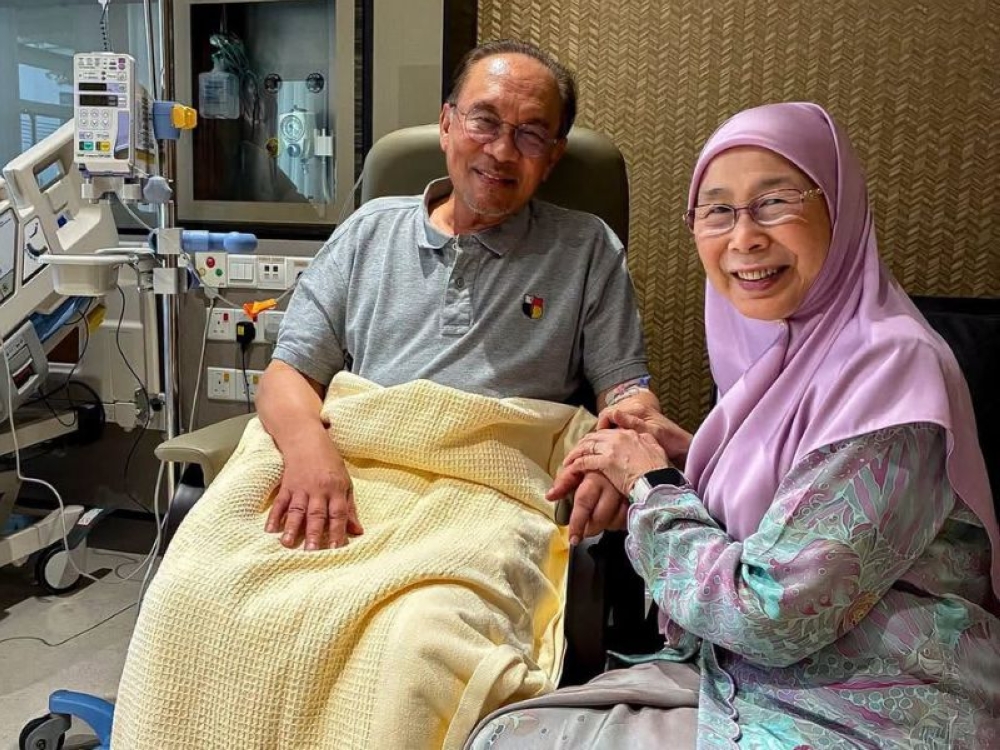
Prime Minister Datuk Seri Anwar Ibrahim is anticipated to return to his residence today after completing his stay in hospital for hernia treatment. The announcement came from his wife, Datuk Seri Datin Dr Wan Azizah Wan Ismail, who provided an update on the premier's health status and recovery timeline following the surgical intervention.
The procedure represents a significant health event for Malaysia's political leadership, occurring at a time when the country continues to navigate complex economic and governance challenges. The timing of such medical interventions in high office typically necessitates careful coordination with government operations to ensure continuity in national administration and decision-making processes.
Hernia operations, while routine in medical terms, require appropriate post-operative care and recovery periods for optimal healing. The decision to discharge the Prime Minister after what appears to be a brief hospital stay suggests that medical professionals overseeing his care assessed his condition as sufficiently stable for home-based recuperation. Such discharge protocols are typically based on comprehensive clinical evaluation rather than arbitrary timelines.
For Malaysian citizens and international observers monitoring the nation's political landscape, health-related absences from the Prime Minister's office raise questions about governmental functioning during periods when the head of administration requires medical attention. The Malaysian constitutional framework and cabinet structure provide mechanisms for interim leadership and delegated authority, ensuring that critical state functions continue uninterrupted regardless of the Prime Minister's temporary incapacity.
Datan Seri Datin Dr Wan Azizah Wan Ismail's public confirmation of her husband's medical status reflects the importance placed on transparent communication regarding leaders' health matters. Such openness helps maintain public confidence and reduces speculation or misinformation that can arise when details about senior political figures' wellbeing remain opaque or undisclosed.
The hernia condition itself, while manageable through surgical correction, can impact daily activities and physical demands associated with the Prime Minister's role. Recovery periods typically involve activity restrictions and gradual return to full responsibilities, suggesting that the government may have implemented adjusted schedules or delegated additional duties among cabinet ministers during this transitional phase.
Regional stability considerations become relevant in this context, particularly given Malaysia's role in Southeast Asian diplomacy and economic cooperation frameworks. Continuity in leadership presence, even when medically justified temporary absences occur, remains important for maintaining Malaysia's consistent engagement with neighbouring nations and multilateral institutions across ASEAN and beyond.
The disclosure of the Prime Minister's medical procedure also underscores broader conversations within Malaysian society about health management among senior officials and the balance between personal privacy and public interest. High-ranking government figures inevitably face greater scrutiny regarding their physical condition, as their fitness to discharge duties carries implications for national governance and public trust in institutional stability.
Post-operative recovery timelines for hernia surgery typically extend over several weeks, during which individuals gradually resume normal activities. The Prime Minister's office will likely coordinate his return to full-schedule duties carefully, potentially staggering his resumption of meetings, official functions, and travel to accommodate healing requirements without compromising governance effectiveness.
Datuk Seri Datin Dr Wan Azizah Wan Ismail's involvement in publicly confirming her husband's discharge information demonstrates the significant role spouses often play in managing communications around leaders' health, particularly when medical privacy intersects with public interest in government continuity. Her statement provides reassurance to stakeholders and the broader Malaysian public that recovery is progressing as expected.
The timing of this medical procedure and its resolution also reflects Malaysia's healthcare infrastructure capabilities, with the nation's medical facilities and specialists able to provide appropriate surgical interventions for senior government officials. This speaks to the quality of available tertiary healthcare services and the advanced surgical expertise available within Malaysian hospitals.

