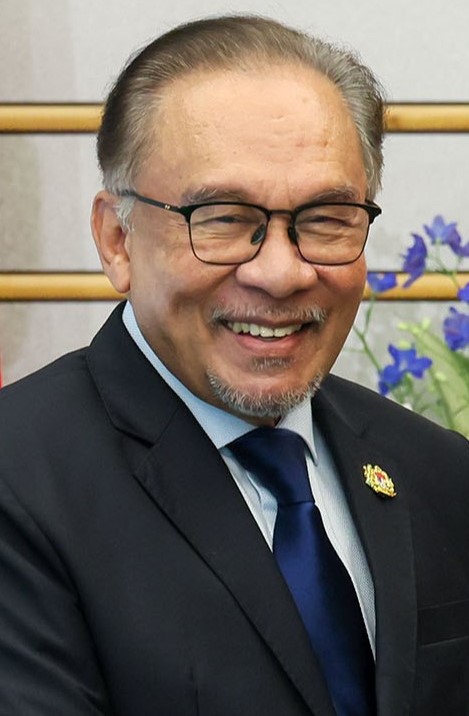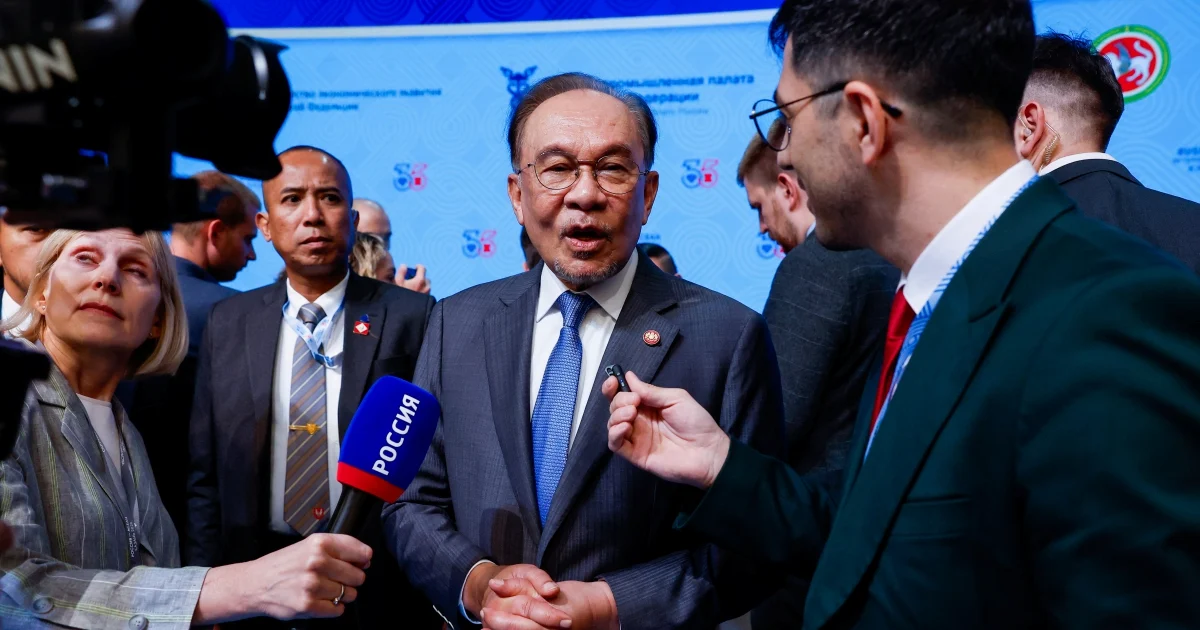
Prime Minister Datuk Seri Anwar Ibrahim has underscored the pivotal role that cultural diplomacy plays in building robust international relationships, drawing on his personal affinity for Russian artistic traditions to illustrate broader principles of bilateral engagement. During his time in Kazan, the premier articulated a vision of Malaysia-Russia ties that extends far beyond commercial transactions and governmental agreements, positioning shared cultural appreciation as a fundamental component of sustained diplomatic progress.
Anwar's comments reflect a diplomatic philosophy increasingly embraced by Southeast Asian leaders seeking to deepen relationships with major global powers through channels beyond trade and investment. By openly discussing his appreciation for Russian cultural expressions, the Malaysian leader demonstrates that people-to-people connections and intellectual exchange can serve as powerful conduits for fostering goodwill and understanding between nations. This approach carries particular significance for Malaysia, which has historically positioned itself as a bridge between the Islamic world and broader international community, and which stands to benefit from expanded cultural ties with Eastern European states.
The emphasis on literature and music as diplomatic tools speaks to Malaysia's own rich cultural heritage and its capacity to engage authentically with diverse foreign traditions. Russian literature, with its philosophical depth and historical significance, holds appeal across educated circles globally, and Anwar's stated interest in this tradition positions Malaysia as a nation whose leaders engage with international culture at an intellectually substantive level. This positioning matters for soft power, particularly as Malaysia seeks to maintain relevance and credibility in an increasingly multipolar world where cultural influence accompanies economic and political influence.
For bilateral relations between Malaysia and Russia, the premier's remarks signal openness to broadening engagement beyond conventional diplomatic channels. Russia has increasingly turned attention to Southeast Asia as Western sanctions limit other avenues of international cooperation, and Malaysia's willingness to engage on multiple fronts—economic, political, and cultural—provides Russia with a reliable and respected partner in the region. The cultivation of cultural linkages can facilitate academic exchanges, artistic collaborations, and tourism flows that generate tangible benefits for both nations while creating networks of individuals with genuine investment in strong bilateral ties.
Anwar's reference to the equivalence of cultural and economic cooperation suggests a recalibration of Malaysia's diplomatic priorities. While trade remains essential, the premier appears committed to demonstrating that Malaysia's value as a partner encompasses more than market access or investment opportunities. This holistic approach to statecraft reflects sophisticated understanding that international relationships built solely on transactional foundations prove vulnerable to shifting economic winds or competitive pressures. By grounding Malaysia-Russia ties in shared appreciation for cultural achievement, Anwar creates resilience in the bilateral relationship.
The timing of these remarks in Kazan, Russia's major regional hub, carries additional weight. The Tatar region has produced significant contributions to Russian and Soviet culture, and the premier's visit to this city specifically provides authentic context for his cultural observations. Kazan's historical importance and contemporary vitality make it an appropriate venue for discussing cultural exchange, and the choice of location suggests the Malaysian delegation's engagement was substantive rather than ceremonial. The geographical specificity of Anwar's remarks distinguishes his approach from generic diplomatic platitudes.
For Malaysian society, the premier's openness about enjoying Russian cultural products also carries domestic implications. It normalises engagement with diverse global traditions at the highest levels of government and suggests that Malaysian identity remains secure enough to embrace foreign artistic influences without defensive anxiety. This posture contrasts with more insular approaches to cultural policy and implicitly endorses a vision of Malaysian society as confident and cosmopolitan. Malaysians interested in Russian literature or music may find encouragement in their prime minister's enthusiasm for these disciplines.
The broader context involves Malaysia's strategic positioning between major power blocs. As geopolitical tensions between Western and non-Western powers intensify, Southeast Asian nations navigate complex terrain requiring skillful diplomatic management. Anwar's emphasis on cultural connection as distinct from but equal to economic cooperation allows Malaysia to engage Russia substantively while maintaining relations with Western partners who may view deepening Malaysia-Russia ties with concern. By framing engagement in terms of universal human appreciation for artistic achievement rather than zero-sum geopolitical competition, the premier creates diplomatic space for expanding relationships.
Russian cultural products have historically maintained prestige in Malaysian intellectual circles, though engagement remains limited relative to American, British, or Asian cultural influences. Greater emphasis on Russian literature, film, and music from government level could gradually shift consumption patterns and broaden Malaysian awareness of Russian achievement. Educational institutions and cultural organisations might respond to prime ministerial encouragement by programming more Russian-language instruction, literary readings, or film festivals, creating institutional supports for the cultural exchanges Anwar advocates.
Anwar's remarks ultimately project an image of Malaysia's leadership as culturally sophisticated and philosophically grounded in principles extending beyond immediate material gain. This persona carries diplomatic utility in interactions with educated foreign counterparts and distinguishes Malaysian statecraft from approaches rooted purely in transactional calculation. The premier's intellectual engagement with Russian culture—whether expressed through genuine personal reading habits or carefully constructed diplomatic positioning—signals that Malaysia's prime minister thinks beyond quarterly economic indicators and quarterly diplomatic cycles.
Looking forward, the cultural dimension of Malaysia-Russia relations may develop into programming including academic partnerships in humanities disciplines, artist residencies, translation initiatives bringing Russian works to Malaysian readers, and reciprocal cultural festivals. Such initiatives would require institutional support and sustained commitment beyond the level of prime ministerial rhetoric, but Anwar's public endorsement establishes the political foundation necessary for government agencies and cultural organisations to justify such programming to sceptical budget committees or conservative constituencies concerned about foreign cultural influence.