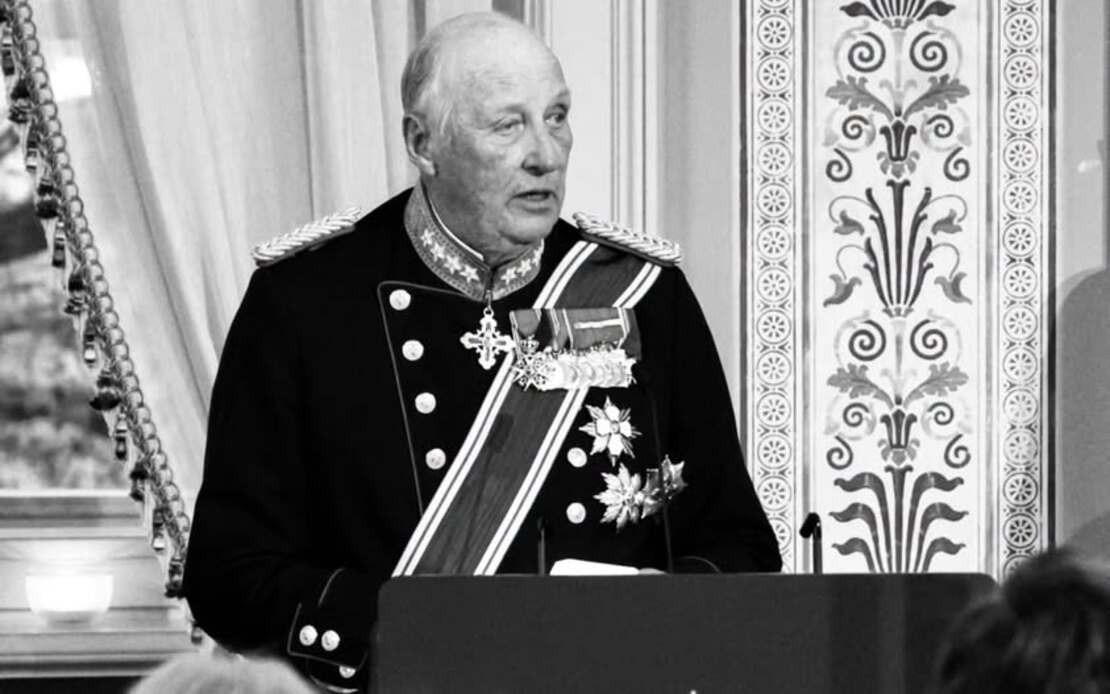
Prime Minister Datuk Seri Anwar Ibrahim has conveyed Malaysia's deepest sympathies to the Norwegian people following the death of King Harald V, who passed away on Friday at the age of 89. The Malaysian government's formal condolence, shared via the Prime Minister's Facebook page on Thursday, reflects the broader international recognition of the late king's significance as a unifying figure in Nordic affairs.
King Harald V died at the National Hospital in Oslo after being admitted on August 17. He had been receiving cortisone treatment for hemolytic anemia, a blood condition that ultimately contributed to his passing. The king's hospitalisation and subsequent death mark the end of a reign spanning decades during which he became one of Europe's longest-serving monarchs and a respected elder statesman within the Scandinavian region.
In his statement, Anwar highlighted King Harald's distinctive approach to national identity, emphasising the late monarch's recognition of Norway's multicultural composition. The Prime Minister noted that the king had spoken eloquently about a nation comprising individuals whose families originated from Afghanistan, Pakistan, Poland, and numerous other countries, affirming that these people were equally Norwegian despite their diverse heritage. This aspect of Harald's legacy resonates particularly with Malaysia's own experience as a multiethnic society, where questions of national belonging and inclusivity remain contemporary concerns.
The King's philosophy on national integration carried profound implications. By publicly affirming that citizens of diverse immigrant backgrounds were fully part of the Norwegian fabric, Harald V positioned himself as a modernising force within the European monarchy. This stance stood in contrast to more restrictive interpretations of national identity that gained traction in various Western democracies during recent decades, and it reflected a carefully maintained institutional role balancing tradition with progressive values.
Anwar underscored another dimension of Harald V's character that he identified as exemplary: the king's rigorous commitment to his coronation oath and his unwavering adherence to constitutional obligations. The Prime Minister suggested that this devotion to duty—to honouring one's formal commitments and responsibilities—represented a cornerstone of Harald's personal and political identity. In a Malaysian context, where debates about institutional integrity and official accountability regularly surface, this tribute carries implicit resonance for how national leaders should conduct themselves.
The Prime Minister's framing of the king's legacy as strengthening national dignity through inclusive governance offers a subtle commentary on contemporary global politics. Anwar's statement proposes that true national strength emerges not from exclusionary definitions of citizenship or ethnicity, but from the mutual respect and dignity extended to all inhabitants, irrespective of their ancestral origins. This philosophical alignment between Malaysian and Norwegian concepts of nationhood—despite vast geographical and cultural differences—underscores shared values within liberal democratic frameworks.
King Harald V's reign, which began in 1991, coincided with significant transformations in both Scandinavia and the wider international order. He inherited the Norwegian throne following the death of King Olav V and presided over a period that saw Norway navigate its relationship with the European Union, address questions of immigration and integration, and maintain its position as a significant energy exporter. Throughout these decades, Harald established himself as a figure of stability and measured modernisation, qualities that appear to have impressed regional observers including Malaysian political leadership.
The death of senior European monarchs typically prompts formal diplomatic acknowledgements from governments worldwide, reflecting protocol and maintaining international relations. However, Anwar's specific emphasis on Harald's inclusive vision of nationhood suggests a deliberate choice in which aspects of the late king's legacy to highlight. This selective focus indicates Malaysia's interest in reinforcing narratives about multicultural coexistence and the compatibility of traditional institutions with progressive social values—themes relevant to the Malaysian government's ongoing nation-building efforts.
Norway's period of mourning will see the royal family's observance of traditional protocols while the nation reflects on Harald's substantial contributions to Norwegian society and European affairs. King Harald V will be succeeded by Crown Prince Haakon, ensuring continuity of the Norwegian monarchy and its institutional role within the constitutional framework. The transition represents a natural progression within one of Europe's oldest and most stable royal houses.
For Malaysia and other Southeast Asian nations, Harald V's passing marks the end of an era represented by a generation of post-war European leaders who shaped their nations through periods of reconstruction and modernisation. The Malaysian government's public tribute positions itself within a broader international community mourning a respected figure, while simultaneously reinforcing its own commitment to the inclusive, dignity-centred vision of national identity that Harald championed. This diplomatic gesture strengthens ties between Malaysia and Norway while subtly articulating shared values across cultural and geographical boundaries that might otherwise seem distant.

