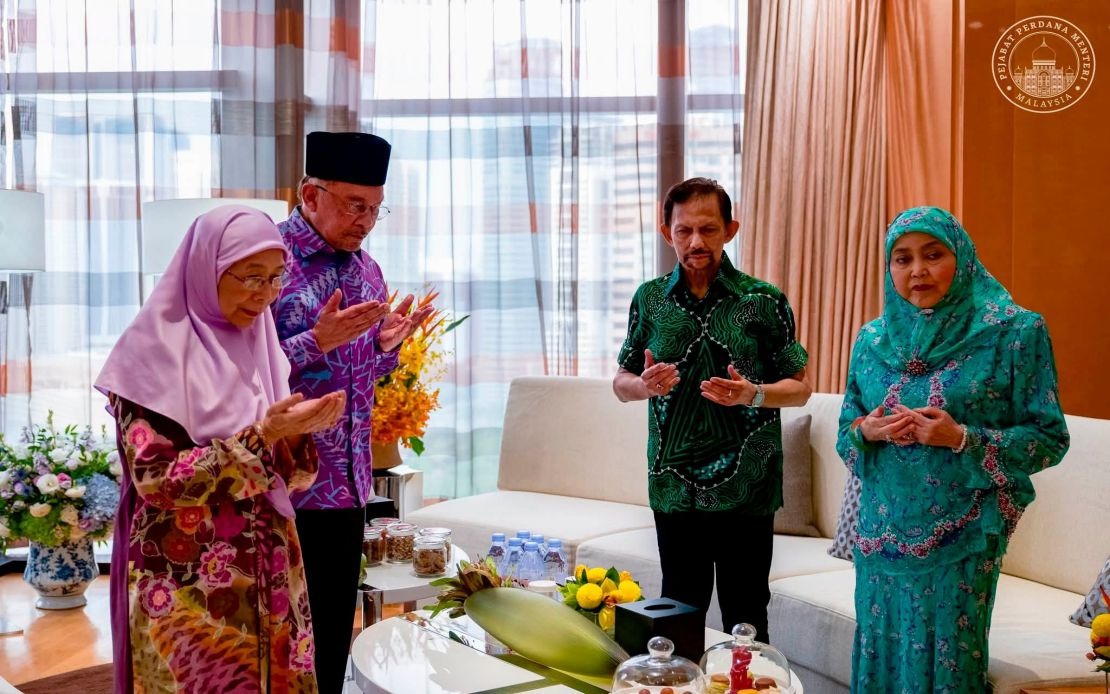
Prime Minister Datuk Seri Anwar Ibrahim has conveyed Malaysia's official felicitations to Sultan Hassanal Bolkiah on his milestone 80th birthday, underscoring the importance of the enduring relationship between the two neighbouring nations. The gesture, communicated through a Facebook post on July 15, reflects the warm diplomatic ties that bind Malaysia and Brunei Darussalam across the South China Sea.
In his message, Anwar spoke on behalf of both the Malaysian Government and its citizens, offering prayers that the Brunei monarch would continue to discharge his duties with the wisdom and judiciousness that have characterised his lengthy tenure. The Prime Minister's words carry particular weight given Malaysia's position as Brunei's largest neighbour and a key economic partner in the region, making such bilateral courtesies significant markers of regional stability.
The Prime Minister articulated a vision for deepened cooperation between the two nations, expressing confidence that Malaysia-Brunei ties would continue strengthening in ways that benefit both populations. This framing positions the birthday milestone not merely as a ceremonial occasion but as an opportunity to reaffirm shared interests and common ground in an increasingly complex geopolitical environment.
Sultan Hassanal Bolkiah ascended to the Brunei throne in 1967, following a proclamation that made him the 29th Sultan of the sultanate. His journey to the throne began on July 15, 1946, when he was born in Bandar Brunei, now known as Bandar Seri Begawan, the nation's capital. The sultan has since become one of the defining figures of modern Southeast Asian monarchy, witnessing and shaping five decades of regional transformation.
The Brunei monarch's reign has spanned an era of extraordinary global change, from the Cold War through decolonisation to the digital age. His stewardship has guided a small oil-rich sultanate through periods of tremendous economic opportunity and international scrutiny, establishing Brunei as a respected member of the Association of Southeast Asian Nations and the broader international community.
Sultan Hassanal Bolkiah's distinction as the world's longest-reigning monarch currently on the throne came into effect following the death of Queen Elizabeth II in September 2022. This historic status reflects not only the longevity of his personal reign but also the stability and continuity he has provided to his nation across five decades. Such longevity in leadership is rare in the modern world, making his milestone birthday a significant moment for Southeast Asian observers.
The relationship between Malaysia and Brunei extends far beyond diplomatic formalities. The two nations share cultural heritage, maritime boundaries, and overlapping economic interests in regional trade and energy sectors. Brunei's wealth from oil and natural gas reserves has made it an important economic actor despite its small population, while Malaysia's larger economy and regional influence make bilateral cooperation mutually beneficial.
Anwar's message reflects Malaysia's consistent approach to relations with smaller neighbouring states, emphasising mutual respect and win-win cooperation. This diplomatic language signals Malaysia's commitment to maintaining stability in Southeast Asia through constructive engagement with all regional partners, regardless of their size or economic capacity.
The birthday congratulations also arrive at a moment when regional cooperation mechanisms are increasingly important. ASEAN forums, bilateral trade arrangements, and security dialogues require the kind of stable, cordial relationships that ceremonial exchanges like this one help maintain. By publicly acknowledging Sultan Hassanal Bolkiah's milestone, Anwar reinforces the centrality of personal diplomatic relationships in maintaining broader regional architecture.
For Malaysian readers, the significance extends to understanding how neighbouring states function and the careful diplomacy required in a region with numerous overlapping territorial waters, resource claims, and historical complexities. Brunei, despite its small size, occupies an important position in regional geopolitics, and maintaining strong ties serves Malaysia's broader strategic interests in Southeast Asia.
The sultan's 80 years have seen Brunei transform from a British protectorate to an independent nation commanding global respect. His extended reign has provided the continuity and predictability that have allowed the sultanate to develop into a modern state while preserving its Islamic character and monarchy-centred governance structure. This balance between tradition and modernity offers lessons relevant to understanding Southeast Asian governance approaches.
As Sultan Hassanal Bolkiah enters his ninth decade, recognition of his contributions to regional stability and his nation's development becomes particularly meaningful. For Malaysia, cultivating strong relationships with stable, prosperous neighbours like Brunei enhances overall regional prosperity and security, making Anwar's warm birthday wishes more than ceremonial courtesy—they represent investment in sustained regional cooperation.

