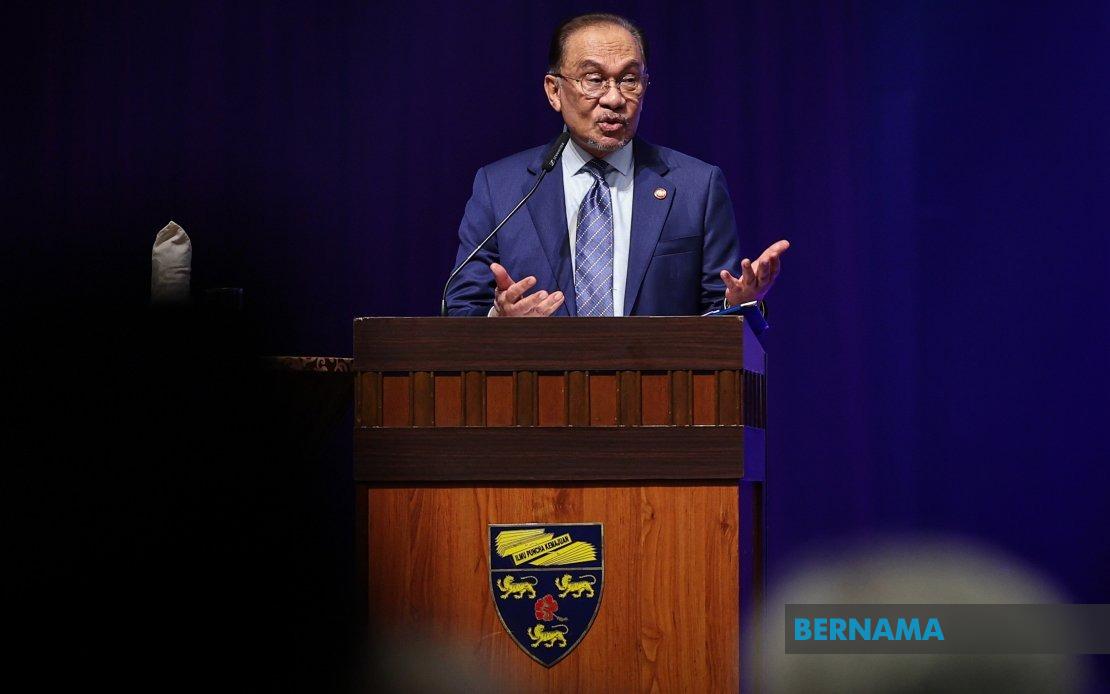
Prime Minister Datuk Seri Anwar Ibrahim has shown compassion towards a gravedigger in Kuala Terengganu who has been waging a three-year battle against mouth cancer. Through the Implementation Coordination Unit of the Prime Minister's Department, Anwar extended RM2,000 in financial assistance to Rosli Abdullah, 52, a resident of Flat Batas Baru who has devoted decades to serving his community through burial services and mosque maintenance.
The donation was handed over by Azhar Abd Hamid, deputy director of the Terengganu Federal Development Department's Implementation Coordination Unit, during a ceremony at the Flat Batas Baru surau. Azhar emphasised that the contribution was specifically earmarked to alleviate Rosli's financial strain and support his upcoming surgical treatment, which medical authorities have deemed necessary and urgent.
Beyond the immediate monetary relief, the Prime Minister's office has taken steps to strengthen Rosli's access to longer-term social support. Officials discovered that despite his considerable need, Rosli had not been registered with e-Kasih, the government's targeted assistance programme for low-income households. A preliminary assessment found that he meets all eligibility requirements, and authorities have committed to processing his registration without delay to unlock subsequent welfare benefits.
Rosli's health situation has deteriorated markedly over recent months, painting a stark picture of hardship. According to Mohd Radzali Mohamad, deputy chairman of the Flat Batas Baru surau, the gravedigger has endured swelling in his mouth and right cheek so severe that he lost his ability to speak approximately one month ago. The physical symptoms have progressed to the point where he cannot consume solid food, surviving instead on liquid nutrition administered through a feeding tube for the past fortnight.
The 52-year-old's predicament is compounded by his solitary circumstances. Living alone without family support, having never married, Rosli has historically sustained himself through his work as a gravedigger and by performing cleaning duties at the surau. His deteriorating medical condition has rendered him unable to perform these tasks, effectively cutting off his income sources and leaving him entirely dependent on the compassion and charity extended by the surau's management and community members.
Rosli's struggle with cancer has already claimed much from him. He underwent surgical intervention twice previously, yet the malignancy has recurred with renewed aggression. The Sultanah Nur Zahirah Hospital in Terengganu recognised the complexity of his case and referred him to the Universiti Sains Malaysia Hospital in Kubang Kerian, Kelantan, for specialised follow-up treatment and further surgical intervention. This referral underscores both the seriousness of his condition and the advanced nature of the treatment he requires.
The surau management has responded to his plight by establishing a dedicated donation fund aimed at covering medical and surgical expenses. However, despite community contributions, the accumulated resources remain insufficient to meet the substantial costs involved in his treatment and ongoing care. The establishment of such a fund reflects the collective sense of responsibility within the community towards one of their long-term members.
Rosli's thirty-year association with Flat Batas Baru surau demonstrates his deep roots within this particular community. His decades of service, though humble and often overlooked, represent a form of social contribution that frequently goes unrecognised in broader societal narratives. The surau's acknowledgment of his situation and advocacy on his behalf highlight how local institutions can serve as crucial intermediaries between vulnerable individuals and government support systems.
The case illustrates an important dimension of Malaysia's social welfare landscape: gaps in identifying and reaching individuals in genuine distress. Rosli's situation demonstrates how someone can remain outside formal assistance frameworks despite meeting objective criteria for support. The Prime Minister's intervention and the subsequent commitment to e-Kasih registration represent an important recognition of this systemic challenge and a practical step towards closing such gaps.
From a policy perspective, Rosli's circumstances exemplify the complex intersection of health crises, economic vulnerability, and social isolation faced by many Malaysians in low-income categories. The intervention by the Prime Minister's office, while providing immediate relief, also signals a broader commitment to identifying and assisting such cases through existing welfare infrastructure. The decision to expedite his e-Kasih registration acknowledges that formal systems must be more proactive in reaching their intended beneficiaries, rather than relying solely on individuals navigating bureaucratic processes independently.

